


In Sylhet’s gentle breeze, Test cricket finds a home
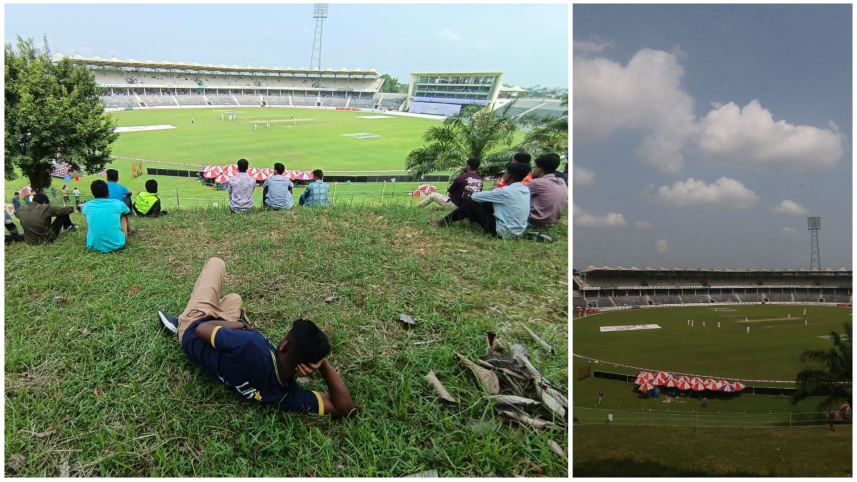
The overall mood surrounding the second day of the second Test between Bangladesh and Pakistan felt perfectly suited to lovers of the game’s longest format -- those who prefer to experience cricket slowly, thoughtfully, and without haste.
Ashar, the month that heralds the monsoon, may still be knocking softly at the door, but Sylhet already seems wrapped in its mood. Wisps of clouds drift across the sky, and a passing spell of rain has washed away the harshness usually associated with late summer. The breeze carries a soothing coolness, wandering gently through the galleries of the Sylhet International Cricket Stadium. For a moment, it feels as though spring has returned quietly to this corner of the country.

It is on afternoons like these that Test cricket reveals its truest self.
Unlike the relentless pace of white-ball cricket, there is no sense of urgency here. No blaring music after every boundary, no roaring spectacle demanding constant attention. Test cricket moves differently — patiently, thoughtfully, almost poetically. Every over unfolds with measured rhythm, allowing spectators the rare luxury of simply sitting back and absorbing the game.
On Sunday, only a few hundred spectators were scattered across the vast stadium during the Sylhet Test between Bangladesh and Pakistan. Most occupied the Eastern Gallery in small clusters, many of them school students enjoying a quiet day at the cricket. Meanwhile, the iconic Green Gallery stood nearly empty, save for a handful of spectators reclining on the grassy slope beneath the trees.
Yet the sparse attendance created a beauty of its own.
With so few people in the stands, every sound from the field travelled clearly through the air. The sharp crack of bat meeting ball echoed around the ground. Bowlers shouted in celebration after a close appeal. Fielders exchanged tactical discussions loud enough to be heard from the gallery. Beyond the boundary ropes, the wind rustled through bamboo groves while birds chirped uninterrupted from nearby trees.
In Sylhet, cricket does not overpower nature. It blends into it.
While Test matches in England and Australia often draw packed galleries, the subcontinent tells a different story. In Bangladesh especially, red-ball cricket continues to unfold before mostly empty seats. But perhaps venues like Sylhet prove that Test cricket does not always require noise to create atmosphere. Sometimes, silence itself becomes part of the spectacle.
Since hosting international cricket for the first time in 2018, Sylhet International Cricket Stadium has carved out a unique identity. Nestled beside the rolling greenery of Lakkatura Tea Garden, it remains one of the country’s most picturesque sporting venues. The Green Gallery, built upon a surviving hillock after surrounding elevations were flattened for adjacent grounds, has become its defining feature.
During monsoon season, the slope transforms into a lush blanket of green. Trees planted years ago now stretch their branches wide enough to offer natural shade to spectators below. Trees like jackfruit and Sonalu add further charm, especially when the golden Sonalu blossoms emerge against the deep green backdrop.
Sitting there with legs stretched across the grass, watching a Test match unfold slowly under the trees, brings a rare sense of calm. The game seems to belong naturally in such surroundings. There is no frantic rush, no desperate chase against time. Everything moves with a graceful cadence, much like a classical melody unfolding note by note.
 For all latest news, follow The Daily Star's Google News channel.
Comments