


Farewell of a legend in tears and defiance

“I was always very competitive since I was young, and I hated losing.”
Few football fans would need long to identify the speaker. Cristiano Ronaldo has built an extraordinary career on that relentless competitiveness -- a man who rarely accepted defeat and never settled for being second best.

On Monday, despite arriving in North America with what many considered the most talented Portugal squad ever assembled for a World Cup, Portugal's campaign ended in disappointment. A narrow 1-0 defeat to an in-form Spain in the Round of 16 in Dallas brought an abrupt end to the dreams of a much-hyped golden generation.
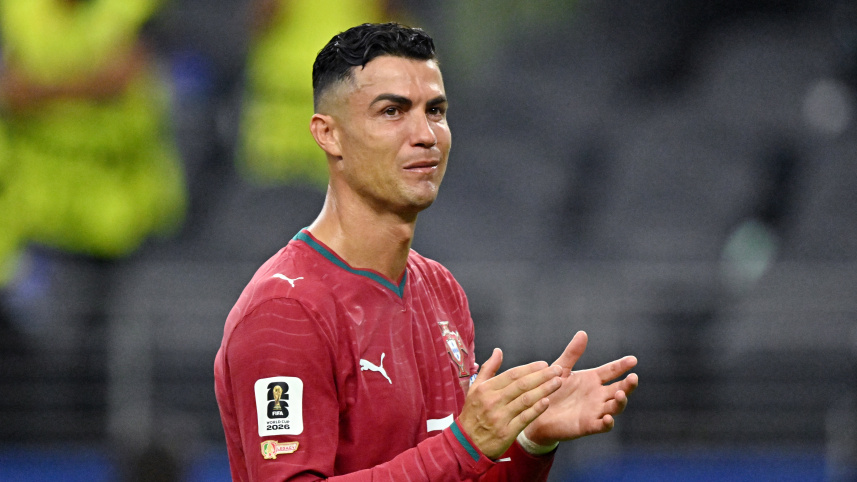
It was a collective failure. Bruno Fernandes, Joao Neves, Vitinha, and Nuno Mendes never truly clicked as a unit, aside from the emphatic 5-0 win over Uzbekistan in the group stage. Yet, as expected, the cameras found Ronaldo after the Spain defeat. For nearly two decades, he had carried the hopes of an entire nation, and in defeat, it was his tearful face that became the defining image of Portugal's 2026 World Cup.
"Well, it's normal, sad, to leave the World Cup like this," Ronaldo said after the match. "I gave it my all, I gave my best. And I leave with a clear conscience.
"That's football. That's the life of a footballer. Sometimes you win, sometimes you lose. It has to move on. It was my last World Cup, yes, but the rest... I have time to think, be with my family, not make decisions in the heat of the moment, and move on with life."
At 41, Ronaldo still finished as Portugal's top scorer with three goals, including the strike that finally ended his long wait for a goal in a World Cup knockout match.
His overall World Cup legacy remains unmatched in Portuguese football. Ronaldo is one of only three players to have appeared in six World Cups, alongside Lionel Messi and Guillermo Ochoa. His 11 goals in 27 matches are both national records for most World Cup goals and appearances.
Yet statistics alone cannot disguise the one prize that escaped him.
Perhaps that is why some of Ronaldo's reflections after the defeat revealed the same trait that defined his career -- his refusal to accept losing.
"I've won three titles for Portugal; before Cristiano Ronaldo, Portugal hadn't won a single title," he said.
"The biggest title the national team has ever won was in 2016, the European Championship, which, to be honest, is just as significant to me as a World Cup."
Part of that claim is undeniable. Before Ronaldo's arrival, Portugal had qualified for only three World Cups. With him, they never missed one, reaching six consecutive tournaments. Beyond the historic Euro 2016 triumph, he also led Portugal to Nations League titles in 2019 and 2025, transforming the country's international record.
Still, equating Euro 2016 with a World Cup feels more like a reflection of acceptance than conviction. If the two truly carried the same weight, the tears after this defeat -- and after Portugal's exit in Qatar four years earlier -- would not have spoken so loudly. They revealed what every football fan already knew: the World Cup remained the one prize he wanted above all else.
That pursuit, however, is also what defines Ronaldo's greatness. Few athletes have matched his longevity, discipline or relentless desire to improve. Even after becoming football's all-time leading goalscorer, he continued chasing new milestones with the same hunger that drove him as a teenager.
In the end, though, his final World Cup will be remembered less for the records he accumulated than for the dream that remained out of reach. Ronaldo leaves the tournament as one of football's greatest champions, but also as a reminder that even the most extraordinary careers can remain incomplete.
His tears in Dallas were not those of a failed player -- they were those of a relentless competitor saying goodbye to the one stage where his greatest ambition would remain forever unfulfilled.
 For all latest news, follow The Daily Star's Google News channel.
Comments