


Was that really a foul?: Experts slam VAR call that denied Egypt against Argentina
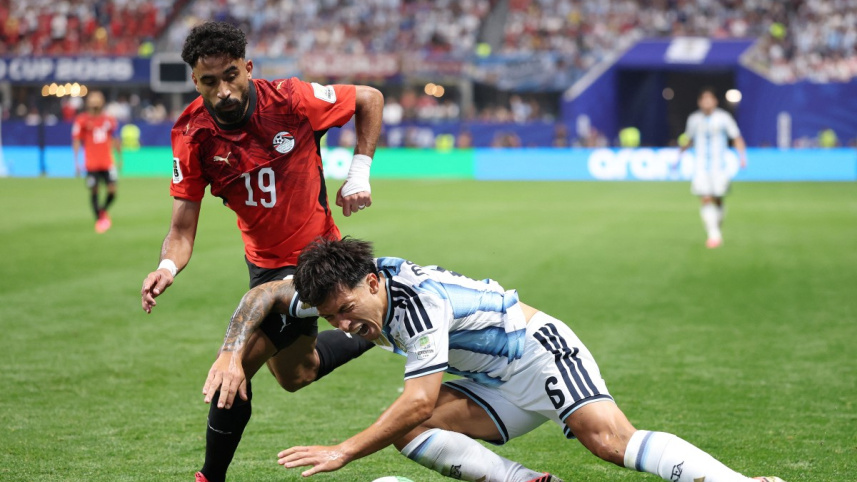
Argentina's dramatic 3-2 comeback victory over Egypt to reach the FIFA World Cup quarterfinals will be remembered for a Lionel Messi-inspired late revival of the defending champions.
But long after the final whistle, the biggest talking point remained a VAR decision that denied Egypt from extending their lead further, which perhaps could have reshaped the game’s outcome.

With Egypt leading 1-0 and threatening one of the greatest upsets in World Cup history, Mohamed Salah released Mostafa Zico with a perfectly weighted pass on the hour mark. Zico calmly lifted the ball over the advancing Emiliano Martinez and wheeled away in celebration as Egypt appeared to have doubled their advantage.
Those celebrations, however, were short-lived.
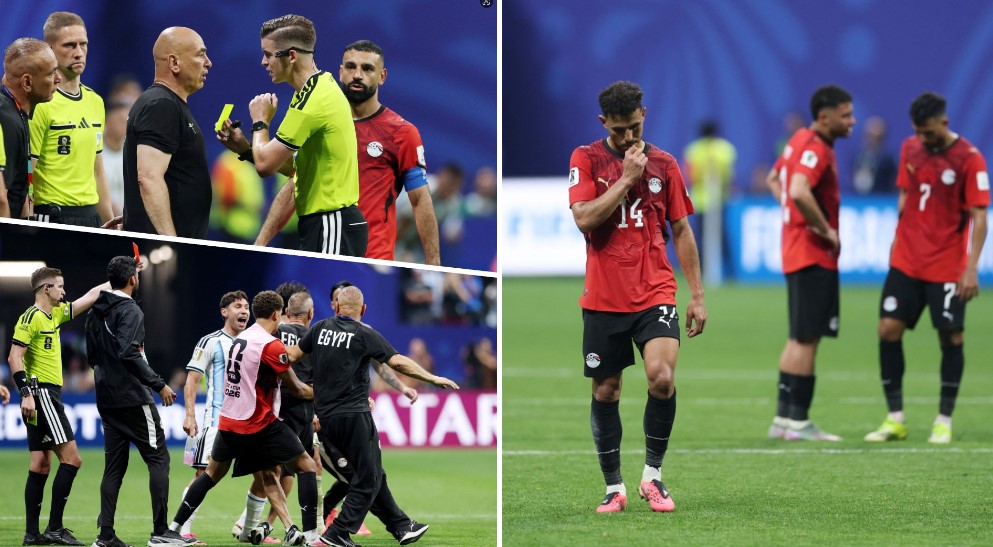
Referee Francois Letexier, after being alerted by the Video Assistant Referee (VAR), disallowed the goal for a foul committed much earlier in the move. Replays showed Marwan Attia stepping on Lisandro Martinez's foot while also appearing to hold the Argentine defender's shirt just outside Egypt's penalty area before the Pharaohs launched the counter-attack.
Technically, the decision is supported by the Laws of the Game.
Under the International Football Association Board (IFAB) Laws and FIFA's VAR protocol, officials are required to review the Attacking Possession Phase (APP) leading to every goal. If an attacking player commits an offence such as a foul, handball or offside during the same continuous phase of possession that results in a goal, the goal must be disallowed.
Law number 12 also classifies stepping on an opponent's foot or holding an opponent's shirt as a foul if the referee considers the challenge careless. Since Egypt won possession directly from Attia's challenge and maintained that same attacking sequence before Zico scored, VAR was within its remit to intervene.
Yet while the ruling may have been correct in law, many pundits questioned whether it reflected the intended use of VAR.
The decision sparked widespread criticism among broadcasters and former players, many arguing that the contact was too minor and too far removed from the eventual goal to justify overturning it.
On the feed shown in Bangladesh, the commentator remarked that "Argentina are lucky" to have escaped the incident, describing the infringement as a "soft" foul.
Former England goalkeeper Rob Green, working as a FOX Sports analyst, was among the strongest critics.
"Someone stepping on someone's toe [100 yards away] is not why VAR was brought into the game," Green said. "We've got to a point now where we've reached far beyond the powers that it should have. The referee saw the tackle, decided not to give it, and then Egypt, with a brilliant breakaway goal, have been denied a two-goal cushion.”
Analysts on TSN echoed those concerns, describing the contact as "too soft" and questioning whether a similar challenge would have been reviewed with the same scrutiny had the teams been reversed.
Former Liverpool defender Jamie Carragher also questioned the consistency of VAR's application.
"I am telling you that, if that was against another team, it would have been awarded as a goal," Carragher said.
"If that was in the Premier League, LaLiga or Serie A, it would have been a goal even after VAR review. There is a lot of inconsistency lately in this tournament."
Egypt did find a two-goal cushion, again through a Zico goal, a few minutes later but the controversy only intensified after Argentina recovered from 2-0 down through goals from Cristian Romero, Messi and Enzo Fernandez to snatch a dramatic late victory.
 For all latest news, follow The Daily Star's Google News channel.
 Egypt coach Hossam Hassan was furious after the match, claiming the officiating had cost his side a historic place in the last eight.
"I do not want to put it nicely and talk about hard luck. We have been cheated unfairly today, we have suffered injustice," Hassan said.
The Egyptian coach argued that not only was Zico's disallowed goal harsh, but his side should also have been awarded a penalty in the build-up to Argentina's winner.
"We haven't seen respect or fair play. There has not been respect or fair play," Hassan said.
"A penalty was ruled out, was not even checked by VAR. A second goal was remarkably disallowed. There has not even been a VAR check when we have all seen the image of the (shirt) being pulled back."
Hassan even suggested external factors may have influenced proceedings.
"Perhaps they wanted to keep the world champions in the competition. Perhaps they wanted Messi to stay in the running," he told BeIN Sports.
Whether one views the decision as a textbook application of the laws or an example of VAR extending beyond its original purpose, the incident has reignited football's long-running debate over technology's role in the game.
In legal terms, the officials appear to have followed the protocol. But in the eyes of many players, coaches and analysts, Egypt were left wondering whether the letter of the law came at the expense of the spirit of the game.
Comments