


Living Inside an Idea

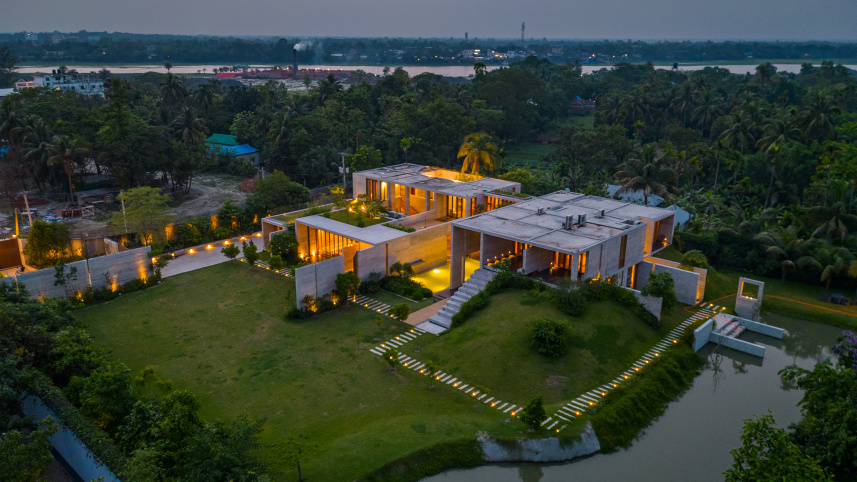
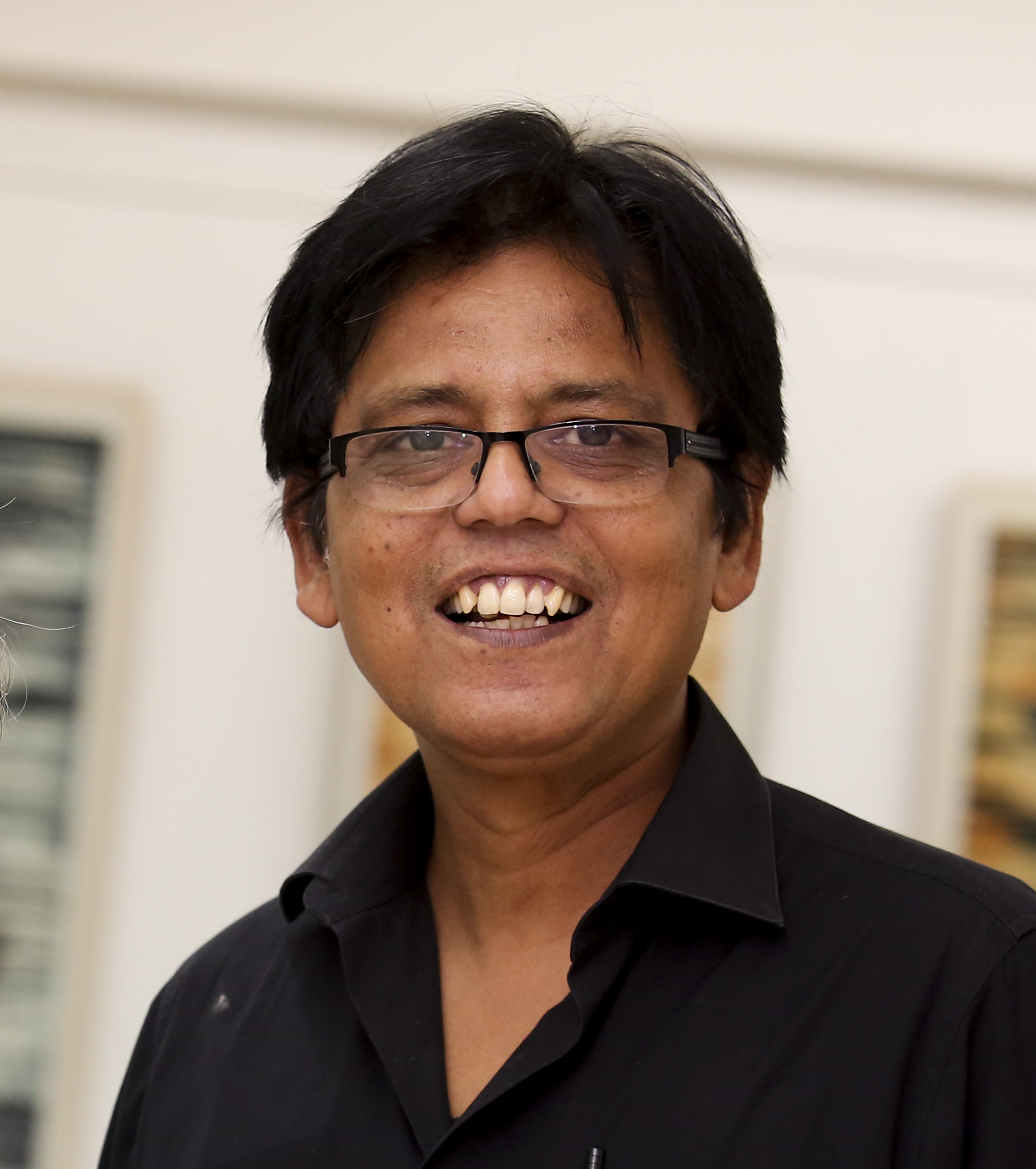
The Daily Star (TDS): Could you describe the concept behind Chaabi and the primary idea that shaped the project?
Enamul Karim Nirjhar (EKN): Chaabi began not as a conventional brief but as an invitation to rethink what a house can teach. We wanted a home that encourages curiosity, one that celebrates the small moments between routines. Instead of focusing narrowly on function, the design weaves provocation into daily life, offering spaces that surprise and ask residents to consider how they live. The project is as much about creating atmosphere as it is about shelter. It asks inhabitants to slow down and to notice light and shadow.

I want to move this from ‘I’ to ‘we’ and make the project a shared experiment.
TDS: What prompted you to take the project in this direction? Were there personal or cultural influences?
EKN: The clients wanted a weekend retreat, yet I saw a chance to do something broader. My background in narrative design and filmmaking suggested that spaces can be staged like scenes. That influence made me approach rooms as parts of a sequence where light, sound, and movement compose mood. I also believe architecture should be a little fictional, a place that allows joy and reflection to surface.
TDS: How did the site and its surrounding context influence the plan and form of Chaabi?
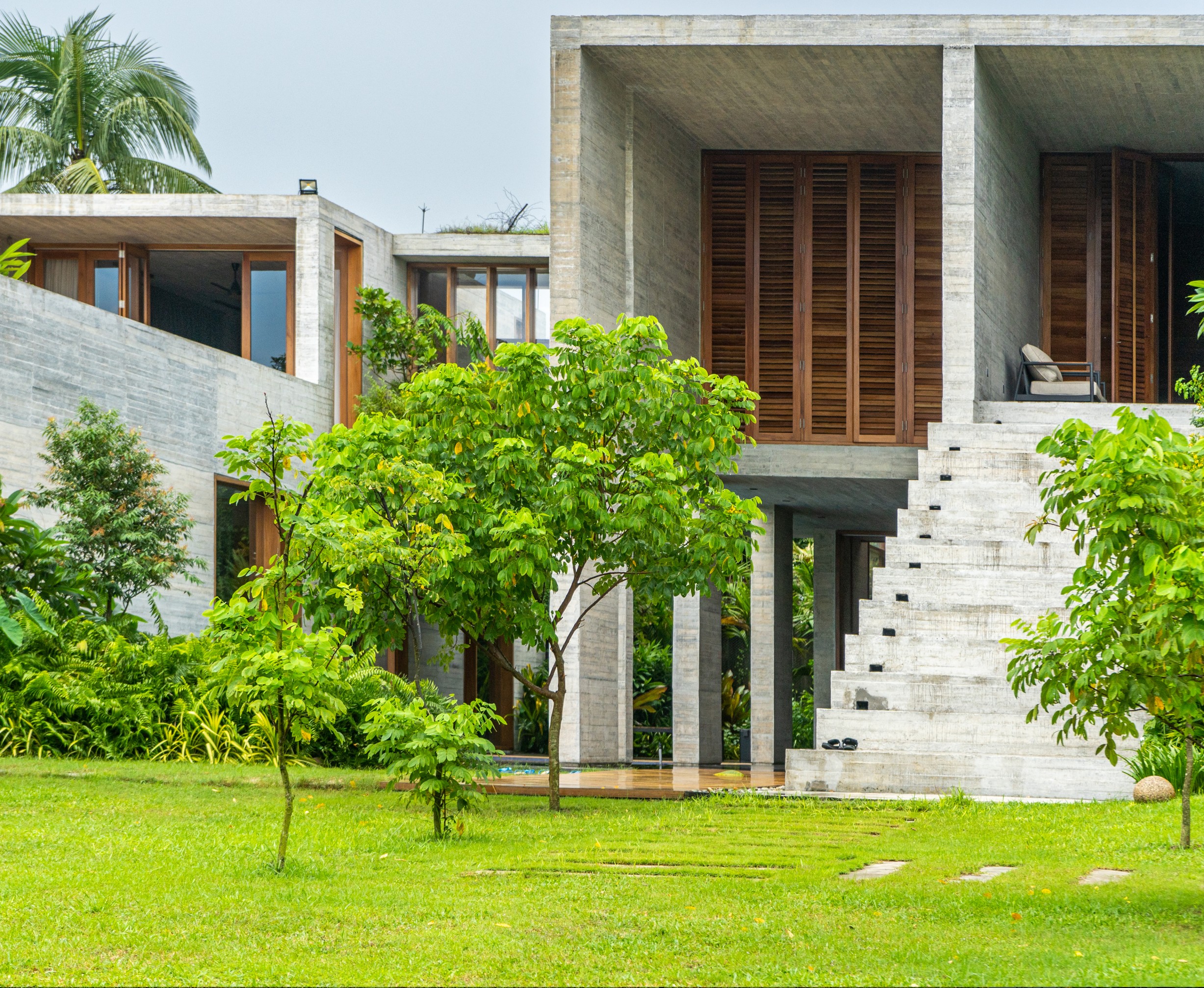
EKN: The site sits on a peri-urban edge with an intermittent river and scattered trees. Those fragmentary features offered opportunities. We did not isolate the house from its surroundings. Seasonal light, breeze, and the presence of water informed the interiors. The compound uses subtle changes in ground level to sculpt views.
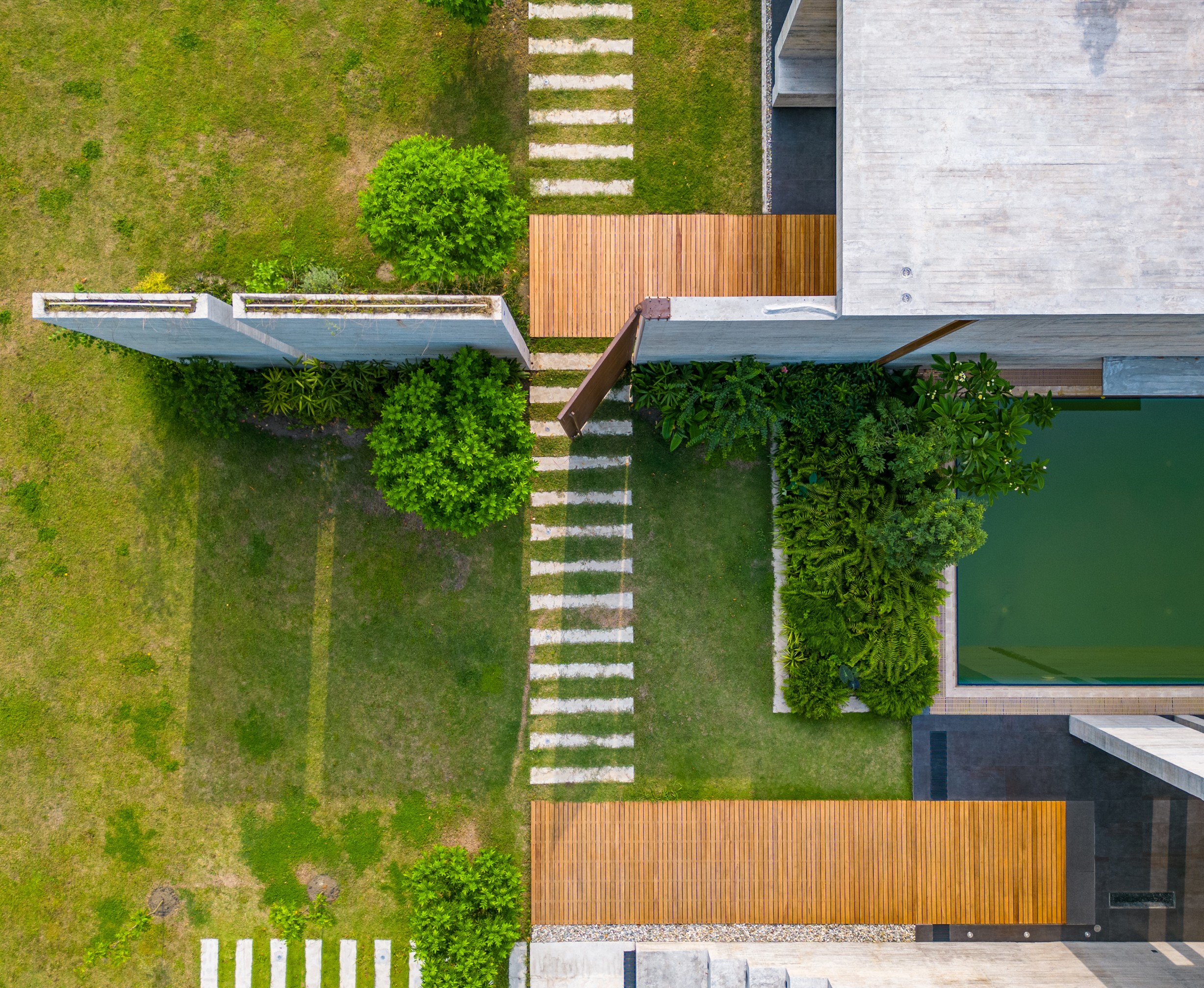
Walkways and trees form a quiet boundary so the property reads as a small enveloped landscape. Arrival was choreographed through a simple sequence of gates and measured pauses that build curiosity and create a sense of entry
TDS: Tell us about materials and your palette. How did you balance durability, cost, and appearance?
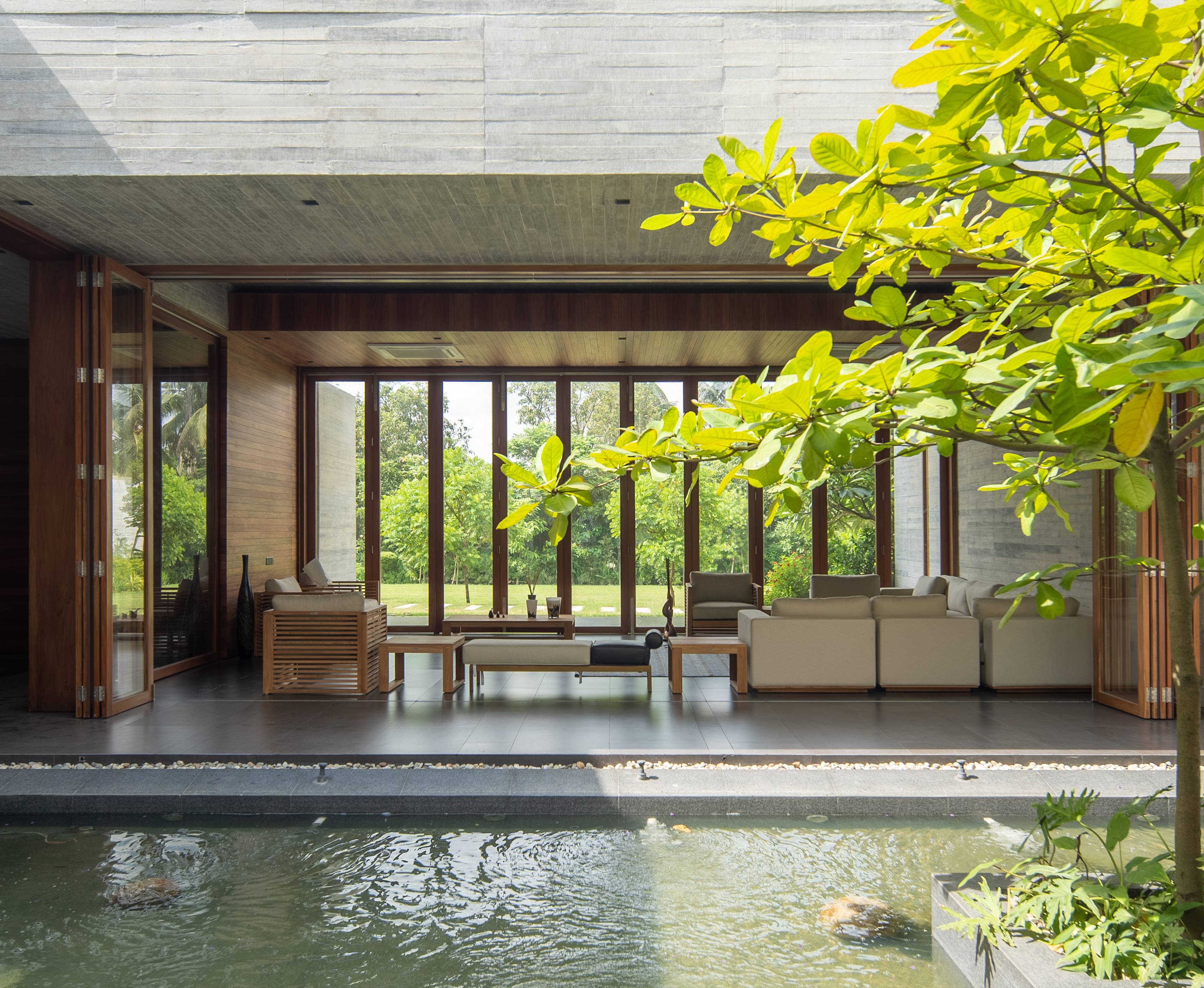
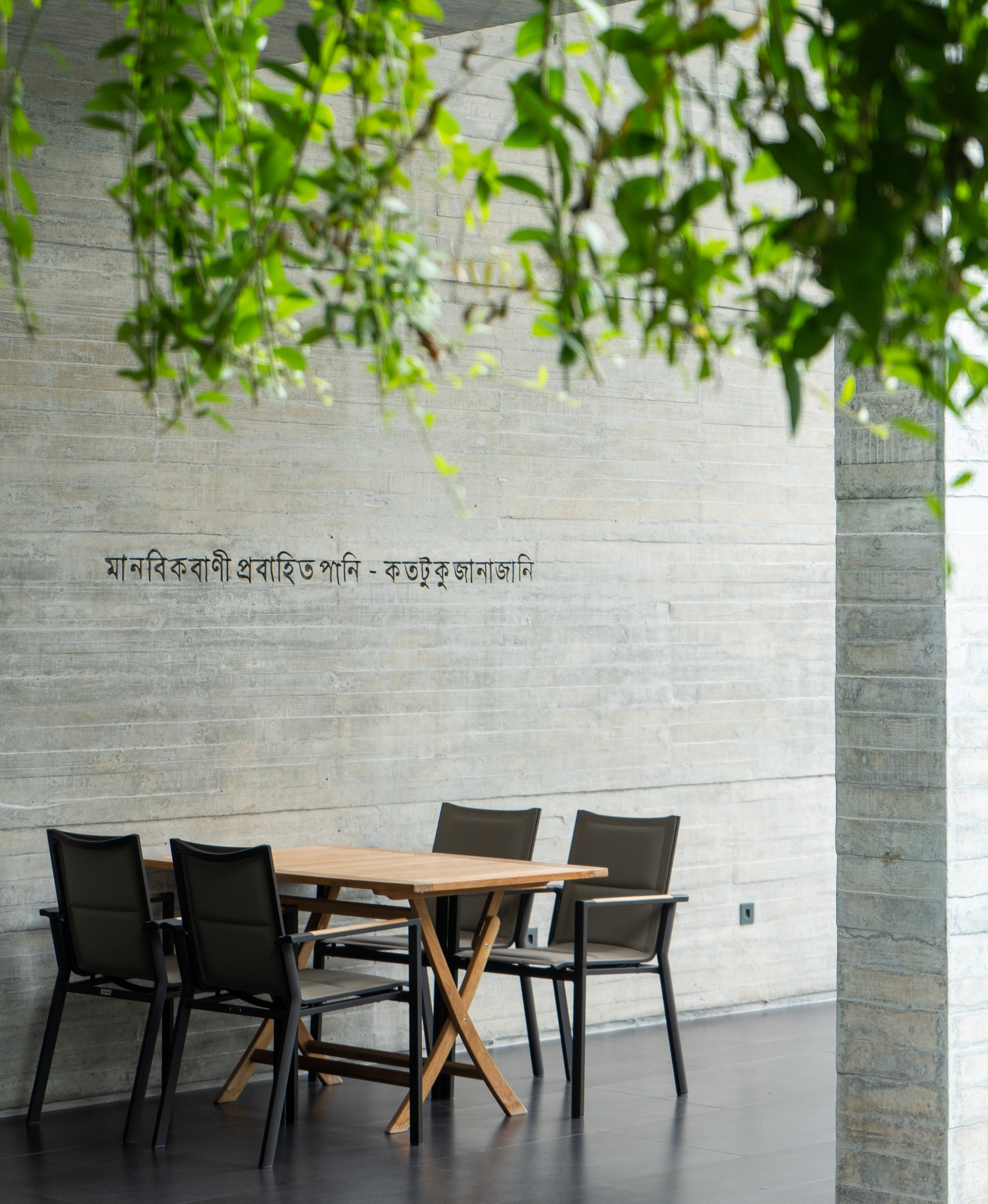
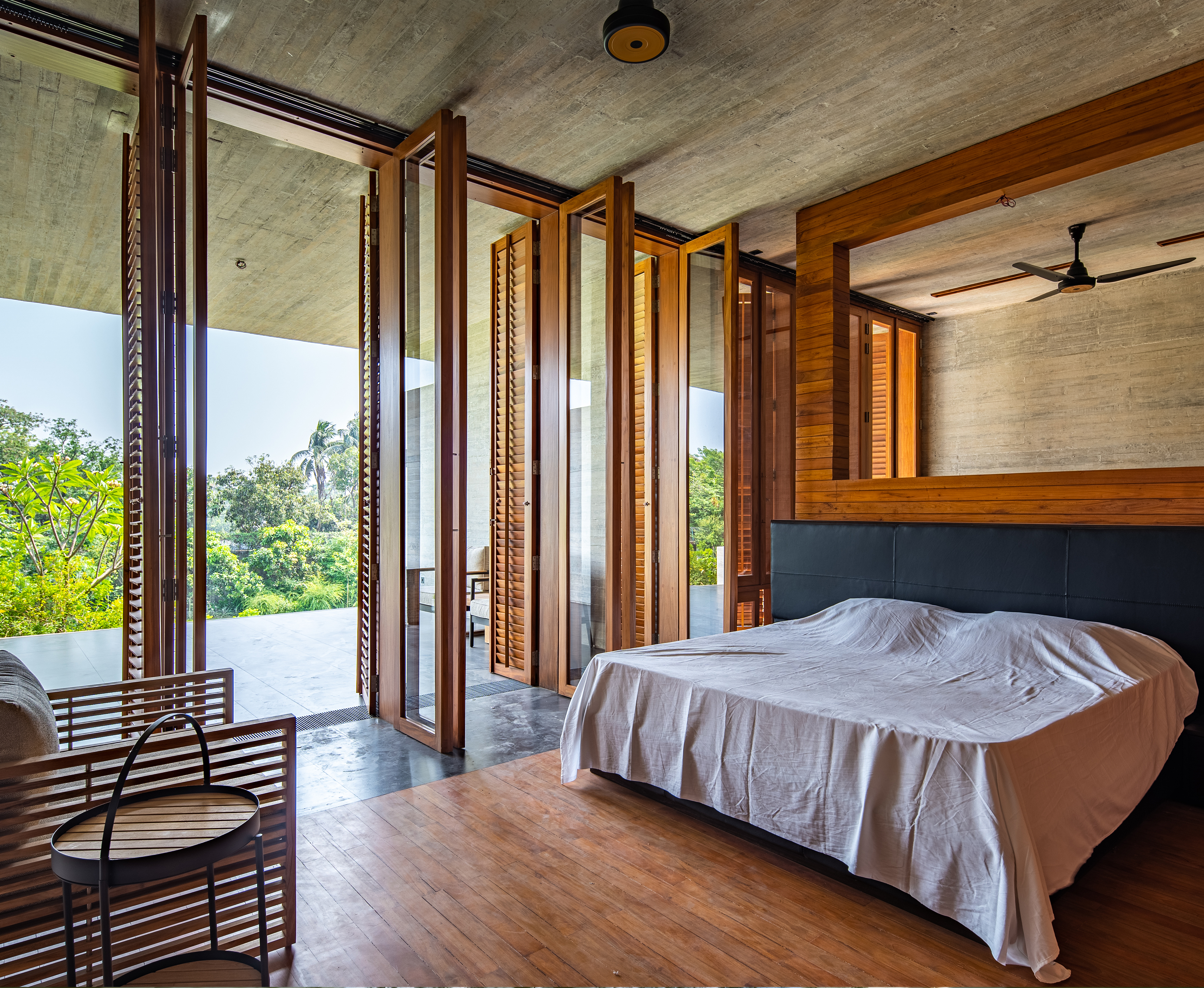
EKN: We chose a restrained palette: exposed concrete as the primary language, modular brick-sized blocks for texture, and selected timber to warm the interiors. Glass is used selectively for display pits beneath the floor that preserve family objects and create small memory showcases. We avoided heavy finishing so the structure and the way light lands on raw surfaces do much of the aesthetic work. The choices were pragmatic and aimed at durability, low waste, and tactile calm.
TDS: What were the major technical or regulatory challenges during design and construction, and how did you resolve them?
EKN: Yes. Poor soil required careful structural resolution. Long spans and generous openings tested our engineering limits. Local contractors sometimes lacked specialist skills, so we had to work closely with engineers and often do fine detailing ourselves that might otherwise have been subcontracted. To reduce on-site improvisation, we resolved many details in the design phase. The project reinforced the importance of thorough documentation and hands-on oversight.
TDS: Chaabi is often read as a narrative piece. How did your filmmaking and storytelling experience inform the project’s spatial sequencing and atmosphere?
EKN: I imagine rooms as scenes and thresholds as cuts. Movement through the house reads like a short film with reveals, pauses, and reactions. Before the clients moved in, I shot a short film on site.
The film was not a marketing piece but a ritual handover. It helped communicate how the house works in motion rather than only in still images and guided our choices about lighting and acoustics.
TDS: How involved were the clients in the process?
EKN: Very involved. I rely on long candid conversations to move beyond wishlists. I asked intimate questions about routines, habits, and sleep patterns so the design serves real lives. That dialogue built trust and allowed us to introduce conceptual devices that might otherwise have been refused. Their willingness to accept small provocations was essential to bringing the concept to life.
TDS: Looking back, what compromises would you avoid if resources were unlimited?
EKN: I would invest more in developing local skilled trades and maintaining team continuity through construction and post occupancy.
Quality depends on consistent teams and better technical training in the supply chain. I would also have expanded the house’s public-facing programs to invite neighbors in, which funding and time limited.
I treat rooms as scenes and thresholds as cuts so movement through the house feels cinematic.
TDS: Chaabi seems to touch on public life. How does the house engage the wider neighborhood and the idea of shared space?
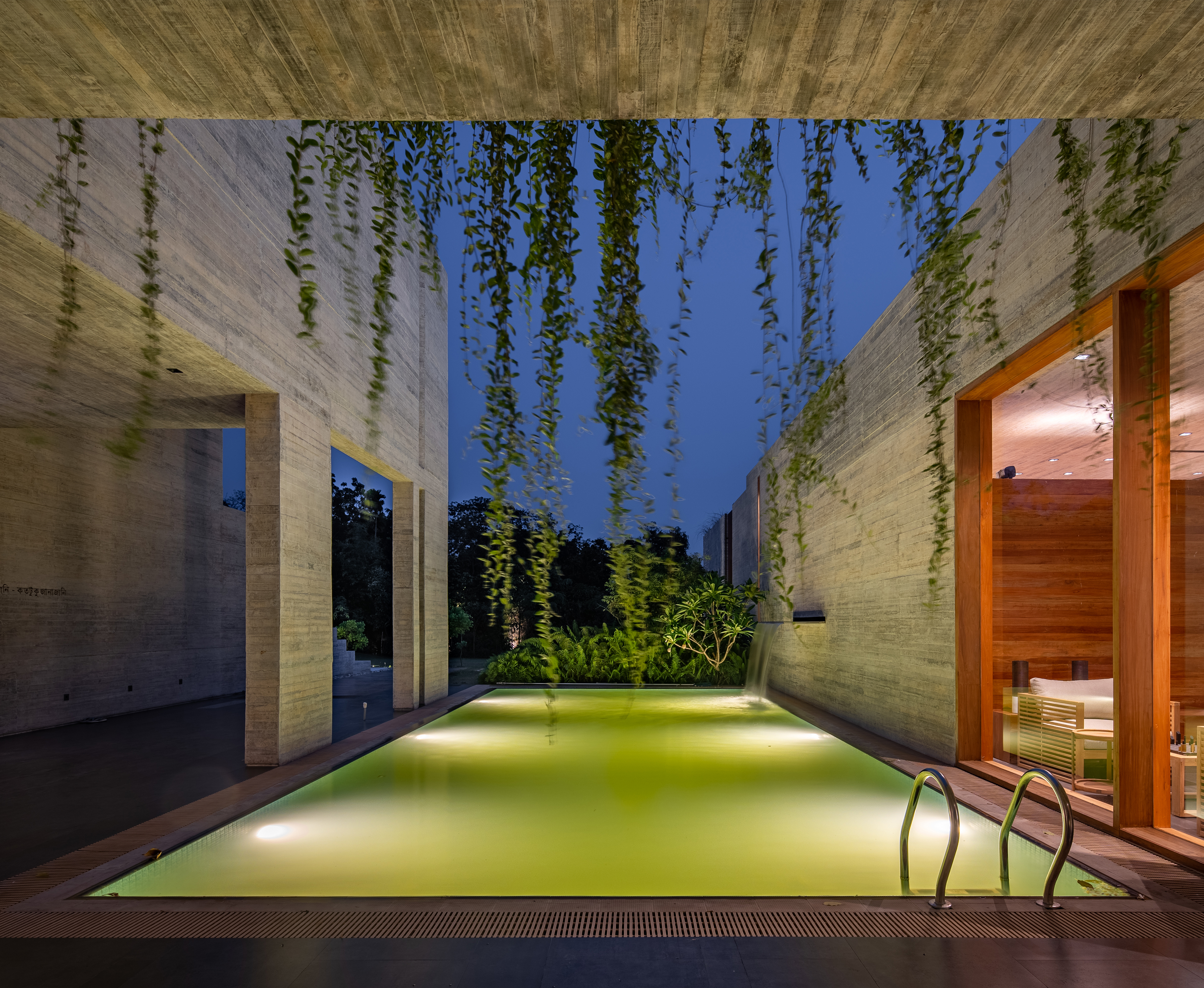
EKN: We designed a few porous edges where public and private might meet without sacrificing intimacy. A shaded courtyard and a low, informal sitting terrace were intended to invite neighbors to pass through on occasion. These modest gestures allow the house to be used in generous ways. I believe good architecture encourages conviviality. By designing thresholds that can be shared, we hope the house participates in a modest public life rather than standing apart as an isolated object.
TDS: What about sustainability and long-term maintenance?
EKN: Chaabi uses simple passive strategies: cross ventilation, shaded openings, and massing that moderates heat gain. Durable materials reduce lifecycle waste and make maintenance simpler.
We focused on repairable, honest construction rather than superficial finishes that require frequent replacement. Sustainable design is about energy and building in ways that last.
TDS: What systemic issues in local practice did Chaabi expose?
EKN: The project revealed weaknesses in technical training and continuity. Architects often leave a project once construction begins, which fragments knowledge. If an idea matters, it needs the skill to be executed. We confronted the need to do extra tasks, from lighting design to finer detailing, because the ecosystem lacks some specialists. That pressure taught us to be more disciplined in documentation and to invest time in skill transfer on-site.
TDS: What lessons from Chaabi would you pass on to young Bangladeshi architects who aim to make socially engaged, award-winning work?
EKN: Prioritise process over product. Be rigorous about drawings, details, and sequencing to prevent construction guesswork. Be persistent and cultivate ethical discipline. If specialists are unavailable, be prepared to take on extra work to ensure quality.
 For all latest news, follow The Daily Star's Google News channel.
 The biggest problem for good architecture in Bangladesh is the lack of consistency among young architects.
Design projects that encourage civic imagination. Small philosophical works will slowly raise public taste. Remain humble and learn from builders; collaboration is central to good architecture.
TDS: Finally, what do you hope Chaabi accomplishes for its inhabitants and for architecture in Bangladesh?
EKN: I hope it makes inhabitants more curious, more attentive to ritual and memory, and more aware that architecture can teach. A house should nudge its residents toward better living. If Chaabi helps a few families reimagine daily life and inspires other architects to take small sustained risks, then it has served its purpose. I also hope Chaabi will encourage conversations about building craft, prompt clients to value process, and nudge institutions to support long-term training so future projects can be executed with greater confidence, care, and public life meaningfully.
Interview conducted by Tagabun Taharim Titun, writer, researcher, and full-time TV series obsessive.
Comments