


At the Table of Power: Reclaiming Bangladesh through food

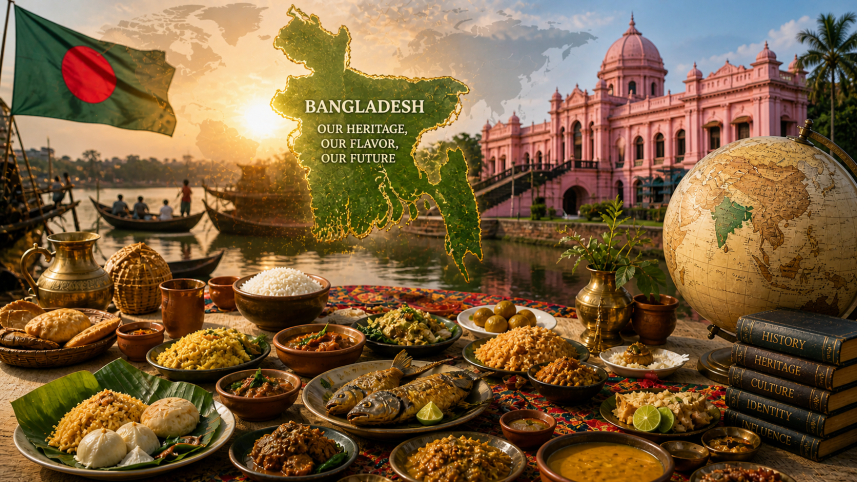
“Bangladeshi cuisine reflects our history, geography, and culture in every bite,” as renowned Bangladeshi chef Siddika Kabir once observed, and in that simple truth lies one of the most powerful and underused instruments of cultural diplomacy available to Bangladesh today. In a world where nations compete for influence through image, narrative, and identity, food has emerged as one of the most intimate and persuasive languages of power, yet Bangladesh continues to sit on an extraordinary culinary inheritance without fully mobilizing it on the global stage.
The scale of that inheritance becomes even more striking when placed against the paradox of its visibility. Across the United Kingdom, the United States, Europe, Australia, and the Middle East, Bangladeshi restaurateurs have built a vast and resilient food economy, with a significant proportion of so-called “Indian” restaurants in the United Kingdom historically owned by Bangladeshis, particularly from Sylhet. Similar patterns appear in the United States and elsewhere, where Bangladeshi ownership quietly underpins large segments of the South Asian restaurant industry. Despite this, very few of these establishments present themselves explicitly as Bangladeshi, and in that quiet mislabeling lies a profound loss of cultural authorship. A cuisine travels the world while its identity remains obscure.

This erasure has consequences that extend far beyond branding. Bangladesh continues to be framed internationally through a narrow set of narratives that center on climate vulnerability, labor, and political instability, while the textures of its cultural life, generosity, creativity, and sensory richness remain largely absent from global consciousness. Food offers a way to rebalance that narrative with authenticity and immediacy. It carries memory, geography, and emotion in a form that people can experience directly, without mediation or translation.
Other countries have understood this with clarity and discipline. Thailand invested deliberately in the global expansion of its cuisine through coordinated state support, training programs, and certification systems that signaled authenticity while enabling scale. Japan integrated food into a broader cultural strategy that linked cuisine with design, media, and national branding, turning everyday dishes into global symbols of refinement and precision. South Korea aligned its culinary identity with its cultural exports, allowing food to travel alongside music, television, and film, thereby reinforcing a coherent, modern national image. In each of these cases, food became a vehicle through which a country could tell a more compelling story about itself, while generating tangible economic returns through tourism, exports, and enterprise.
Bangladesh carries within it a story that is equally powerful, though far less articulated. The country has endured repeated cycles of scarcity, including devastating famines that shaped both memory and survival, yet it has emerged with a food culture defined by abundance, hospitality, and care. Meals are shared expansively, guests are fed beyond expectation, and generosity at the table remains a deeply embedded social ethic. This is a form of cultural capital that cannot be manufactured or easily replicated. It speaks to a worldview in which nourishment is relational, where food is an act of connection rather than consumption.
At the same time, the diversity within Bangladeshi cuisine offers a narrative of complexity and depth that has yet to be fully communicated. Regional variations across Chattogram, Sylhet, Dhaka, Rajshahi, and the coastal and riverine belts reflect differences in ecology, trade, and history, producing a culinary landscape that is both highly localized and richly layered. From river fish preparations to slow-cooked meats, from pitha traditions to vibrant street food cultures, Bangladesh holds within it a living archive of techniques, ingredients, and stories that can anchor a compelling global identity.
There are already moments that hint at what becomes possible when this identity is presented with intention. The exhibition at the Whitechapel Gallery in East London, supported by the Mubarak Ali Foundation, brought together visual art and Bangladeshi cuisine, allowing audiences to experience culture through multiple senses at once. The collaboration between artist Laisul Hoque and chef Sameera Wadood, working alongside women from Oitij jo Kitchen, created a space in which food functioned as both memory and narrative, extending the artwork's meaning into something embodied and shared. The recognition that followed, including Hoque’s receipt of the Bow Arts East London Prize, signaled the resonance that emerges when Bangladeshi culture is presented with confidence and coherence.
The question that follows concerns structure and intention. For Bangladesh to translate its culinary strength into cultural influence, a coordinated approach is required across government, private sector, and diaspora networks. Institutional support can play a catalytic role by establishing a dedicated body to promote Bangladeshi cuisine globally, supporting chef training, and developing certification systems that communicate authenticity without constraining innovation. Financial incentives can encourage diaspora restaurateurs to reclaim Bangladeshi identity in their branding, while international campaigns can highlight the diversity of regional cuisines and create a more nuanced understanding of what Bangladeshi food represents.
The diaspora itself holds significant power in shaping this shift. Across continents, Bangladeshi chefs and restaurateurs have already built the infrastructure through which cuisine travels. What remains is aligning identity with that infrastructure. Networks of culinary ambassadors, collaborative festivals, and mentorship structures can strengthen authenticity while enabling scale. At the same time, investment in documentation and storytelling becomes essential. Culinary archives, films, and digital platforms can preserve techniques, elevate narratives, and make Bangladeshi cuisine accessible to new audiences who increasingly engage with food through media and technology.
The economic implications of such a shift are substantial. Countries that have invested in culinary diplomacy have seen measurable increases in tourism, export demand, and employment across the food value chain. Bangladesh, with its agricultural diversity and strong diaspora presence, is well-positioned to benefit from similar dynamics. Yet the deeper impact lies in perception. Food can reshape how a nation is felt, which in turn influences how it is understood, engaged with, and invested in.
This becomes particularly important in the context of climate discourse. Bangladesh’s vulnerability to climate change is real and significant, yet it represents only one dimension of a far more complex national story. The same deltaic landscape that brings risk also creates extraordinary agricultural fertility, shaping a cuisine that reflects both adaptation and abundance. By telling the story of its food, Bangladesh can present a more complete picture of itself, one that acknowledges challenge while foregrounding ingenuity, resilience, and beauty.
At its core, food is a declaration of presence. The famous phrase “Mache bhaate Bangali” (“Fish and rice make a Bangali”) captures something essential about identity, grounding it in everyday practice while connecting it to geography and history. Each dish carries the imprint of rivers, soil, and community, transforming ingredients into expressions of belonging. When that story is shared with the world, it does more than introduce a cuisine. It invites connection, curiosity, and respect.
Bangladesh stands at a moment where it can choose to claim this narrative with clarity and ambition. Through coordinated effort, strategic investment, and cultural confidence, food can move from the margins of representation to the center of how the nation is seen and experienced globally. The table, in this sense, becomes a site of diplomacy, where perception shifts quietly yet powerfully through taste, memory, and encounter.
We will be continuing this conversation at the food panel at Bangla House during South by Southwest London from June 2nd to 4th, and I would invite you to join us there as we explore how Bangladesh can take its place on the global stage through the language of food.
Amreen Bashir is a passionate advocate for cultural diplomacy and an ardent lover of Bangladeshi food. Her work leading the Mubarak Ali Foundation explores the intersections of education, technology, art, and cultural heritage, driven by a belief in the transformative power of storytelling. When not championing Bangladeshi cuisine, Amreen can be found savoring bhuna khichuri or experimenting with traditional recipes in her kitchen.
 For all latest news, follow The Daily Star's Google News channel.
Comments