


Securing the nation’s growth with clean fuel Omera LPG
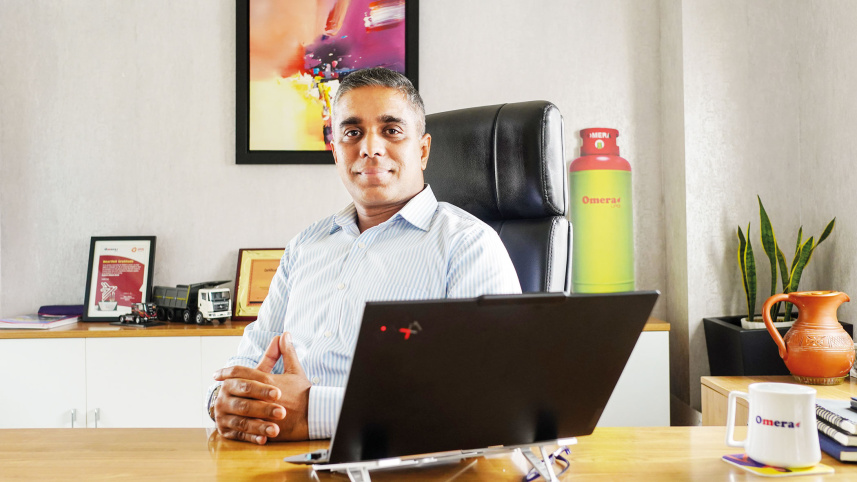
Matheendra De Zoysa, Chief Operating Officer, Omera LPG

Safety is treated as a way of life with non-negotiable standards, particularly because the highly inflammable nature of LPG means even minor deviations can result in major disasters. To ensure the highest safety standards are maintained across the entire operation the company has deployed specialised safety teams at every plant to provide 24/7 oversight.
The LPG industry serves as a cornerstone of Bangladesh’s energy security, supporting millions of households and a rapidly growing industrial sector. Omera LPG COO Matheendra De Zoysa discusses navigating current market challenges and future strategic plans.
The Daily Star (TDS): How does Omera perceive the current competitive landscape in Bangladesh?
Matheendra De Zoysa (MDZ): Bangladesh’s LPG industry is in crisis due to global supply shortages and the ongoing geo-political tension, which has caused major disruptions to global shipping routes. Recently, the global market experienced an unexpected price hike of $240 per metric ton, resulting in a nearly 40% increase in local LPG prices. This volatility forces consumers to look for alternatives considering the switching cost, yet LPG will remain the most convenient and fastest mode of cooking for households. Additionally, the nation faces a severe supply gap: Bangladesh consumes 140,000–150,000 MTs monthly, but current supply averages only 90,000–110,000 MT.
TDS: Could you share Omera’s current percentage split between household, commercial, and industrial users?
MDZ: Omera’s current consumption split is heavily weighted toward the B2C (business-to-consumer) segment, which accounts for over 80% of sales. While the industrial and commercial sectors represent approximately 12% and 8%, respectively. Additionally, the B2B (business-to-business) segment remains promising due to ongoing natural gas supply constraints and growing expansion in the industrial sector.
TDS: What are the operational challenges in expanding the Auto-gas station network across the country?
MDZ: The rising price of fuel has led to a massive increase in the cost of logistics. As 16-ton tankers take 2–3 days for 300–400km trips to scattered AGS. Additionally, fuel accessibility has become a major hurdle. Beyond logistics, the industry faces a serious challenge regarding the unauthorized filling of consumer cylinders at auto gas stations.
TDS: What is your vision for Omera’s role in Bangladesh’s energy mix by 2030?
MDZ: Omera’s vision is to establish itself as the pre-eminent energy corporation in Bangladesh through aggressive infrastructure development and strategic long-term investments. Omera recently acquired the French owned Totalgaz operation under its wings further strengthening the network and resource operations. The company recently launched the unique 5.5 kg “Omera Shohoj” an affordable, portable option for low-income users and students. Omera also provides rare 425 kg cylinders for bulk industrial use. Despite current market volatility and high costs, Omera remains confident in LPG’s future and its commitment to ensuring a reliable national energy supply.
Interview conducted by Adrin Sarwar
 For all latest news, follow The Daily Star's Google News channel.
Comments