


Weathering the Seasons
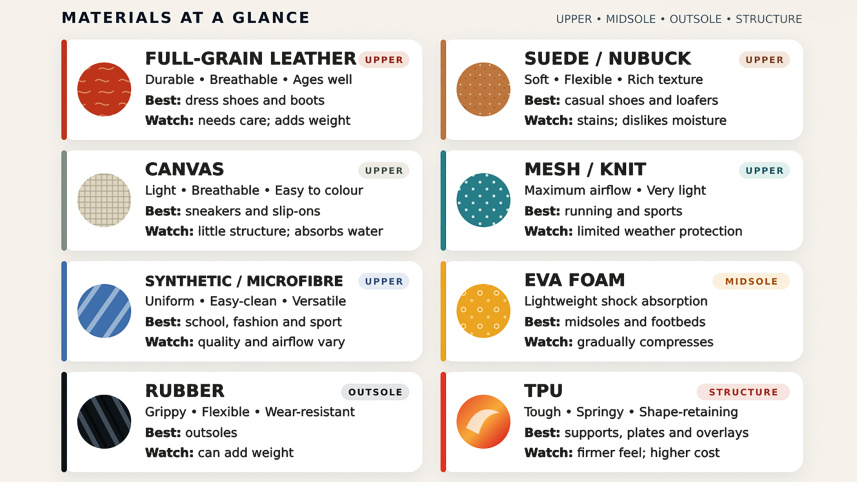
From breathable mesh to water-resistant synthetics and carefully designed outsoles, the materials inside a shoe play a major role in determining how comfortably it handles Bangladesh’s heat, humidity and rain. A shoe that feels comfortable on a dry February morning may become rather less agreeable during a humid April afternoon. Add a sudden monsoon downpour, waterlogged streets and slippery tiles, and the demands placed on footwear change again. For manufacturers, designing shoes for Bangladesh therefore involves more than changing colours and silhouettes with the seasons. The materials used in the upper, lining, footbed and sole can influence how much heat and moisture remain trapped around the foot, how the shoe reacts to water and how much traction it provides underfoot.
Bangladesh’s climate makes those decisions particularly relevant. Although the traditional calendar recognises six seasons, climatically the year can broadly be divided into a hot pre-monsoon period, a long rainy monsoon and a cooler, drier winter. During the monsoon, relative humidity exceeds 80 percent across much of the country.

When the challenge is heat
In hot weather, one of the biggest considerations is what happens inside the shoe itself.
The foot produces heat and perspiration, while the shoe creates a small enclosed environment around it.
Research into footwear comfort has found that shoes with lower air permeability can develop higher internal temperature and humidity. Studies comparing different upper constructions have similarly found highly permeable mesh structures better able to exchange heat and moisture than less porous alternatives.
This explains the widespread use of mesh, knitted textiles and other lightweight fabrics in running shoes and casual footwear. Rather than simply making a shoe lighter, these materials can allow greater movement of air and water vapour.
The construction matters as much as the name of the material, however. A thick multilayer textile may behave very differently from an open mesh, while linings and insoles can also affect how moisture moves inside the shoe.
Local products increasingly reflect this thinking. Bata, for example, sells sports and casual shoes in Bangladesh using breathable mesh uppers. One of its Globe sneakers combines mesh with a water-repellent treatment — illustrating how manufacturers can try to balance ventilation with some protection from unpredictable rain.
Designing for the downpour
The equation changes once the monsoon arrives.
For everyday footwear, resistance to water, ease of drying and durability on wet surfaces become more important. This is one reason materials such as PVC, PU and other synthetics are common in rain-oriented sandals and casual footwear.
Apex, for instance, currently markets PVC sandals specifically as waterproof and designed for the monsoon. Step uses combinations including PU or PVC uppers and EVA footbeds and soles across several models that it describes as capable of handling rain and wet surfaces.
But a water-resistant material does not automatically make a water-resistant shoe.
Water can penetrate through stitching, seams, joins between the upper and sole or components capable of wicking moisture towards the interior. International footwear-testing organisation SATRA therefore evaluates completed shoes by repeatedly flexing them in water, testing the construction as a whole rather than simply examining a piece of upper material.
This distinction matters for consumers as well. “Water-resistant” and “waterproof” describe different levels of protection, while the performance of a shoe ultimately depends on how its materials have been put together.
What happens underneath
Rain changes what is required from the bottom of a shoe. EVA is widely used in footwear because it is lightweight and provides cushioning, making it common in footbeds and midsoles. TPR, rubber, PVC and other compounds may appear in outsoles depending on the type of footwear and the characteristics manufacturers are trying to achieve. Research into footwear friction has shown that outsole geometry, tread depth, surface material and the presence of water or other contaminants can all alter traction. This is why manufacturers designing for rainy conditions must consider the sole as a complete system.
One shoe, many compromises
There is no perfect seasonal material. A highly open upper may ventilate well but offer little protection from rain. Closing a shoe against water can make managing heat and perspiration difficult. Bangladesh’s relatively mild winter makes the contrast even more interesting. Unlike markets where snow and freezing temperatures make insulation a major design requirement, local footwear development is shaped much more heavily by heat, humidity and prolonged rain.
 For all latest news, follow The Daily Star's Google News channel.
 For footwear manufacturers, materials determine how it breathes, bends, absorbs impact, responds to water and meets the ground. In a climate where a scorching afternoon can be followed by a flooded commute home, designing for the season begins from the sole up.
Comments