


Only political will can break cycle of violence

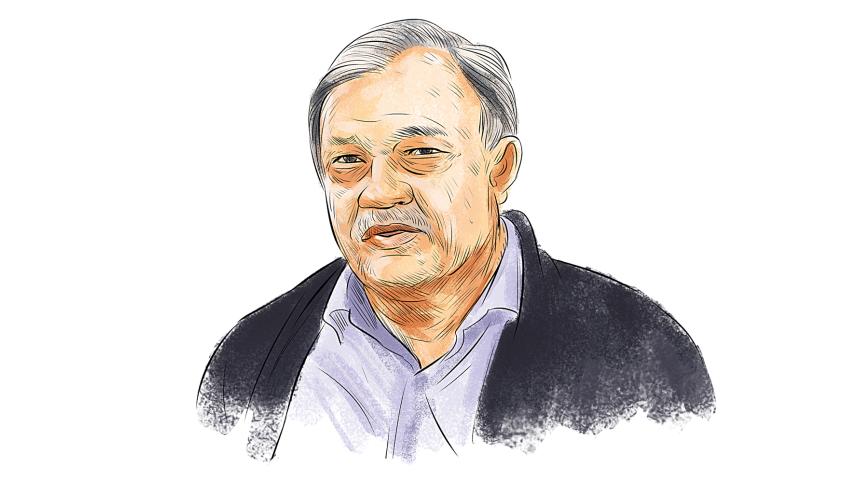
Years of political hostility and the misuse of state agencies have kept political violence alive in Bangladesh, and only a newly elected government with the goodwill to act can break this cycle, said human rights activist Nur Khan Liton.
In an interview with The Daily Star, he said political hostility has become entrenched through long-standing practices such as false cases, harassment and intimidation.

Such practices have persisted across administrations and shaped citizens' relationship with politics, deepening mistrust between people and the state, said Liton, a member of the Commission of Inquiry on Enforced Disappearance.
According to the Human Rights Support Society (HRSS), political violence between September 2024 and September 2025 left at least 160 people dead and over 8,000 others injured in 1,047 incidents.
Intra-party clashes accounted for the highest number of fatalities, with 85 deaths in BNP infighting alone.
Another 34 people were killed in BNP-Awami League confrontations, and two in clashes involving the BNP and Jamaat-e-Islami.
Liton said citizens expected improvement after the August 5 political changeover, but the continuation of harassment, intimidation, and politically motivated cases under the interim administration showed "how deeply rooted the problems are".
He said many believed political violence and the misuse of legal mechanisms to corner opponents would decline after the shift, but that expectation did not materialise.
The rights activist said political violence cannot be viewed merely as clashes between rival groups; it is tied to deep-rooted hostility between parties and institutional habits that have built up over years. Tensions and distrust have grown to a point where political competition has become adversarial rather than constructive.
"To stop this violence and bring back a fresh breeze into politics, all political parties must work together to resolve the distances and conflicts among themselves," he said.
Unless parties take responsibility to reduce hostility, he warned, political violence will continue regardless of who holds power.
This requires clear instructions that violence, harassment, and intimidation will not be tolerated, and that cases will not be used as instruments of political pressure.
He said the responsibility to take the first steps lies especially with the next elected government, which will have the authority and strength to initiate changes that an interim government cannot. This must begin with ending harassment through false or fabricated cases.
"Opponents must not be subdued through fabricated charges," he said, adding that such cases also drag in ordinary citizens, draining their resources, time, and dignity.
The rights activist said institutions such as the National Human Rights Commission and any police oversight bodies must be able to operate independently. For meaningful reform, these bodies need an environment free from fear and political pressure.
Independence, he stressed, is not optional but essential.
Reforms, Liton added, cannot be one-off. "Reform activities should be kept timely and ongoing," he said, noting that years of entrenched practices cannot be undone through short-term measures. A continuous reform process is needed to rebuild public trust.
Looking ahead, Liton said democratic stability depends on ending political violence.
Without strong political will, he warned that the country risks falling into yet another cycle of fear, hostility, and suppression.
"Only then can Bangladesh move beyond a politics sustained by fear and hostility. Whoever comes to power must take responsibility and show the will to change," Liton told this correspondent.
 For all latest news, follow The Daily Star's Google News channel.
Comments