


July pledges still unrealised

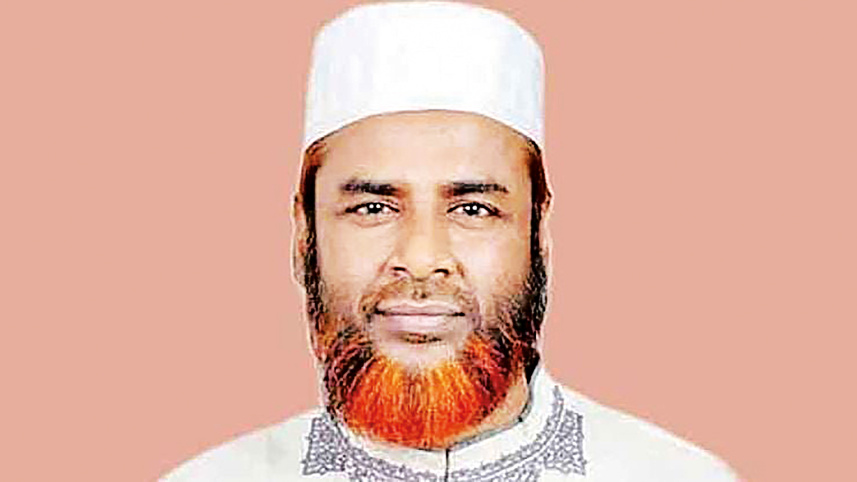
Two years after the July uprising, its core aspirations remain unfulfilled as the government has ignored the reform agenda endorsed by the people through the referendum and the July charter, Jamaat-e-Islami Secretary General Mia Golam Porwar said yesterday.
In an exclusive interview with The Daily Star at the party’s central office in Moghbazar, Porwar said the government was pursuing constitutional amendments instead of fundamental reforms, a course he claimed was pushing the country back towards authoritarianism.

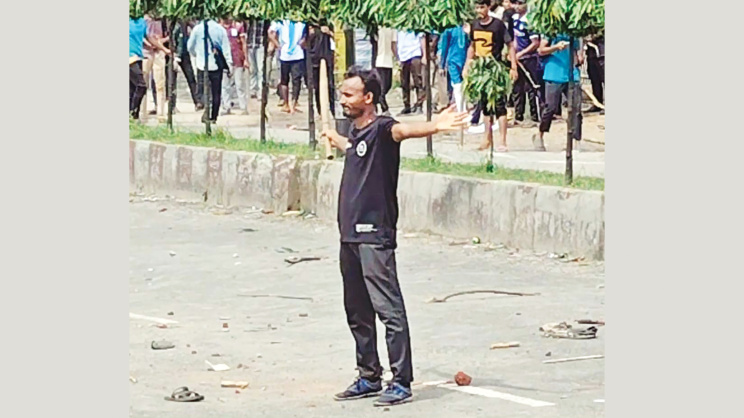
He said the greatest achievement of the July uprising was the emergence of national unity against fascism, as people from all walks of life came together against years of authoritarian rule, repression, corruption and partisan control of state institutions.
However, the uprising’s central objective -- fundamental reforms to the state and the constitution -- remained unrealised even after two years, he said.
Porwar said the July charter was drafted on the basis of consensus reached among political parties following lengthy deliberations by the National Consensus Commission. The public later endorsed those reform proposals through a referendum, he added.
“But after assuming office, the BNP-led government failed to implement that mandate,” he alleged.
“A government was formed on the basis of the national election, but the verdict of the referendum held on the same day was rejected. As a result, the people’s expectations have remained unmet,” he said.
Porwar accused the government of opting for constitutional amendments instead of comprehensive reforms, arguing that the two were fundamentally different.
“An amendment means minor changes, whereas reform means bringing structural changes to the constitution’s philosophy and the balance of power. The goal of the July uprising was to transform the state’s structure, but the government is not moving in that direction,” he said.
He also accused the government of drifting towards authoritarianism, claiming that its retreat from the commitments outlined in the July Charter reflected a return to fascist tendencies.
“The prime minister himself took part in the referendum. Voting ‘yes’ meant endorsing all 84 reform proposals. Rejecting those proposals now amounts to rejecting the mandate given by the people,” he said.
Explaining why Jamaat refused to join the parliamentary special committee on constitutional amendments, Porwar said the party opposed the process on principle and believed the country needed genuine reform rather than piecemeal amendments.
“We do not want another authoritarian regime to emerge from this state structure in the future. If the government initiates genuine reforms, opposition parties may consider taking part,” he said.
He also hinted that the party could take the issue to the people if no resolution was reached in parliament.
“If parliament fails to resolve this issue, we will have no option but to turn to the people,” he said.
Recalling his experience during the uprising, Porwar said he was arrested on July 19, a day after publicly expressing support for the student movement, and spent the most turbulent days of the uprising behind bars.
“Even from prison, we received updates every day. We realised that something major was about to happen. When we learned on August 5 that Sheikh Hasina had left the country, it felt like the end of an authoritarian chapter,” he said.
Porwar said while he had believed the government would eventually fall, he had not expected it to happen so quickly and dramatically.
“This was not a movement led by a single party or individual. Students, workers, teachers, businesspeople and professionals -- people from all sections of society took part. It became a universal movement,” he said.
Asked who had benefited most from the uprising, Porwar said ordinary people had gained little and those currently in power were the main beneficiaries.
 For all latest news, follow The Daily Star's Google News channel.
 He accused the government of trying to expand partisan influence within state institutions instead of delivering on the promises made to the public.
“The pledges of July remain unfulfilled. We are still demanding their implementation and continuing our struggle,” he said.
Responding to a question about the political future of the Awami League, Porwar said the suspension of the party’s political activities was part of a legal process and the people would ultimately decide whether it should be allowed to return to politics.
“People witnessed the brutality and repression during the July uprising. Whether the Awami League can return to politics despite that is something the people will decide,” he said.
Read full interview on our website
Comments