


Uprising expectations cannot be met overnight

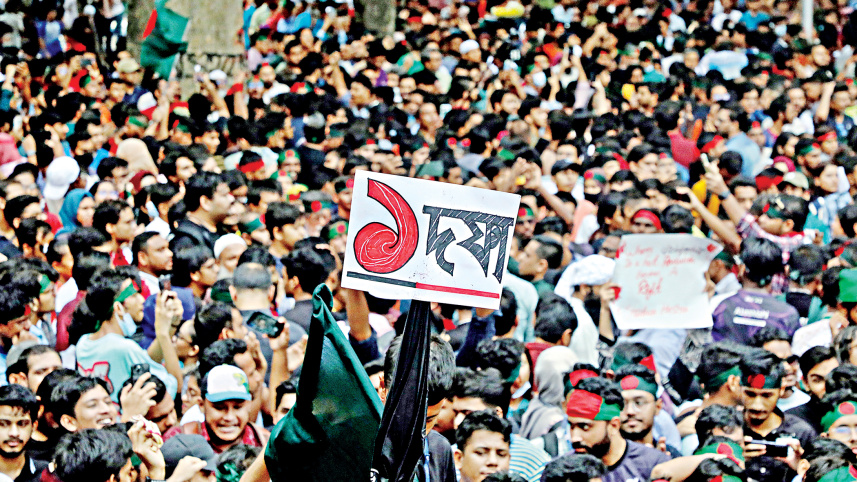
Though the July uprising restored democracy and created conditions to protect people's rights, its broader goals and public expectations cannot be fulfilled overnight, BNP Secretary General and LGRD Minister Mirza Fakhrul Islam Alamgir said.
"The BNP-led government has been working to meet people's expectations since taking office five months ago. But a country cannot change overnight. Change takes time and patience," Fakhrul told The Daily Star in a recent interview.

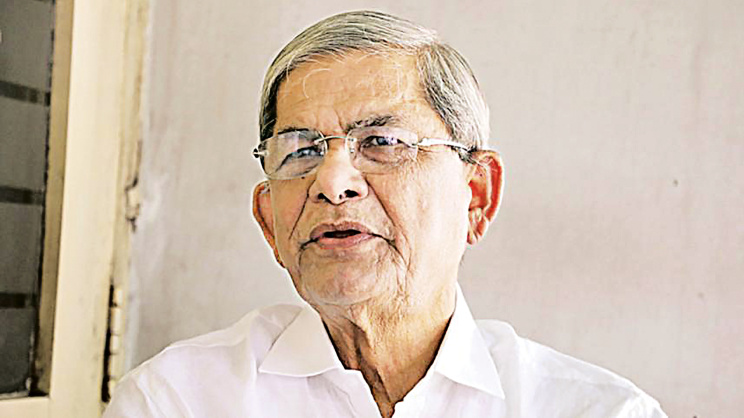
If she [Hasina] returns, she will be arrested immediately. She has already been sentenced to death, and the sentence could be carried out. I don’t think she is brave enough to come back. Mirza Fakhrul Islam Alamgir
He said the government was trying to fulfil the expectations created by the uprising by rebuilding state institutions, stabilising the economy and implementing its election pledges.
Fakhrul also dismissed ousted prime minister Sheikh Hasina's announcement that she would return to Bangladesh by December as a "political stunt".
"If she returns, she will be arrested immediately. She has already been sentenced to death, and the sentence could be carried out. I don't think she is brave enough to come back," he said.
Hasina fled the country on August 5, 2024, and has since been staying in India.
Fakhrul said her presence in India remained an obstacle to improving bilateral ties and that her political activities from there had created an additional problem.
He also said the Awami League had undermined its own political foundations through authoritarian rule, repression and violence at the grassroots.
The party would not be able to return to national politics unless it completely changed, he said.
Claiming Hasina has a "habit of fleeing", Fakhrul alleged that after the assassination of then president Ziaur Rahman, she tried to leave the country through the Cumilla border into Tripura.
"She should have returned to Dhaka and faced the situation. She was a major political leader at the time and should have come to see what was happening," he said.
"Why was she running away? This habit of fleeing has been with her for a long time."
Fakhrul said the BNP, student leaders, Jamaat-e-Islami and other political parties had worked together for 15 months to prepare the July National Charter. However, disagreements remained over some proposals, including proportional representation in the upper house of parliament, prompting the BNP to submit notes of dissent, he said.
Although the party agreed to hold a referendum in the greater national interest, Fakhrul alleged that the four questions ultimately put to voters were inconsistent with the earlier political agreement.
He said an elected government implements its election manifesto and that a special parliamentary committee, with participation from all parties, had been formed to discuss the promised constitutional amendments.
Criticising Jamaat for staying away from the committee's discussions, he accused the party of trying to turn constitutional reform into a street-based political issue.
"Jamaat should join the committee, discuss the disputed issues and help resolve them through dialogue," he said.
Fakhrul said the interim government's mandate was limited and it could not meet all public expectations, including controlling essential commodity prices. However, he credited it with forming reform commissions, setting a course for institutional change and improving Bangladesh's international image.
Fakhrul said the process of shaping Bangladesh's post-Hasina political order began around noon on August 5, 2024, when the army chief called him to say the then prime minister wanted to resign and political parties needed to decide what would follow.
 For all latest news, follow The Daily Star's Google News channel.
 After consulting acting BNP Chairman Tarique Rahman, Fakhrul said he and BNP Standing Committee member Mirza Abbas went to Army Headquarters in an army vehicle.
There, the service chiefs and political leaders discussed the country's next course. According to Fakhrul, student leaders skipped the meeting and sought separate talks. While a national government was proposed, the BNP backed an interim government.
Fakhrul said the army chief later announced that an interim government would be formed. That evening, political leaders met at Bangabhaban with the president, service chiefs, intelligence officials and student representatives.
He said he demanded the release of then BNP chairperson Khaleda Zia during the meeting, and that both the army chief and the president agreed.
Fakhrul said student leaders proposed Muhammad Yunus as chief adviser. Although no political party had nominated him, the BNP did not object.
He added that the full student leadership later joined the talks, most likely on August 7, and presented political parties with a proposed list of advisers for the interim government.
The interim government was formed on August 8.
Comments