


Invisible children of recycling
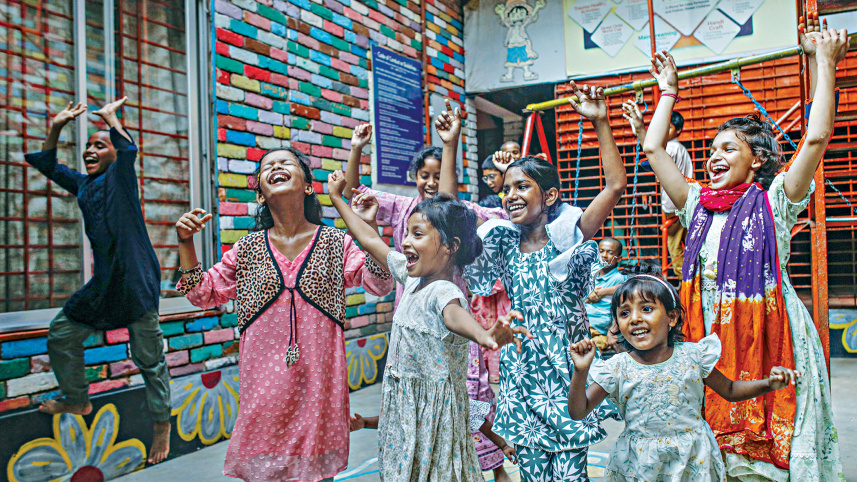
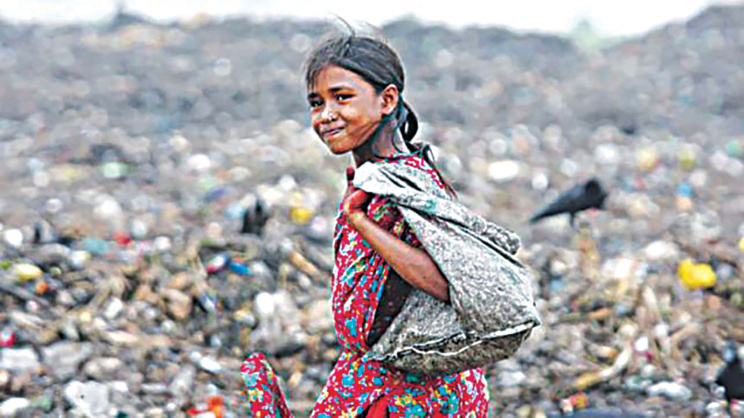
They move through Dhaka’s streets largely unnoticed, searching roadsides, drains, and piles of waste for discarded plastic bottles.
Some are children living on the streets. For them, an empty PET bottle is not simply rubbish. It can be collected, carried in a sack, and sold to a junk shop for a small amount of money.

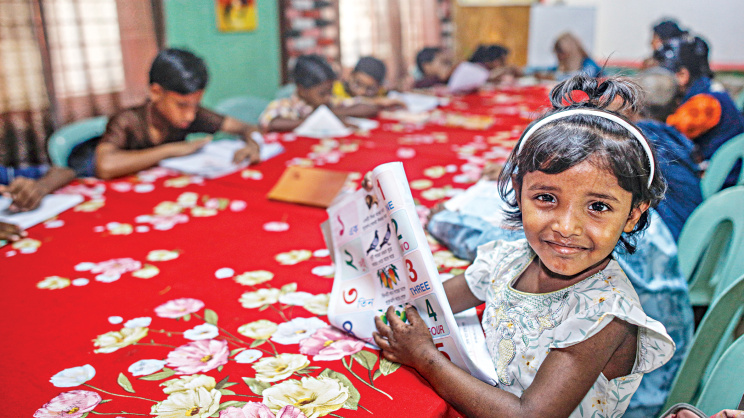
Street children of Bangladesh are playing a great role by collecting those bottles and helping in the recycling process. They are protecting the environment. But actually, there is no one to look after these children.
From there, the bottles pass through a longer recycling chain, eventually reaching factories where they are processed into flakes for export and recycling.
At the bottom of that chain are children whose labour helps clear plastic waste from the streets. Their contribution remains mostly unseen, even as beverage, plastic recycling and recycled textile businesses generate billions of dollars.
A PET bottle is a container made from polyethylene terephthalate, a strong, lightweight and shatterproof plastic.
Many of the children supported by the Local Education and Economic Development Organisation (LEEDO) collect such bottles and other recyclable materials to survive.
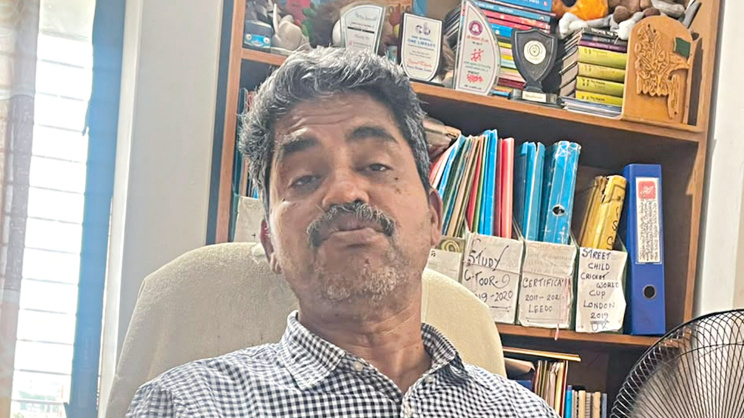
“Among the children we meet regularly, almost 85 percent are involved in this kind of garbage collection,” said Forhad Hossain, founder and executive director of LEEDO.
Sitting at his office in Bosila, Forhad said the children were protecting the environment through their work but received little recognition or protection in return.
International beverage companies sell millions of products in PET bottles across Bangladesh every day. Once emptied, many of the bottles end up on streets, in drains and beside waterways.
Forhad said the companies producing and selling them took little responsibility for collecting the waste.
“Those companies are avoiding their responsibilities. However, street children of Bangladesh are playing a great role by collecting those bottles and helping in the recycling process,” he said.
“These street children are protecting the environment. But actually, there is no one to look after these children,” he added.
He said the government, major beverage companies and other businesses operating in Bangladesh all had a responsibility to protect the children but were failing to do so.
With LEEDO’s assistance, British activist Mike Sheriff prepared a report examining the role of street children in the plastic recycling industry and the exploitation they face.
The report, titled “The Children Behind the Brands-From Aquafina to Zara: Plastic Bottle Recycling Chains and the Children They Exploit”, will be launched in London on July 14th.
For the report, Mike interviewed children who collect plastic bottles and followed the recycling chain through junk shops and factories.
It examines how children at the bottom of the chain face widespread exploitation while multinational companies conduct billion-dollar businesses in the beverage, plastic recycling and recycled textile industries.
The companies pay little attention to the children whose labour helps recycle the plastic waste generated by their products, Forhad said.
He said every section of society had a responsibility to protect children living on the streets and help them build a better future.
 For all latest news, follow The Daily Star's Google News channel.
 LEEDO’s work is centred primarily on the streets of Dhaka.
“Every day, we support around 600 children,” Forhad said.
The organisation runs around eight “School Under the Sky” programmes at designated locations stretching from the airport to Sadarghat. It also operates temporary shelters for rescued children.
Forhad said the first step was to establish trust with the children, many of whom had experienced abandonment, abuse or repeated displacement.
“Firstly, we work on building trust. Because when we bring these children under long-term support, trust building is a very big issue,” he said.
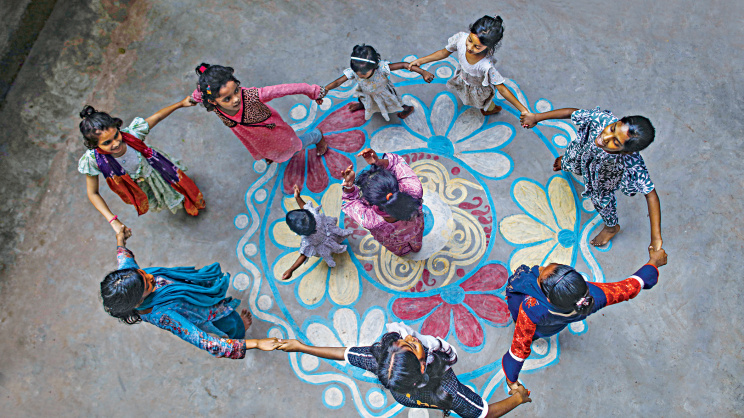
LEEDO’s frontline street workers approach children where they live and work. They talk and play with them before gradually encouraging them to attend the organisation’s open-air schools.
“Our frontline street workers communicate with the children on the streets, play with them, and through play, bring them to our schools, which we call ‘School Under the Sky’,” Forhad said.
The children usually spend three to four hours at the schools. During that time, LEEDO staff provide lessons in literacy and numeracy, values-based education and opportunities to play football and cricket.
The organisation also provides food to hungry children, tries to ensure access to safe drinking water and arranges treatment for those who are ill.
Children requiring serious medical treatment are admitted to hospitals, while LEEDO also holds health camps on the streets.
Forhad described the organisation’s approach as a “4R method” covering rescue, referral, reintegration and rebuilding lives.
“Overall, you can say we work on the 4R method in a 360-degree approach. 4R means -- Rescue, Refer, Reintegration, Rebuild the lives,” he said.
When LEEDO rescues a child, it first files a general diary with the police station concerned.
The child is then taken to one of the organisation’s two temporary shelters. One is in Kamalapur, near Mugda Police Station, and the other is in Kadamtali.
Children can stay at the shelters for up to six weeks. During that period, LEEDO staff speak to them regularly and try to trace their families.
Once a family is found, the organisation tries to reunite the child with them. But reintegration is not always possible.
“While trying to reintegrate them, we often find that many children’s parents are separated, or there is no one to take the child, or the environment there is not suitable for the child to live in.
“In those cases, we bring those children to this Peace Home and continue to support them for mainstreaming.”
Children living at the Peace Home attend formal schools. They also take computer classes, complete their homework and receive life-skills training there.
Some children with special needs attend an inclusive school run with the organisation’s support.
Over the past two decades, LEEDO has supported many children who previously lived on the streets. Some are now working in Dhaka and other parts of Bangladesh, while others are studying or running food businesses, Forhad said.
One of the organisation’s most memorable achievements came in 2019, when a group of children received an opportunity to travel to London for the Street Child Cricket World Cup.
The children, however, did not have passports.
The government rejected their passport applications because they had no recognised guardians and lived in an institution, Forhad said.
“Then, I went to the Family Court and the court appointed me as their guardian. After being appointed as the guardian, I obtained a no objection certificate from the home ministry, applied for the children’s passports, and we got the passports and travelled to the UK with the children,” he said with a smile.
His name now appears in the passports as the legal guardian. The names of the parents are included when the children can identify them. In cases where they cannot, the spaces remain blank.
“So far, I have obtained about 35 passports as the legal guardian,” Forhad said.
The children face another bureaucratic barrier once they turn 18.
Those who cannot provide their parents’ names face difficulties obtaining national identification cards because the system does not accept applications without the information, he said.
Most of the children who received passports are staying at the Peace Home and attending schools.
PEACE HOME
At LEEDO’s Peace Home in Washpur, Bosila, around 60 children were living together. All were below 18.
The youngest played inside the home as older children attended classes, completed household tasks or prepared to leave for school and other activities.
LEEDO staff member Sohel Rana said it became much harder to change a child’s behaviour and lifestyle if they were rescued after the age of 14.
Since starting its work in 2000, LEEDO has rescued over a thousand children from the streets, Sohel said.
Among the senior residents of the Peace Home is Jasmine, who has lived there since being rescued from Kamalapur at the age of seven.
She sat for the HSC exams this year and has also been taking photography courses.
After completing one course, she enrolled in an advanced course at Pathshala.
“I collect and provide all the photos LEEDO needs,” Jasmine said.
She also made a short film titled “Where the Kids Have No Name”, which won an award.
“I went to Nepal to receive the award for it,” she said.
Jasmine plays cricket and football and has travelled to London, Qatar and Chennai.
“I won the award for Best Bowler in London,” she said.
Her days remain busy with studies, photography, sports and volunteer work.
“Actually, when it comes to work here, there is all kinds of work. No one sits idle. If there is no work at the home, I have work outside. I do volunteering, then I go outside to take photos. I am engaged in various activities,” she said.
Some residents of the Peace Home are as young as two.
Eight-year-old Priya said she usually looks after Sohana, a two-year-old girl who was rescued six months ago when she was only 18 months old.
Priya described Sohana simply as her sister.
“I take care of her,” she said.
Sohel said an older girl named Sathi was primarily responsible for looking after the youngest children.
Sathi handles their clothes and helps clean the toilets. Other residents also assist whenever they can, he said.
Children are returned to their families when LEEDO can locate their parents and determine that the home environment is suitable.
Those who have no parents, no relatives willing to care for them or no safe place to return to remain at the Peace Home.
One such case was that of Sanjida Mirza, who now lives outside the home.
LEEDO found her parents 14 years after she came under the organisation’s care and tried to reunite her with them.
“We found her parents after 14 years. Then we brought her parents and handed her over to them. But they did not have the ability to keep the girl,” Forhad said.
“So, they left her with us again. Now she is working at Bangladesh Specialized Hospital. At the same time, she is also studying nursing.”
For Forhad, stories such as those of Jasmine and Sanjida show what children can achieve when they receive sustained care and opportunities.
But thousands of other children remain on the streets, collecting bottles and other discarded materials while receiving little protection from the government, businesses or society.
Comments