


They couldn't defy husbands
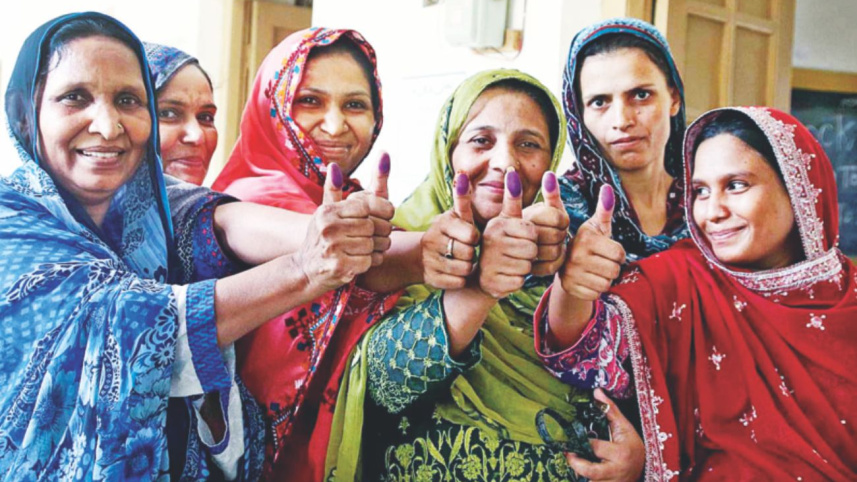
Pakistani women who had pledged to defy men in their village by voting for the first time ultimately did not exercise their democratic right in yesterday's election, citing intimidation by their husbands.
Male elders banned females from voting in Mohri Pur, some 60 kilometres (35 miles) from the central Pakistan city of Multan, around 1947 and the women have obeyed ever since.

This year many had vowed to cast a ballot following changes to Pakistan's election laws and amid shifting attitudes towards women in parts of the deeply patriarchal South Asian country.
Some 3,200 women were listed on the electoral register in Mohri Pur -- but not one voted, according to election officials and an AFP journalist at the village's sole polling station.
"We have threats from our husbands that they will divorce us if we cast our vote," 25-year-old Tanya Bibi told AFP as she walked past the polling station, without going in.
Around 8,000 men were registered to vote in the village. Large queues of them -- each clutching identity cards -- formed at the polling station, located in a school.
"We are here to cast our ballots, but our women didn't cast their votes because it is our old tradition which we have been preserving," Muhammad Shamsher told AFP.
Even Qasir Abbas, a lawyer who campaigned for the women's vote, said in the end he did not bring his wife to the polling station, explaining: "I was afraid ... the villagers might boycott my family."
Bismillah Iram, from a local NGO, said announcements were made from the village mosque warning that women should not come to the polling station.
Elders in Mohri Pur, which is located in Punjab province, banned women from voting decades ago, claiming that visiting a public polling booth would "dishonour" them.
In 2015, one woman, Fouzia Talib, became the only one in the village to vote in local elections. She was ostracised.
Hopes were raised this time after the Election Commission of Pakistan (ECP) declared that at least 10 percent of voters in each constituency must be women, otherwise its results will be voided.
Nearly 20 million new voters were registered in the rapidly growing country of some 207 million people, including 9.13 million women, the commission said.
 For all latest news, follow The Daily Star's Google News channel.
Comments