


China plans nat’l security laws for Hong Kong after unrest
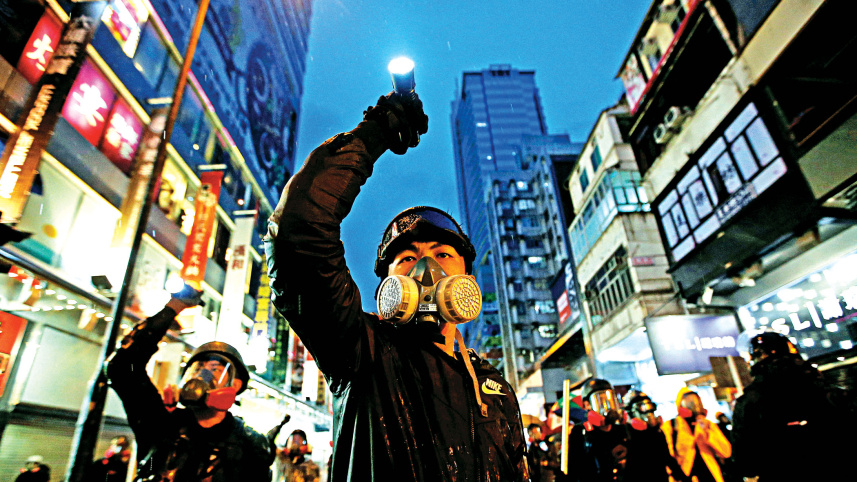
China will propose national security laws for Hong Kong in response to last year's often violent pro-democracy protests that plunged the city into its deepest turmoil since it returned to Chinese rule in 1997, three people with direct knowledge of the matter said yesterday.
The South China Morning Post newspaper, citing unnamed sources, said the laws would ban secession, foreign interference, terrorism and all seditious activities aimed at toppling the central government and any external interference in the former British colony.

The legislation, which could be introduced as a motion to China's parliament, could be a turning point for its freest and most international city, potentially triggering a revision of its special status in Washington and likely to spark more unrest.
Online posts have already emerged urging people to gather to protest yesterday night and dozens were seen shouting pro-democracy slogans in a shopping mall as riot police stood nearby.
Hong Kong people took to the streets last year, sometimes in their millions, to protest a now-withdrawn bill that would have allowed extraditions of criminal suspects to mainland China. The movement broadened to include demands for broader democracy amid perceptions that Beijing was tightening its grip over the city.
The technical details of the proposals remain unclear but an announcement will be made in Beijing later on Thursday, one senior Hong Kong government source said.
US Secretary of State Mike Pompeo said on May 6 he was delaying the report assessing whether Hong Kong was sufficiently autonomous to warrant Washington's special economic treatment that has helped it remain a world financial centre.
The delay was to account for any actions at the National People's Congress, he said.
A previous attempt by Hong Kong to introduce national security legislation, known as Article 23, in 2003 was met with mass peaceful protests and shelved.
Hong Kong has a constitutional obligation to enact Article 23 "on its own", but similar laws can be introduced by Beijing separately into an annex of the Basic Law, the city's mini-constitution.
That legal mechanism could bypass the city's legislature as the laws could be imposed by promulgation by Hong Kong's pro-Beijing government.
 For all latest news, follow The Daily Star's Google News channel.
Comments