


How world can change
Donald Trump's victory in the US presidential contest could change America's relationship with the rest of the world in some important ways. Here are few of them.
Nato faces a shake-up
Trump has been hugely critical of Nato, a cornerstone of American foreign policy for more than 60 years. He has attacked the organisation as obsolete and characterised its members as ungrateful allies who benefit from US largesse. He says America can no longer afford to protect countries in Europe - and in Asia - without adequate compensation, suggesting he would withdraw American forces unless they pay up.

New cosier ties with Russia?
As for Russia itself, Trump has said he believes he can ease tensions with President Vladimir Putin, and has praised him as a strong leader with whom he would love to have a good relationship. This could be very important in solving crises in Middle East or in Eastern Europe.
Bad news for Free trade deals
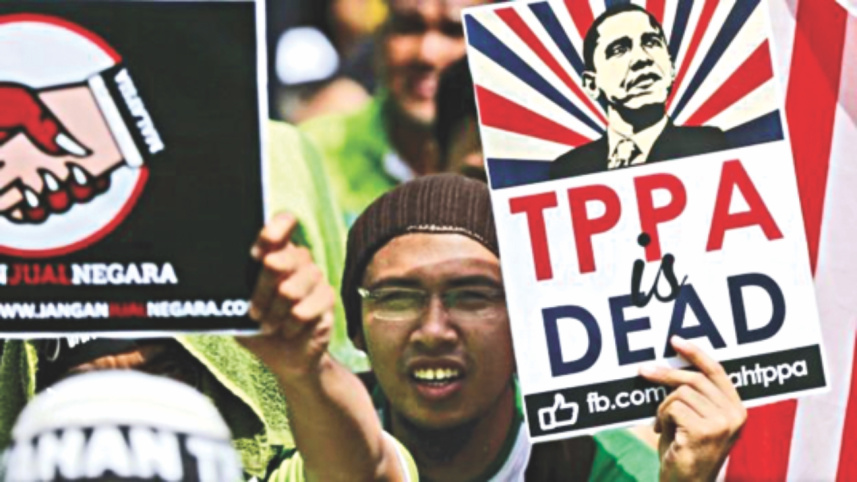
Donald Trump's trade policies would amount to the single biggest change to the way America does business with the rest of the world in decades. He has threatened to scrap a number of existing free trade agreements, including the North American Free Trade Agreement between the US, Canada and Mexico, which he blames for job losses. He has even suggested withdrawing the US from the World Trade Organization.
Iran nuclear accord on the line
For President Obama, the deal that saw sanctions against Iran lifted in exchange for guarantees it would not pursue nuclear weapons was a "historic understanding". But for Donald Trump, echoing Republican concerns, it was "the worst deal I think I've ever seen negotiated". He has said dismantling it would be his "number one priority". Doing so would potentially have a huge impact on the Middle East, with Iran a key player in the Syrian conflict and a rival of Saudi Arabia and Israel, for instance.
Two-state solution may suffer
Meeting Netanyahu in New York in September, Trump pledged to recognise Jerusalem as Israel's "undivided" capital if elected, in a break with longstanding US policy. Trump's adviser on Israel, David Friedman, also said last month the candidate was "tremendously sceptical" about the prospects for a two-state solution to the Israeli-Palestinian conflict. Israeli Education Minister Naftali Bennett said that with Trump's election: "The era of a Palestinian state is over."
War on IS and Syria
During the campaign Trump repeatedly pledged to "destroy" the jihadist Islamic State group, but presented no clear plan for how. How Trump moves forward with the anti-IS offensive will depend on how he intends to deal with traditional US allies in the region, in particular Sunni Arab Gulf states, and his approach to the war in Syria. Washington has backed rebel forces opposing President Bashar al-Assad in Syria's five-year civil war, and Hillary Clinton was especially supportive of regime change. Trump said earlier this year that fighting both IS and Assad simultaneously was "madness, and idiocy".
 For all latest news, follow The Daily Star's Google News channel.
Comments