


Kerry urges Iran to help end Yemen, Syria wars
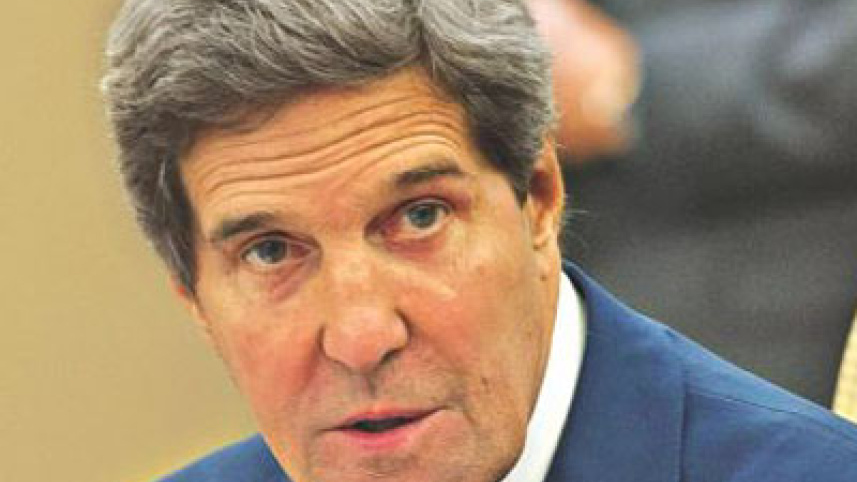
US Secretary of State John Kerry urged Iran yesterday to help end wars in Yemen and Syria, where Tehran and its Gulf Arab rivals are backing opposing sides.
On the first visit by a US chief diplomat to Bahrain since 2010, Kerry also told authorities in Manama accused of discriminating against the country's Shia majority that respect for human rights was "essential".

Kerry was to meet his Gulf counterparts later yesterday, two weeks before President Barack Obama is scheduled to attend a Gulf Cooperation Council summit in Riyadh when Washington's Middle East policy is likely to come under the microscope.
Kerry called on Iran to "help us end the war in Yemen... help us end the war in Syria, not intensify, and help us to be able to change the dynamics of this region".
He told a news conference in Manama that Tehran should "prove to the world that it wants to be a constructive member of the international community and contribute to peace and stability".
Bahraini Foreign Minister Sheikh Khalid bin Ahmed Al-Khalifa, whose government accuses Iran of stoking persistent protests among the kingdom's Shias demanding an end to Sunni minority rule, echoed Kerry's call. "Yes, we do want to see Iran change its foreign policy," he said, speaking alongside Kerry.
Meanwhile, Human Rights Watch (HRW) said yesterday that bombs supplied by the United States were used in coalition air strikes on a market in Yemen that killed at least 97 civilians including children last month.
Asked to comment on the report, Kerry said: "With respect to Yemen I don't have solid information, any documentation, with respect to what weapon might or might not have been used."
The United States has been exerting efforts to "try to secure a full ceasefire in Yemen", he added. In his meeting with Gulf ministers, Kerry was to discuss "some of the critical regional issues, primarily Yemen, Syria, the situation in Iraq, Lebanon, and elsewhere in the region," a US official said.
 For all latest news, follow The Daily Star's Google News channel.
Comments