


“Wuthering Height”: A reimagining that strays too far from its roots
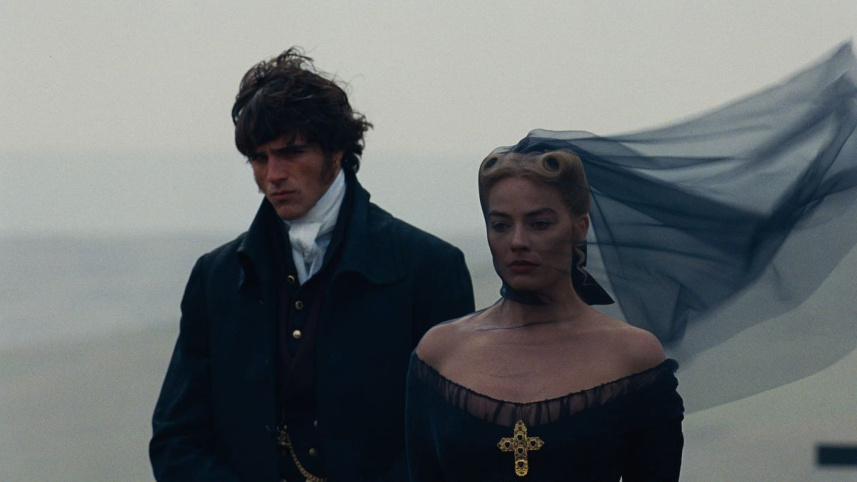
If there has ever been a movie that has deliberately attempted to completely detach itself from its source material, then “Wuthering Heights” (2026) is the perfect example.
This film is everything the book is not. It doesn’t adapt the novel so much as it uses it almost loosely as a starting point, and then turns the entire material upside down. Emily Brontë never imagined that her Cathy would be played by a Barbie-era actress, with a Charli XCX score blaring in the background, accompanied by an Australian Heathcliff and a boudoir-esque Isabella. In fact, there is reason to speculate that she would not be fond of any of these twists of events. Naturally, fans of her work aren’t either.

The biggest disconnect comes from how the film markets itself: “the greatest love story ever told”. Yet, that’s never what the original story was. “Wuthering Heights” is not a romance in the traditional sense. It’s a cautionary tale about obsessive love, cycles of abuse, domination, vengeance, and the way toxicity echoes across generations. It’s about how that kind of love doesn’t just destroy the people involved, but everyone around them as well. The only sense of peace comes when those patterns are finally partially broken.
Catherine and Heathcliff are often mistaken for the ultimate romantic ideal, but their connection is rooted in possession, mutual destruction, and something almost brutally confusing. It’s about the faint possibility of redemption through the next generation. The novel focuses on class difference, racism and discrimination, and deteriorating mental health. It never romanticises the eventual psychosis.
However, the movie barely explores these dynamics. Instead, it leans heavily into the intensity that comes with yearning. And yes, there is a lot of it, particularly crafted for the female gaze.
I would actually argue that there is too much of it. The cast is perfectly capable of adapting their lines, but on screen, their chemistry is reduced to just playing dialogue. It pushes a narrative of forbidden love that is absent because of the plot lines that the movie doesn’t adapt.
There is an interesting, unexpected positive note, though, which is the visuals. The direction is unapologetically bold. Emerald Fennell rejects the muted minimalism that a lot of modern films lean into and instead embraces a loud, saturated, and almost overwhelming aesthetic. The use of colour is striking: Cathy’s skin against her crimson outfits that represent her inner turmoil, the deliberate clashing tones, and the heightened tone of the palette that turns every frame into something picturesque.
There isn’t a single scene or outfit that wasn’t carefully placed or thought out. The film uses vast, evocative backdrops to conjure a kind of sentimentality that feels aptly grand. A few instances that come to mind are the colder scenery changes during the lowest pivots, as well as Cathy’s room, which resembles the veins beneath our skin. The latter, in particular, perfectly articulates her eventual descent. Even the stylistic choices, like the almost anachronistic elements and the unexpected costume influences, add to the film’s identity, allowing it to go beyond the boundaries of traditional period drama.
At times, it feels like the film is more interested in being seen than being understood and strangely, that’s where it succeeds the most. Even when the narrative falters, the imagery carries it. You could honestly watch this film purely for its cinematography and walk away satisfied.
“Wuthering Heights”— intentionally titled with quotation marks—exists here as more of an idea than an adaptation. A reinterpretation, a reimagining that prioritises emotion, aesthetics, and atmosphere over fidelity. Emerald Fennel said her goal was to capture the experience of a teenage girl reading a romance book for the first time. She clarified several times that she has no intention of adapting the book but rather depicting her own interpretation of it. Watching the movie with that in mind might leave less shock and bitterness, and could even satisfy a cinephile who prefers the visuals.
Tinath Zaeba is an optimistic daydreamer, a cat mom of 5 and a student of Economics at North South University. Get in touch via tinathzaeba25@gmail.com
 For all latest news, follow The Daily Star's Google News channel.
Comments