


Smaller firms pay 20% of goods value in import requirements
Smaller firms in developing countries pay 20 percent of the value of imported goods in import requirements, such as customs fees, other payments and fees paid to customs brokers or freight forwarders, according to UN Trade and Development (UNCTAD).
These higher costs put the small and medium enterprises at a disadvantage compared with medium and large businesses as shipping, insurance and energy costs rise, the organisation said in a report.

These extra costs can make it harder for smaller businesses to compete. As transport, fuel and financing expenses rise, many may have to cut production, delay investment or stop serving some markets altogether.
The findings are particularly important as disruptions along key shipping routes, including the Strait of Hormuz, push up crude oil prices, freight charges and insurance costs.
Large companies are generally better placed to deal with such shocks because they can spread their risks across different suppliers, markets and sources of financing. Smaller firms have fewer options and are therefore more exposed to sudden increases in costs.
The UNCTAD analysis was based on data from 90,120 enterprises in 114 developing and 43 developed countries between 2023 and 2025.
The analysis was based on data from 90,120 firms in 114 developing and 43 developed countries in 2023-2025
The report also highlights the financing problems faced by smaller businesses. The average annual interest rate for SMEs in developing economies reached 15.8 percent in 2024, compared with 6.3 percent in developed economies.
Access to finance is another major concern. In developing countries, 28 percent of small enterprises said they faced major or very severe difficulties in obtaining finance. Of them, 17 percent described the obstacles as major and 11 percent as very severe.
Energy costs are also putting pressure on small manufacturers. One in four small firms in developing countries spends more than 4.2 percent of its total sales on electricity.
The impact of economic shocks on smaller businesses has been seen before. During the economic shock of 2020, 88 percent of small enterprises in developing countries reported lower sales, compared with 81 percent of large corporations.
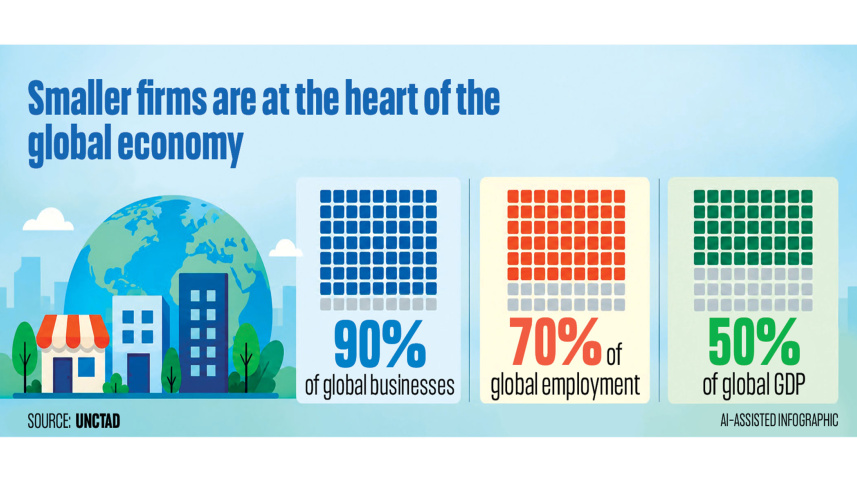
The risks are significant because micro, small and medium enterprises account for 90 percent of businesses worldwide, 70 percent of employment and 50 percent of global GDP.
UNCTAD warned that if smaller firms are pushed out of global value chains, the effects could extend beyond individual businesses, leading to job losses, lower household incomes and greater social vulnerability.
It called for stronger public support for trade and logistics services and measures to help smaller businesses maintain and diversify their supplier networks. Such support, it said, would help ensure that rising trade costs do not benefit larger companies at the expense of smaller ones.
 For all latest news, follow The Daily Star's Google News channel.
Comments