


100 years of Attenborough: The man who taught the world to love the Earth

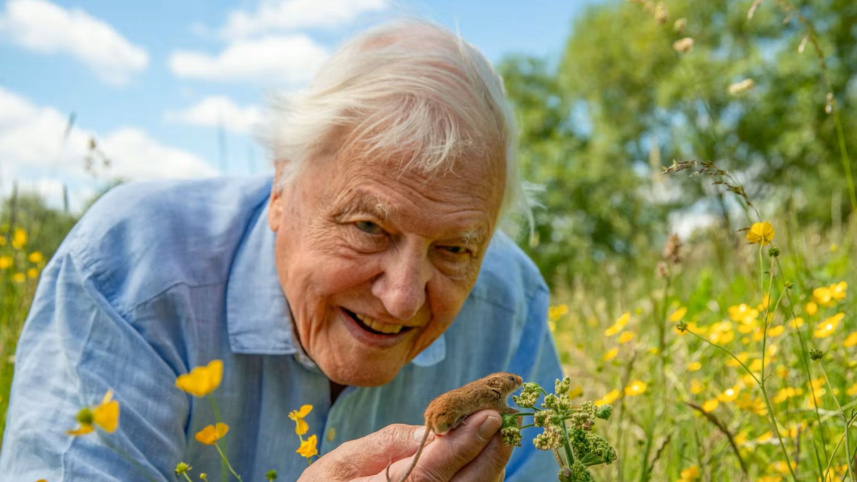
On this day 100 years ago, a boy named David Frederick Attenborough was born in a modest home in London.
Today, his voice has become so deeply woven into humanity’s understanding of the natural world that it almost feels elemental -- like rainfall, birdsong, or waves breaking against a shore. For generations across continents, David Attenborough has not merely narrated nature; he has taught us how to see it, how to love it, and increasingly, how to save it.

To millions of people, David Attenborough was their first encounter with the wonders of nature. Long before many of us ever stepped into rainforests, crossed oceans, or looked closely at wildlife, his voice guided us through coral reefs glowing beneath dark waters, deserts teeming with hidden life, and frozen landscapes where survival itself seemed miraculous.
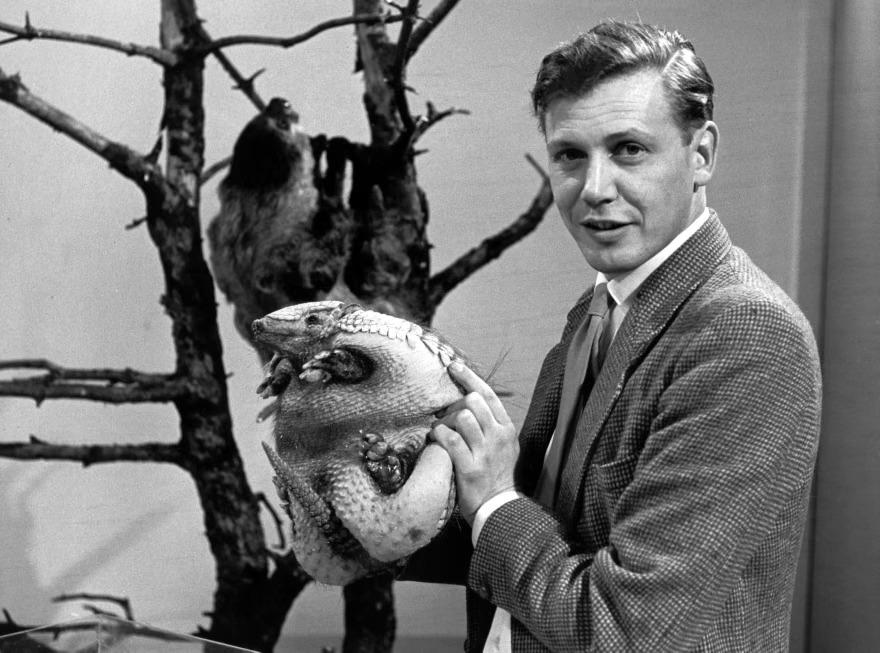
Through him, the planet stopped feeling distant and became personal to us.
Raised in Leicester, where his father served as principal of University College, the young David spent his childhood collecting fossils, stones, and other tiny treasures from the natural world. After studying natural sciences at Clare College, Cambridge, and completing service in the Royal Navy, he joined the BBC in 1952 -- despite famously not even owning a television at the time.
That accidental leap into broadcasting changed environmental storytelling forever.
Within two years, he co-created Zoo Quest, a groundbreaking programme that took audiences out of sterile studios and into jungles, rivers, and deserts. At a time when wildlife television largely consisted of caged animals or static educational footage, David brought viewers face-to-face with living ecosystems in motion.
Then came the landmark Life series, beginning with Life on Earth in 1979. Filmed across more than 100 locations and featuring hundreds of species, it traced the story of evolution. Then came The Living Planet, The Trials of Life, Planet Earth, Blue Planet, Frozen Planet, and many others, which managed the remarkable feat of educating while entertaining. Together, they transformed natural history filmmaking into a global emotional experience.
Entire families and groups of friends sat together in darkened living rooms watching birds of paradise dance, humpback whales migrate across oceans, or hatchling iguanas outrun snakes along the Galápagos shoreline. Through David’s narration, nature ceased to feel like scenery. It became a living, breathing community of beings connected by the same fragile threads as humanity itself.
Yet Attenborough’s legacy stretches far beyond television.
Over decades, scientists, conservationists, marine biologists, and climate activists have repeatedly spoken about the “Attenborough effect” -- the phenomenon of viewers becoming emotionally invested in conservation after watching his work. His documentaries did not simply educate audiences; they changed public behaviour and influenced environmental conversations worldwide.
When Blue Planet II exposed the devastating impact of plastic pollution in oceans, it triggered worldwide discussions about single-use plastics. Governments introduced new environmental measures, corporations reconsidered packaging, and millions of people began changing their daily habits. The so-called “Blue Planet effect” became one of the clearest examples of media directly shaping environmental awareness and policy.
His work also strengthened support for marine protected areas, wildlife preservation efforts, and biodiversity campaigns globally. Conservation organisations often reported surges in donations and volunteer engagement following his documentaries. By helping audiences emotionally connect to species and ecosystems, David made us confront the urgency we often ignored -- he made us see what we were doing to our planet, our only home.
That has always been his most extraordinary gift.
He never approached nature with arrogance. Even while explaining the most complex scientific realities, his tone remained filled with humility and reverence. He did not lecture audiences from above. Instead, he invited people to listen closely -- to the rustle of forests, the songs of whales, the rhythm of migration, and the warnings carried by a warming planet.
He spoke openly about rising temperatures, disappearing rainforests, collapsing ecosystems, and what he called the sixth mass extinction. Yet remarkably, even at his most alarmed, he refused to surrender to despair.
In A Life on Our Planet, which he described as his “witness statement”, David chronicled the staggering environmental changes he had observed across nearly a century -- shrinking wilderness, bleaching coral reefs, rising emissions, and vanishing species.
But he consistently insisted that recovery remained possible if humanity acted with urgency and courage.
In 2025, at the age of 99, he released Ocean, a documentary examining both the devastation inflicted upon marine ecosystems and the resilience still glimmering beneath the waves. “If we save the sea,” he declared, “we save our world.”
Perhaps that is why Sir David’s 100th birthday feels so profoundly emotional across the world.
 For all latest news, follow The Daily Star's Google News channel.
 Because he is not simply a broadcaster who has guided us through the natural world for decades. He is the voice many of us associate with childhood curiosity.
Before Attenborough, animals on television were often framed as curiosities or spectacles. Through him, they became neighbours, kin, fellow inhabitants of a shared and fragile world.
So as Sir David Attenborough turns 100, we thank him for the wonder, for the lessons, for the heart, and for reminding us that humanity’s awe alone is not enough -- it must become care, and care must become action.
Comments