


Symphony No. 9: The sound Beethoven could no longer hear, but the world still can't forget

Disability is often romanticised only after triumph arrives, but the world rarely acknowledges the quieter reality beneath it -- fatigue, alienation and bargains with one’s own body or circumstance, the persistent fear that one’s ambitions may exceed one’s ability.
Ludwig van Beethoven’s Symphony No. 9 speaks directly into that anxiety, as there is something profoundly intimate about it for those who live in daily negotiation with physical abilities.

Art is often born precisely from the tension between vulnerability and aspiration; and perhaps that is the deepest reason the musical piece remains resonant.
It reminds those who feel marginal and uncertain that human limitation need not preclude magnificence. The body may falter. Circumstances may constrict. Society may underestimate. Yet the interior world remains capable of astonishing vastness -- that even from silence, struggle and solitude, one may yet produce something that reaches beyond oneself and touches the world.
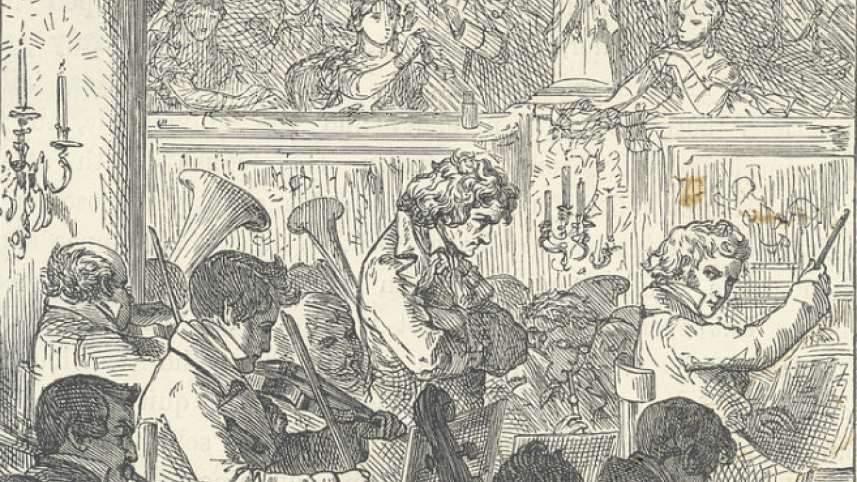
On 7 May 1824, in Vienna’s Kärntnertor Theatre, Beethoven, by then almost entirely unable to hear, stood before an orchestra and unveiled a symphony that would go on to live forever ever since.
By then he was a man besieged by affliction -- physically deteriorating, socially isolated, emotionally tempestuous and almost entirely cut off from the very sense upon which his profession depended.
Over 200 years later, Symphony No. 9 remains not merely admired, but inhabited. It has become one of those rare cultural artefacts that escaped the confines of elite appreciation and entered the everyday element.
Deafness for a composer was not simply disability; it was existential mutilation. Music had become an interior phenomenon for him, heard only within the cavernous architecture of his mind.
Yet what emerged from that was not resignation but a renaissance.
Symphony No. 9 does not drift politely into existence. From its opening bars, there is a strange primordial quality, as though creation itself is slowly assembling from mist and turbulence. Beethoven turns to Friedrich Schiller’s “Ode to Joy” in the final act and transforms poetry into communal exultation.

We inhabit an age saturated with anxiety. Loneliness has become epidemic despite unprecedented connectivity. Politics often resembles perpetual tribal combat. Wars still redraw maps and destroy childhoods. Technology accelerates faster than wisdom.
The modern individual oscillates between exhaustion and overstimulation, yearning simultaneously for meaning and escape. Despite being over two centuries in age, Symphony No. 9 feels contemporary because it refuses simplistic optimism. It does not pretend suffering is absent. It drags suffering into the centre of the stage and then dares to seek transcendence anyway. That journey toward transcendence is what gives the symphony its almost scriptural power.
Much modern discourse mistakes cynicism for sophistication. Earnestness is often treated as intellectual embarrassment. Hope arrives with disclaimers. Idealism is viewed suspiciously, as though sincerity itself were silly.
Beethoven’s Symphony No. 9 rejects such fashionable detachment, it resonates because it articulates an emotional paradox central to human existence -- we are wounded creatures who nonetheless continue to wander seeking communion.
Its afterlife across history only deepens its mystique. When the Berlin Wall fell in 1989, Leonard Bernstein conducted the Ninth in a newly liberated Berlin, altering “Freude” -- joy -- into
Even in popular culture, fragments of Symphony No. 9 appear incessantly, sometimes reverently, sometimes ironically. Yet the music remains strangely immune to dilution. Its grandeur survives quotation because its emotional architecture is too immense to trivialise fully.
Part of Beethoven’s enduring relevance also lies in his peculiar modernity as an artist. He was among the first truly mythologised geniuses -- tempestuous, uncompromising, emotionally volatile, indifferent to social decorum and fiercely committed to artistic autonomy.
In many ways, contemporary culture still operates within the shadow of that transformation. That is the peculiar magnificence of masterpieces -- they expand rather than diminish with time.
And perhaps that is why Symphony No. 9 remains resonant in this fractured age. Beethoven understood something elemental -- civilisation is not sustained by comfort alone. It survives through the stubborn persistence of hope against overwhelming evidence to the contrary.
 For all latest news, follow The Daily Star's Google News channel.
Comments