


The limits of genius: Women, caste, and the unfinished politics of Tagore
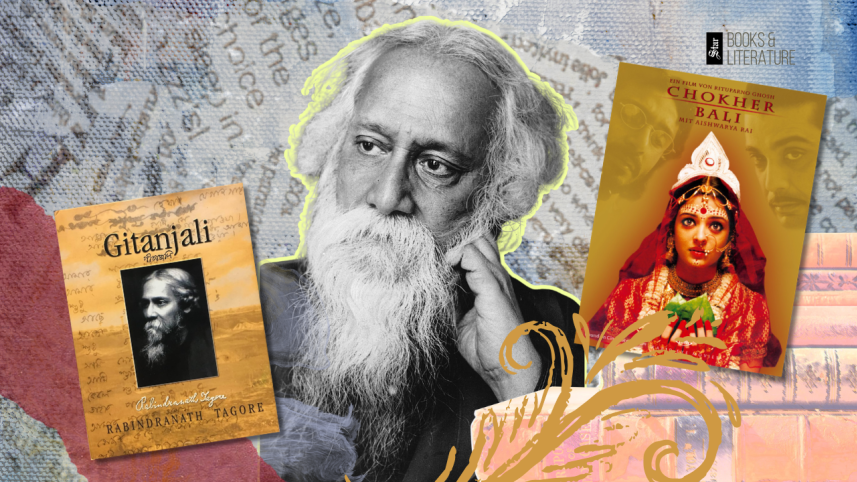
As we come together to celebrate Rabindranath Tagore on his birthday, early May’s air naturally fills with esteem where garland makers make extra strands. Children rehearse Rabindra Sangeet for school performances, and we, the inheritors of his words, nod at his genius as though it were a settled fact. But idolisation without honesty is just a ritual. If we look closer at the women in his literature, his caste politics, and the landlord’s shadow that followed him like evening follows afternoon, we will find that this is us sitting with contradictions. Tagore himself never asked to be remembered as a flawless sage. He was, after all, a man who returned his knighthood in protest, who once admitted that his own heart was “a battlefield of doubts”.
Tagore’s female characters truly jump off the page with a passion that's shocking even today, after a century of them being written. Take Chokher Bali (1903), for example: you'll meet Binodini, a young widow with tremendous desires that swirl beneath the surface like a powerful tornado. But she's not just a victim, she's a woman who takes action, who schemes and seduces. Tagore gives her a sharp mind, a deep anger, and a heartbreaking loneliness that's almost too much to bear. In Streer Potro (1914), a wife named Mrinal writes a letter to her husband, stating that she will not remain as the mejo bou of the house. These were considered radical gestures for the early 20th century Bengali society, steeped in Brahmo and Hindu conservatism, both of which expected widows to shave their heads when their husbands passed away and embrace a life without joy; it was expected that wives would endure silently. But Tagore said no—because he saw the cage, the slow strangulation of a loveless marriage, widowhood, and the way women were taught to swallow their own voices.


And yet.
Think of Binodini again. Does she ever truly escape? She fights and rages against the universe she was living in. But in the end, the world around her does not bend. It bends her into a noble sufferer, not a woman who walks away into ordinary, unheroic freedom. Tagore painted pain almost too exquisitely, as if suffering itself were a kind of aesthetic. Consider Mrinal, too. Her “letter of freedom” is a masterpiece of anger, but after she symbolically dies, Tagore does not follow her. Did he ever let his women win? Not really. Not in the way a free woman wins: by living a small, unremarkable, unheroic life of her own choosing.
Now let the breeze carry us to another, perhaps harder ground: Caste. Tagore wrote against untouchability when few dared. In his poem "Here is thy footstool" (“Jethay thake shobar odhom”) from Gitanjali (1914) he raged against the exclusion of Dalits from temples. Tagore’s “Bharat tirtho” (1947) poem was not just poetry but it was a manifesto containing the sea of humanity.
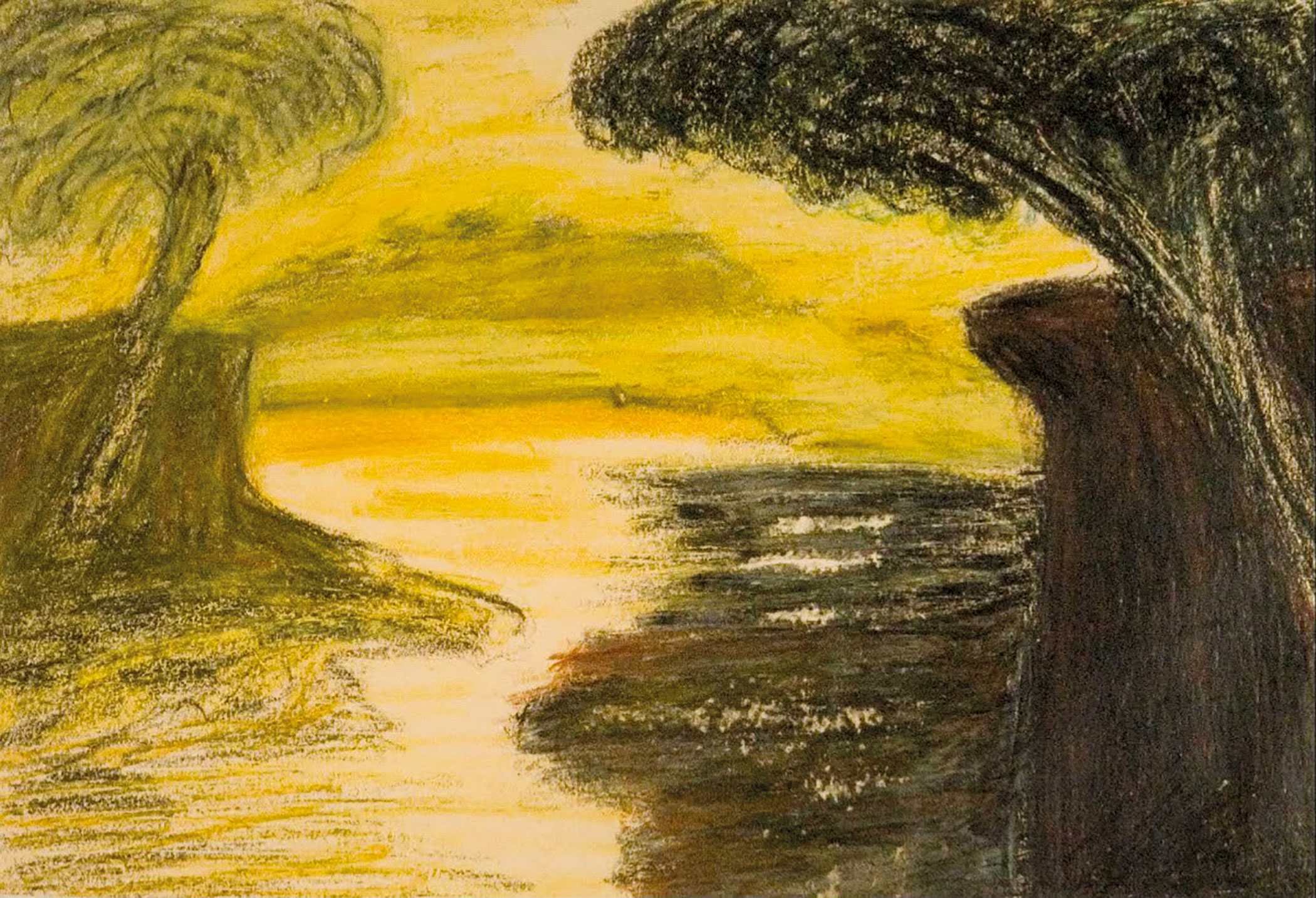
But here is the weather of his life. He was a zamindar, a landlord where his family-owned vast estates in what is now Bangladesh. The wealth that allowed him to write without worry, travel to Europe, to found a university that came from the sweat of peasants, from the very soil that was graded by caste. He wrote elegantly about equality from a veranda that overlooked fields worked by men and women he would never call "brother" in the way he meant it. He opened Shantiniketan’s doors to all children, regardless of birth, when most schools would not even admit them as sweepers, but he did not break bread with them in his own home. The boundary between "helping the oppressed" and "living with the oppressed" never fully dissolved for him. That boundary is the veranda. And he rarely stepped off it.
When Tagore speaks for a lower-caste woman his voice carries a certain distance. He imagines her suffering. His empathy is real but it is a guest's empathy, not a native's. He doesn't focus on the gritty, mundane details, doesn’t describe the smell of the garbage she has to clean, the hunger in her stomach, or the exact slang she would use while arguing with a neighbour. And the women of his stories, even the poorest, tend to speak with the cadences of the Bengali bhodrolok—the respectable gentry making their grammar too correct, rage too literary. Tagore’s silence is part of his legacy too. It’s not a crime but it is a limit.

Let’s call him what he was: a reluctant radical—mind swift and daring while his feet stayed on soft, privileged soil. This is not hypocrisy. This is the human condition, only more visible in genius. He gave us women who struggled to breathe inside golden cages, fought caste with ink, and opened schoolrooms for the underserved. But he also could not fully leave his world behind—its comforts, hierarchies, unspoken rules. And now, as the breeze softens and Robi Thakur calls from a distant branch, a final question rises like smoke from dying embers. Was it him—or was it his time?
The Bengal of the late 19th and early 20th centuries was a river of contradictions itself—colonial rule, feudal hangovers, a renaissance that touched only the upper castes. The likes of Tagore swam in that river. He could not help but absorb the mud. His women rebelled but never won because his society did not allow real women to win. His caste critique stopped at the veranda because his own feet had never known the dust of the Dalit hut. The age gave him eyes to see suffering, but not hands to dismantle its architecture entirely.
If we ask, “Would he act differently if he lived in our era?” The honest answer drifts through the leaves like a half-heard tune. Perhaps yes. Perhaps the same restless, questioning Tagore, born in 2026 instead of 1861, would have stood on the right side of every fight. He would have marched for gender equality, named caste violence as the horror it is. He would have written not about Dalit women but with them, giving them their own voice, their own victory, not just their noble pain. His radical instinct, freed from the anchor of zamindari privilege, might have soared. Because every age has its blind spots. Every progressive is, in some way, a reluctant radical. We, ourselves too, will be judged by futures we cannot see.
The gift Tagore leaves us is not perfection. It takes a lot of courage to even ask the question in the first place. Therefore, let us take up the work he left unfinished, under the same banyan tree he sat under, with the same soft breeze he felt, as the soft afternoon light turns gold when the sun starts to set. Was it his time? Yes. Would he be different today? We will never know. But us, asking, is our tribute.
Nazmun Afrad Sheetol is an IR graduate and a contributor at The Daily Star. She can be reached at sheetolafrad@gmail.com.
 For all latest news, follow The Daily Star's Google News channel.
Comments