


‘Vinyl Madness’ is Dhanmondi’s little ‘anti-Dhaka’ for music lovers

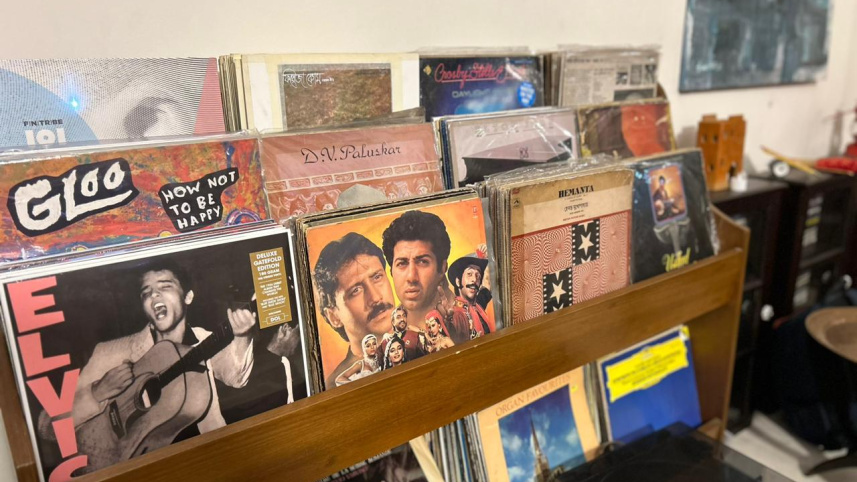
In a little apartment tucked away in Dhanmondi, a vinyl store stands as a testament to Bangladesh’s seemingly lost love for vintage music.
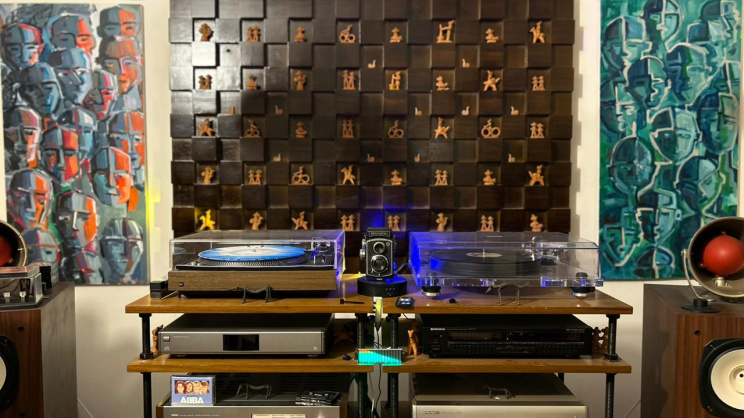
As soon as one enters Vinyl Madness, they easily find themselves surrounded by hundreds of vinyl records, cassettes and CDs. The cosy interior, the sound of jazz playing in the background and the smell of fresh coffee immediately pull visitors in with a warm embrace. Guitars wait against the walls, while shelves lined with records hint at decades of music waiting to be rediscovered.

More than a record store, Vinyl Madness operates as an invite-only listening room and informal jamming space for Dhaka’s music enthusiasts.
Its founder, Saadi Manzoorul Huq, does not like to call himself a businessman. By day, he works at a multinational bank. At night, however, he is an artiste and music enthusiast with an immense love for tunes and records.
“My parents always listened to music on vinyl, and they encouraged me to listen to records as well,” he told The Daily Star. “It was during Covid that I really got into collecting vinyl instead of simply listening to it.”

As his collection grew, Saadi came to believe that music is best experienced through the equipment of its own time.
“An old track would not sound appropriate with modern equipment, just like Arctic Monkeys would sound wrong with classical equipment,” he said. “When you listen to vinyl, you hear the song like the artiste wants you to.”
He was certain that people in Bangladesh were still listening to vinyl, but had little opportunity to share that love. With few dedicated spaces for collectors, many were left to buy records from abroad and listen in isolation.
Initially, Saadi invited friends to his home. Slowly, those friends began bringing others. Before long, his weekends were filled with people, some of whom he had never met.
To protect his privacy and preserve the atmosphere, he turned the gatherings into an invite-only affair. Visitors are asked a few questions before being welcomed in, free of charge.
“I wanted to create a stress-free place, an anti-Dhaka, if you will,” Saadi said.
That idea still shapes Vinyl Madness. The space is meant to remain clean, calm and respectful, away from smoking, drinking, swearing and negative conversations. It is a place where music comes before business.
Saadi had already been bringing vinyl for himself, so he started importing a few extra records for others. But when he considered turning it into a commercial venture, he decided against taking any profit.
“I already have a fulfilling life supported by a good job and my family,” he said. “So, until I leave my job, I will not take any profit from this.”
Instead, the profit goes to charity or back into the store. Visitors are never pressured into buying anything.
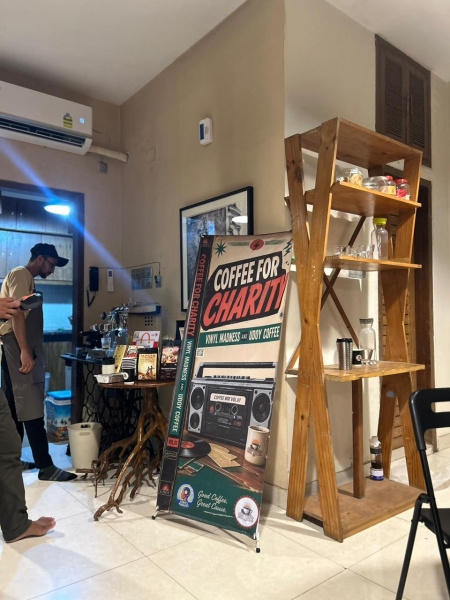
The first policy at Vinyl Madness, therefore, is simple: no visitor should ever be pressured into purchasing anything. He is similarly uninterested in paid promotion.
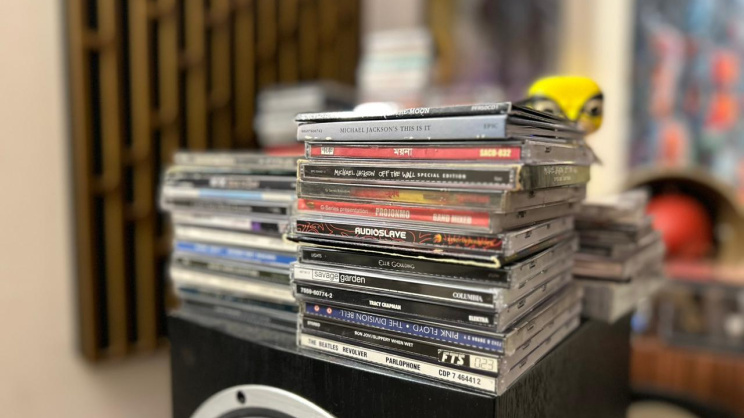
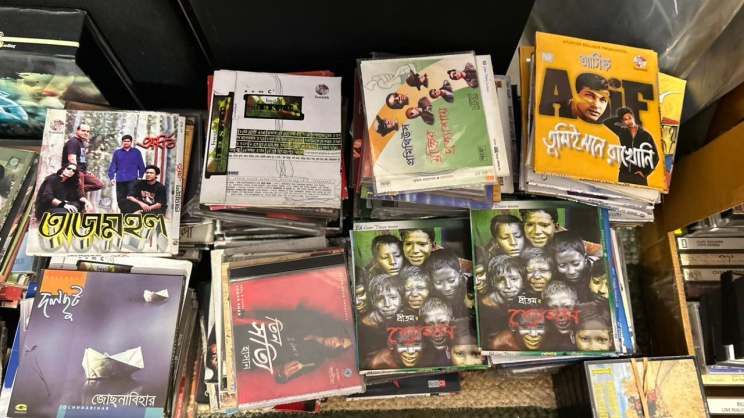
Although Vinyl Madness began solely with records, Saadi later introduced CDs and cassettes.
The most unexpected evolution of Vinyl Madness came when young visitors began asking whether they could sing.
“They would randomly ask, ‘Can I sing?’ and I would say, ‘Why not?’” Saadi recalled.
That was how the jamming culture of Vinyl Madness began.
 For all latest news, follow The Daily Star's Google News channel.
 Soon, young musicians started asking for amplifiers, drums and guitars as if Saadi were family, and he was happy to provide. Money earned from selling records, CDs and cassettes was used to bring instruments into the space.
“There are a lot of talented musicians who do not get any platform,” he said. “These younger kids are already prodigies, yet they have to pay to get noticed or book expensive jamming pads. That is unfair.”
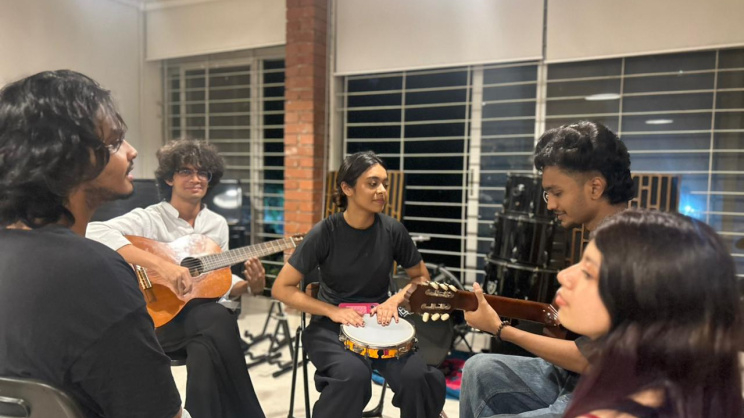
Saadi wants Vinyl Madness to become a place where musicians do not even need to bring their own equipment. They can simply walk in and play his.
Some evenings began to feel almost spiritual. Musicians from bands came through, strangers played together, and more people found their way to the apartment.
But Vinyl Madness was not built by Saadi alone. It grew through the affection of those who discovered it. Two young visitors once fell so deeply in love with the place that they volunteered to organise Saadi’s enormous record collection into Excel spreadsheets. An 18-year-old visitor offered to design a website. Vinyl Madness now has one.
“These people grew the place with their love,” Saadi said. “I felt like the universe was welcoming and talking to Vinyl Madness.”
For him, the greatest reward would be to see an unknown musician find recognition after beginning here.
“People with no financial support or recognition need a place, and I am more than happy to provide that,” he said. “Who knows, someone might get the fame they deserve and say, ‘I started from Vinyl Madness.’ That would be my prize, my legacy.”
Saadi is reluctant to describe the space as a movement.
“I would not call Vinyl Madness a revolution,” he said. “But I will say that Vinyl Madness is a clean space and a highway for musicians.”
People now travel from other cities to visit, something he considers both a blessing and a sign of what the space could become.
Vinyl Madness is open from 4:30pm to 9:30pm every day except Monday.
It remains a small room surrounded by the restless streets of Dhanmondi. Inside, however, the city appears to slow down.
Comments