


Avi Shankar Ain’s solo exhibition ‘Atmospheres of Time’ explores light and time at Gallery Platform

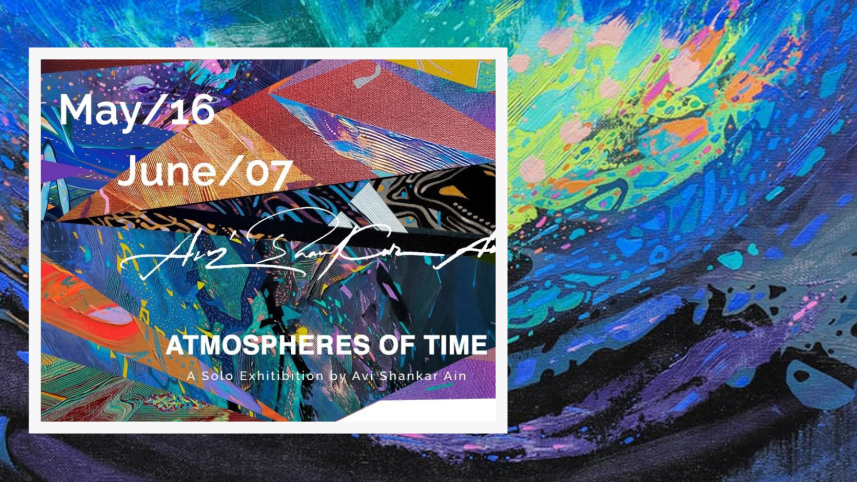
In the evolving landscape of contemporary Bangladeshi painting, Avi Shankar Ain emerges as a cartographer of sensation—mapping not geography, but shifting states of light, time, and elemental flux. This solo exhibition titled “Atmospheres of Time” unfolds as a sequence of atmospheric meditations in which seasons dissolve into hours and terrestrial boundaries blur into aquatic immensities. What appears is not a set of discrete paintings but a continuous field—an immersive ecology of perception.
Ain’s practice is grounded in technical plurality—oil, watercolour, acrylic, charcoal, and digital media—yet unified by a sustained inquiry into the mutability of experience. The titles—“Twilight Valley”, “Moonlight Sea”, “Starlight Reef”, “Midnight Canopy"—evoke a world in transition, where liminal hours heighten awareness. These are not landscapes in the conventional sense; they function as temporal thresholds. Dawn, dusk, and midnight act not as passive backdrops but as generative forces shaping both form and feeling.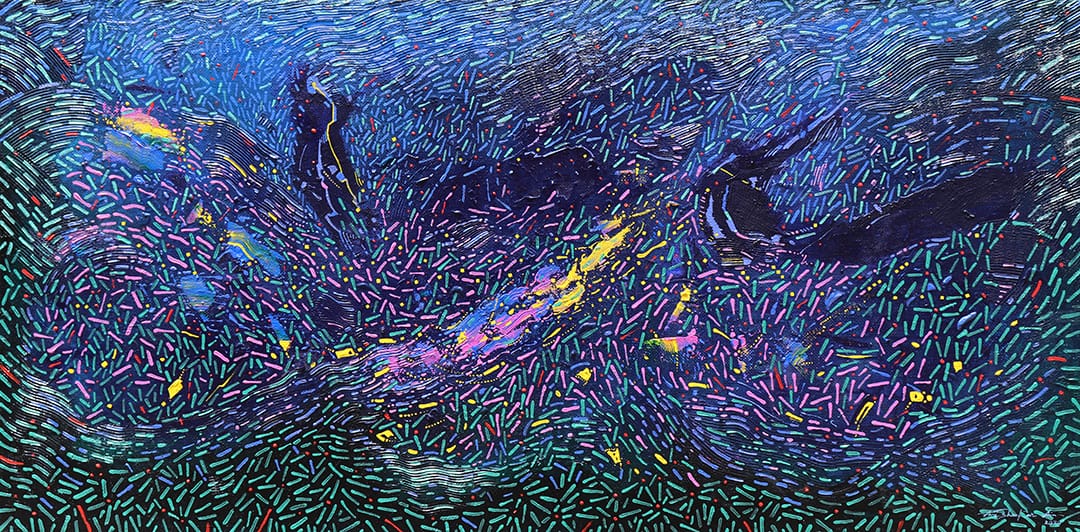
Water operates as a central metaphor throughout the exhibition. In works such as “Oceanic Fury”, “Midnight Storm”, and “Tempest of Paradise”, Ain explores the sea’s dual nature—its capacity for serenity and violence. The ocean becomes a psychic mirror, reflecting inner turbulence alongside external force. This is not an indulgence in romanticism but a measured engagement with nature’s volatility, rendered through layered textures and shifting tonalities that suggest depth without fixing the viewer to a stable horizon.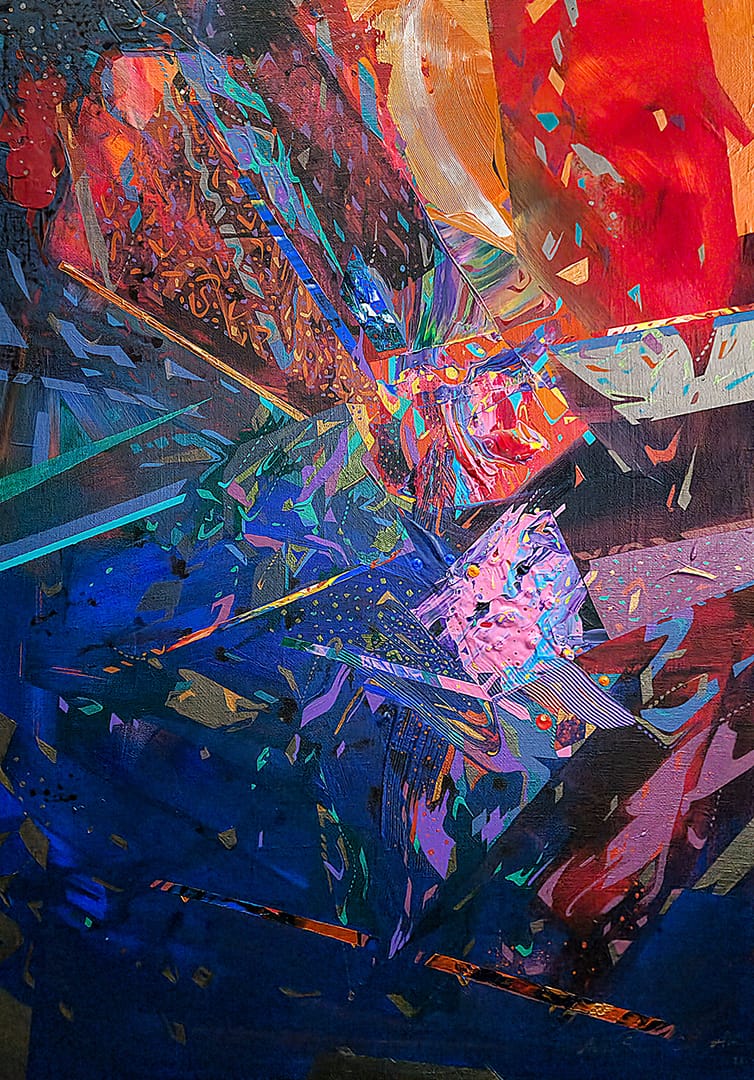
Equally resonant is Ain’s sensitivity to quieter registers. Paintings like “Elysian Showers”, “Moonlit Narratives”, and “Dusk’s Embrace” reveal an almost musical compositional logic, where rhythm is carried by light and silence articulated through negative space. His training at Kala Bhavana, Santiniketan, finds subtle expression here—not as a stylistic influence but as a philosophical alignment, where atmosphere becomes a conduit between the visible and the felt.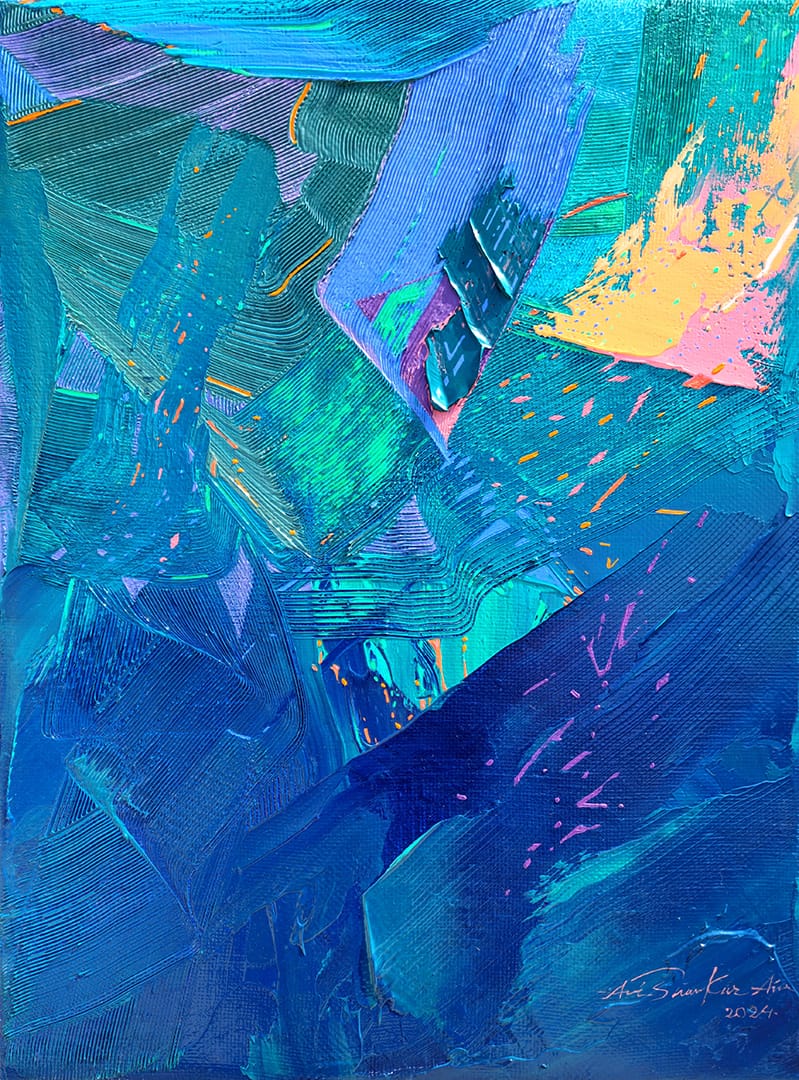
Human figures are largely absent, yet the works remain deeply human in their emotional charge. The environment itself appears animate. In “Whispering Wilds” and "Blossom Grove”, vegetation seems to breathe; in “Sunlit Rains” and “Obsidian Rains”, weather assumes narrative agency. This animistic sensibility places Ain within a broader lineage of abstract, symbolic, and semi-abstract practices, where realism is extended towards the imaginative and the metaphysical.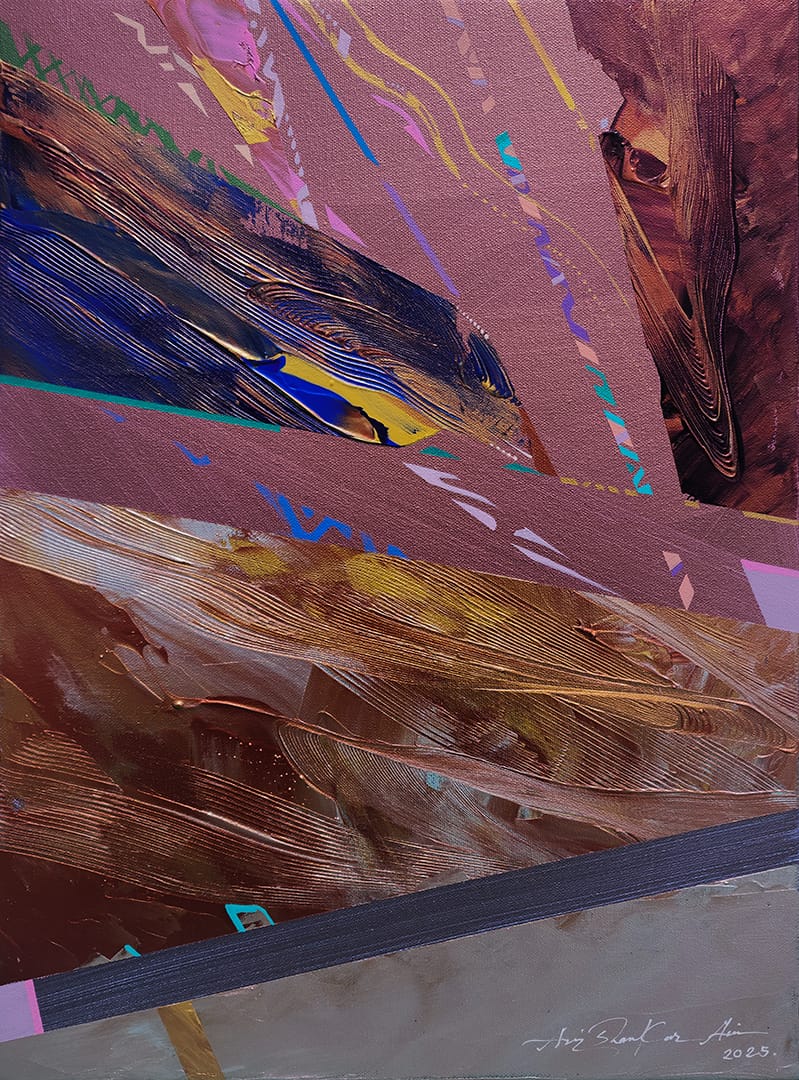
A defining strength of this body of work lies in its orchestration of contrasts—light and darkness, stillness and movement, surface and depth. “Sizzling Solstice” radiates with chromatic intensity, while “Moontrace" withdraws into spectral restraint. These shifts are deliberate, reflecting an ongoing engagement with cyclical time—seasonal, diurnal, and emotional. The exhibition becomes a journey through phases rather than a sequence of isolated images.
Ain’s trajectory—from his academic foundation at the Faculty of Fine Art, University of Dhaka, to his postgraduate studies in Santiniketan and participation in international exhibitions—demonstrates a consistent commitment to expanding both medium and meaning. Despite this global presence, his sensibility remains anchored in a South Asian understanding of nature as both an aesthetic and spiritual terrain.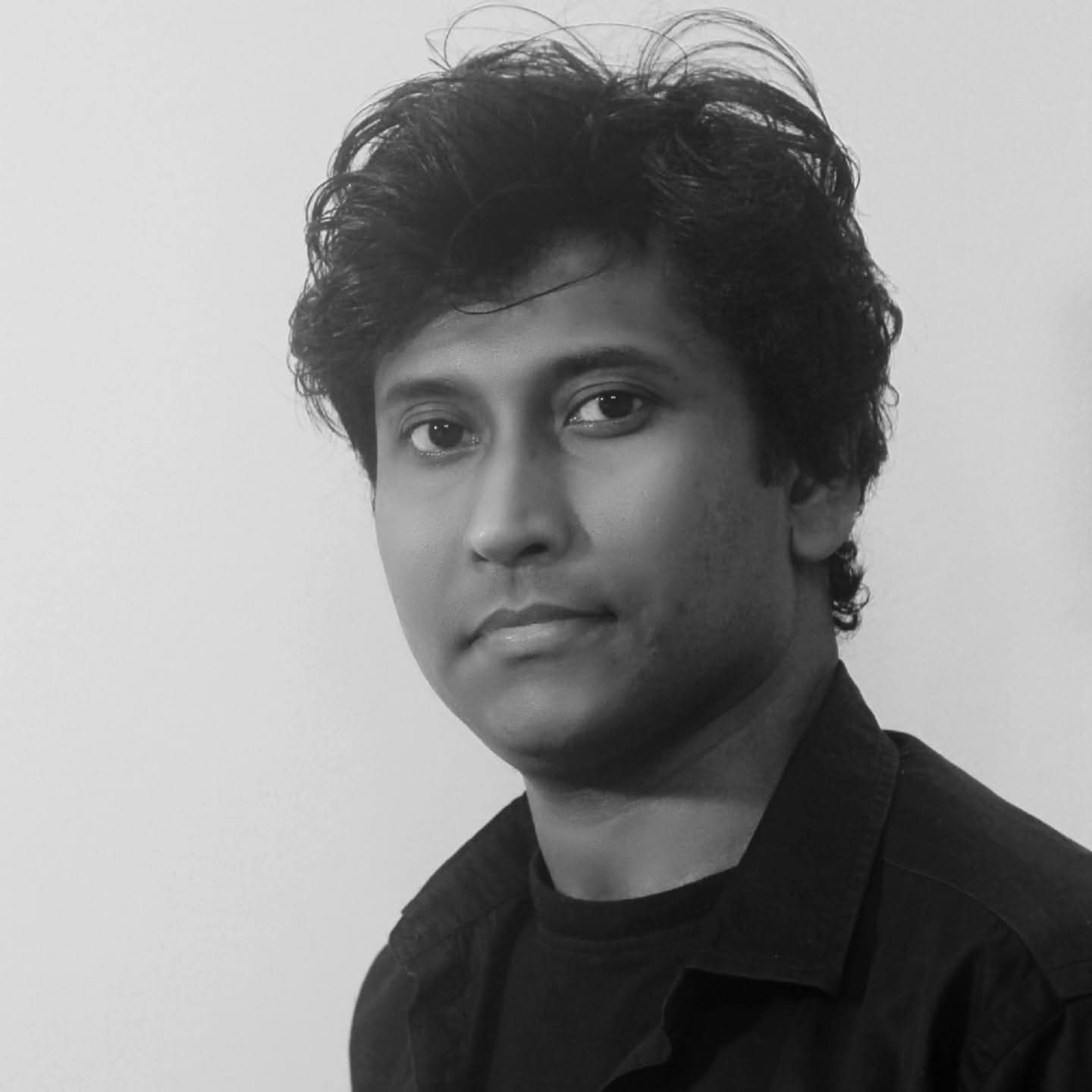
This exhibition marks a pivotal moment in Ain’s practice. It consolidates years of exploration into a cohesive vision that privileges immersion over spectacle and atmosphere over narrative. In a time marked by visual excess and immediacy, Ain offers a slower, more contemplative mode of seeing. His paintings do not call for attention; they absorb it.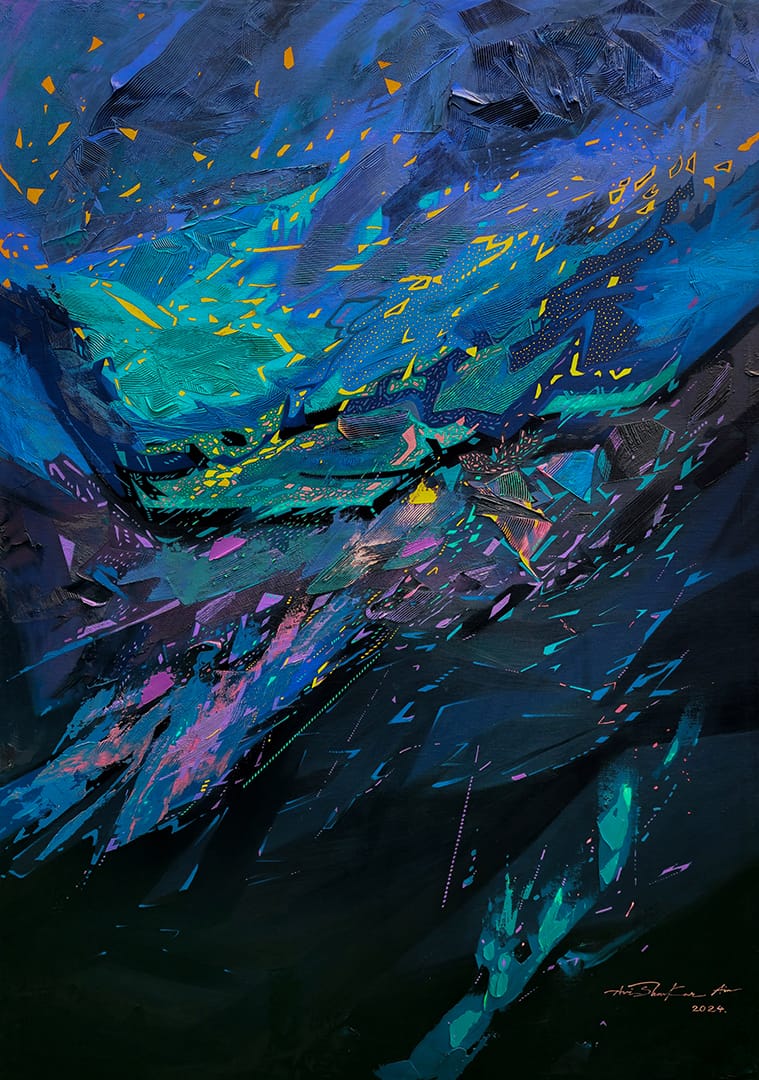
Ultimately, Avi Shankar Ain invites a reconsideration of our relationship with time, nature, and perception. His works suggest that the most profound experiences occur in transition—in the fading light of twilight, the quiet tension of midnight, and the boundless, unknowable depths of the sea.
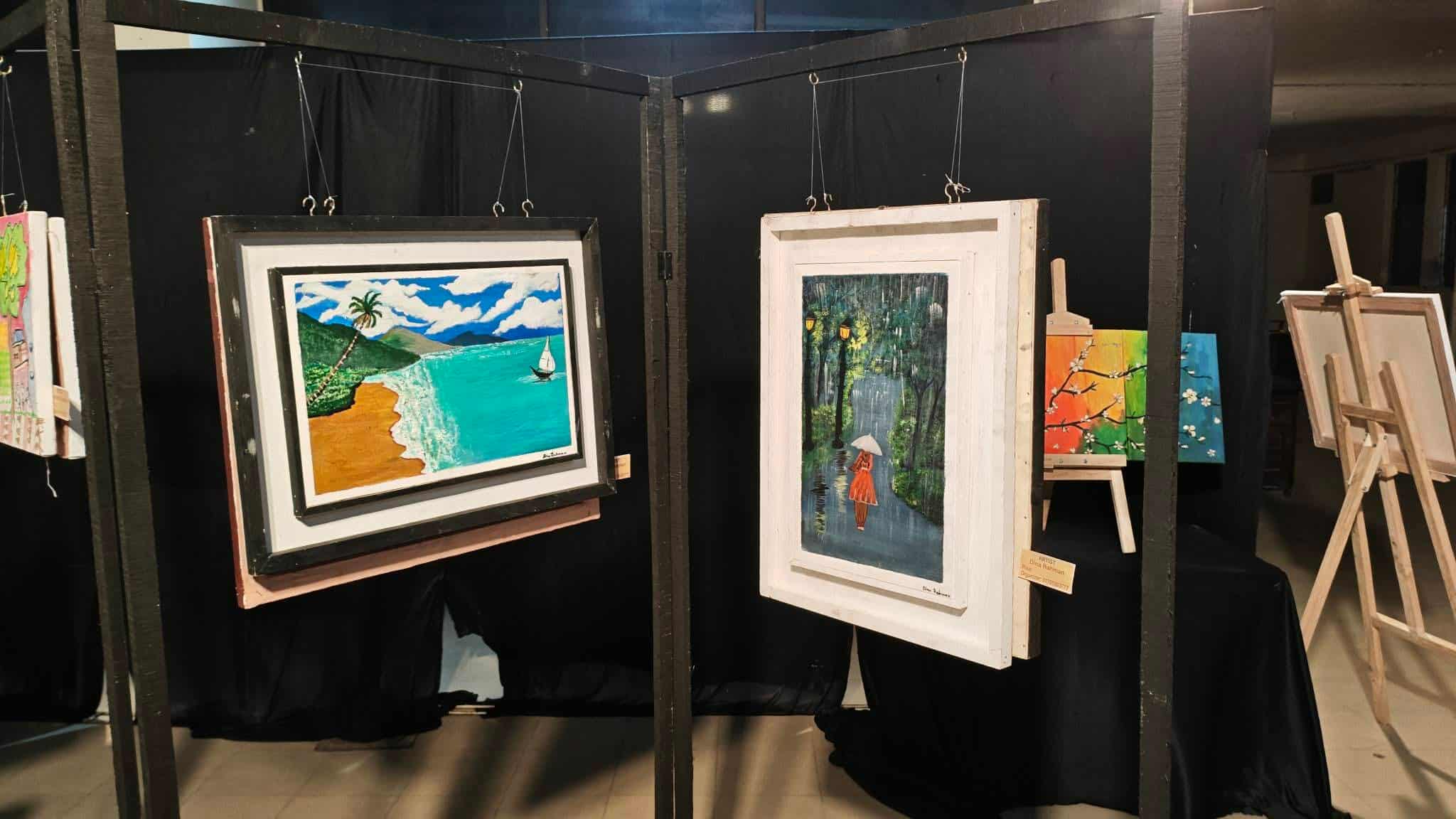
Opening today, the exhibition will run until June 7.
The author is a visual artist and critic.

 For all latest news, follow The Daily Star's Google News channel.
Comments