


Crowning the champions of free press: Bangladesh Press Photo Competition 2026 announces winners

Some photographs document history. Others preserve the grief, resilience and everyday realities that might otherwise fade with time. Bringing together many of those defining moments from 2025, the fifth edition of the Bangladesh Press Photo Competition 2026 commenced at Drik, where the winners of this year were announced.
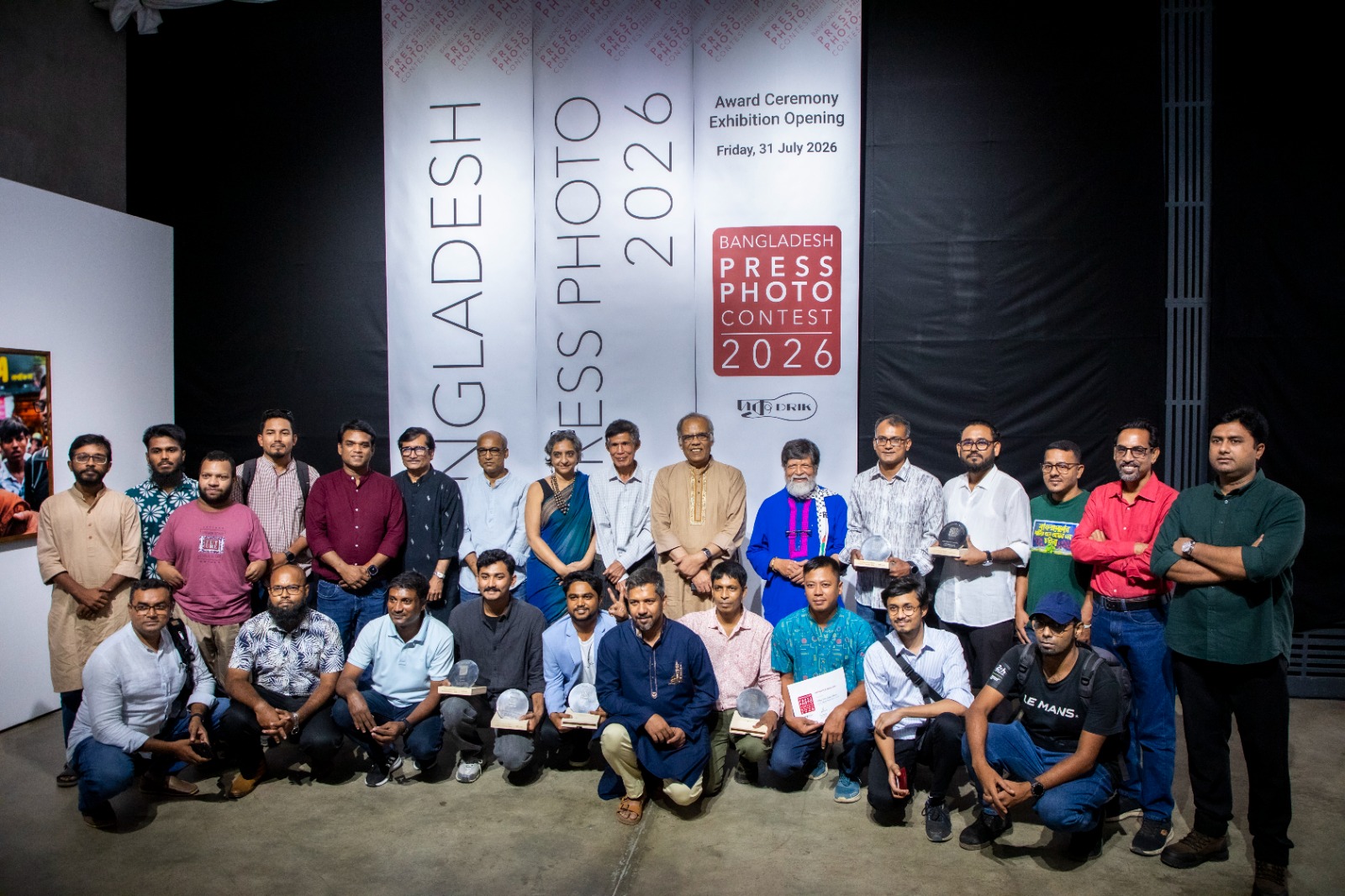
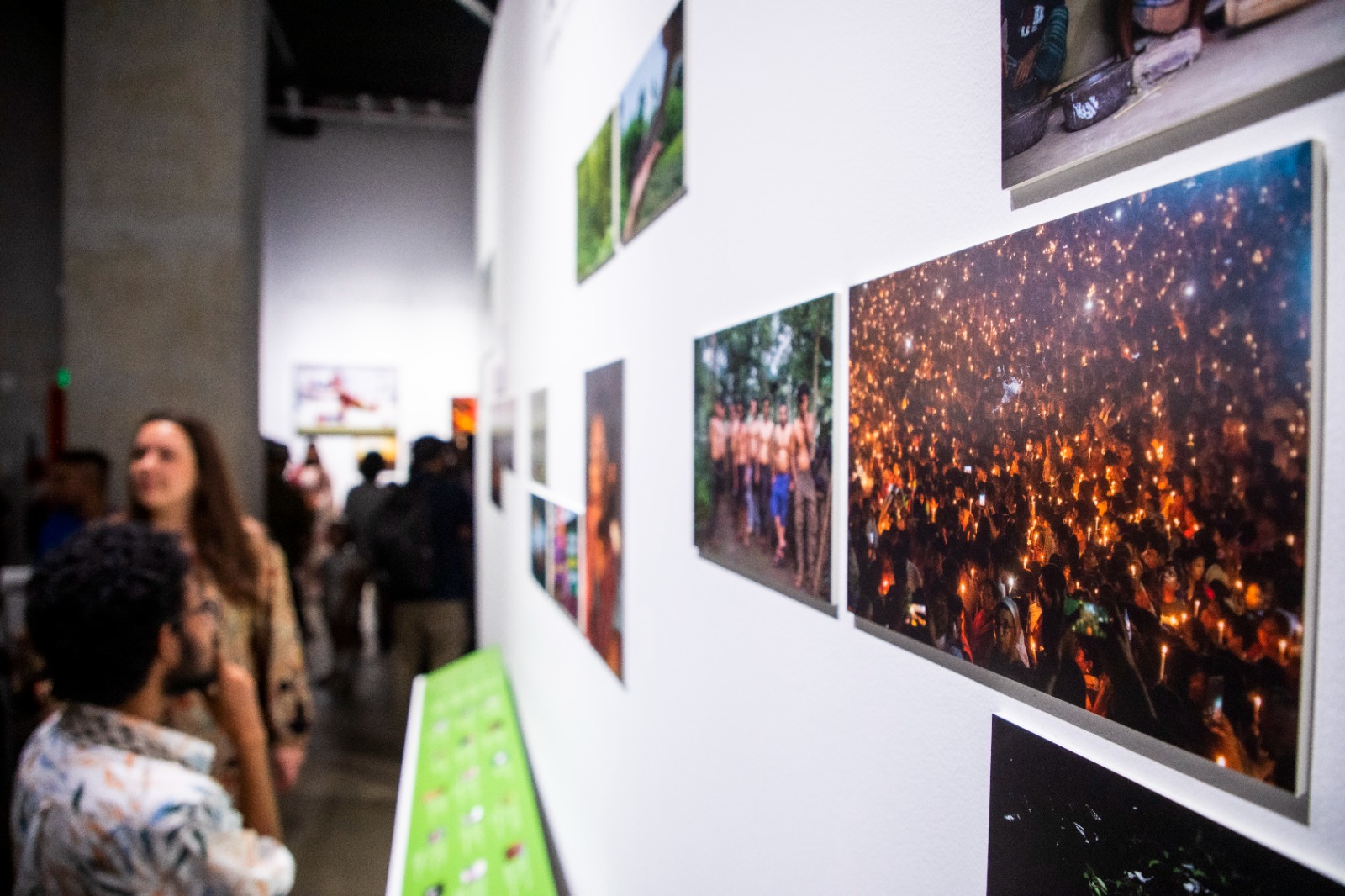
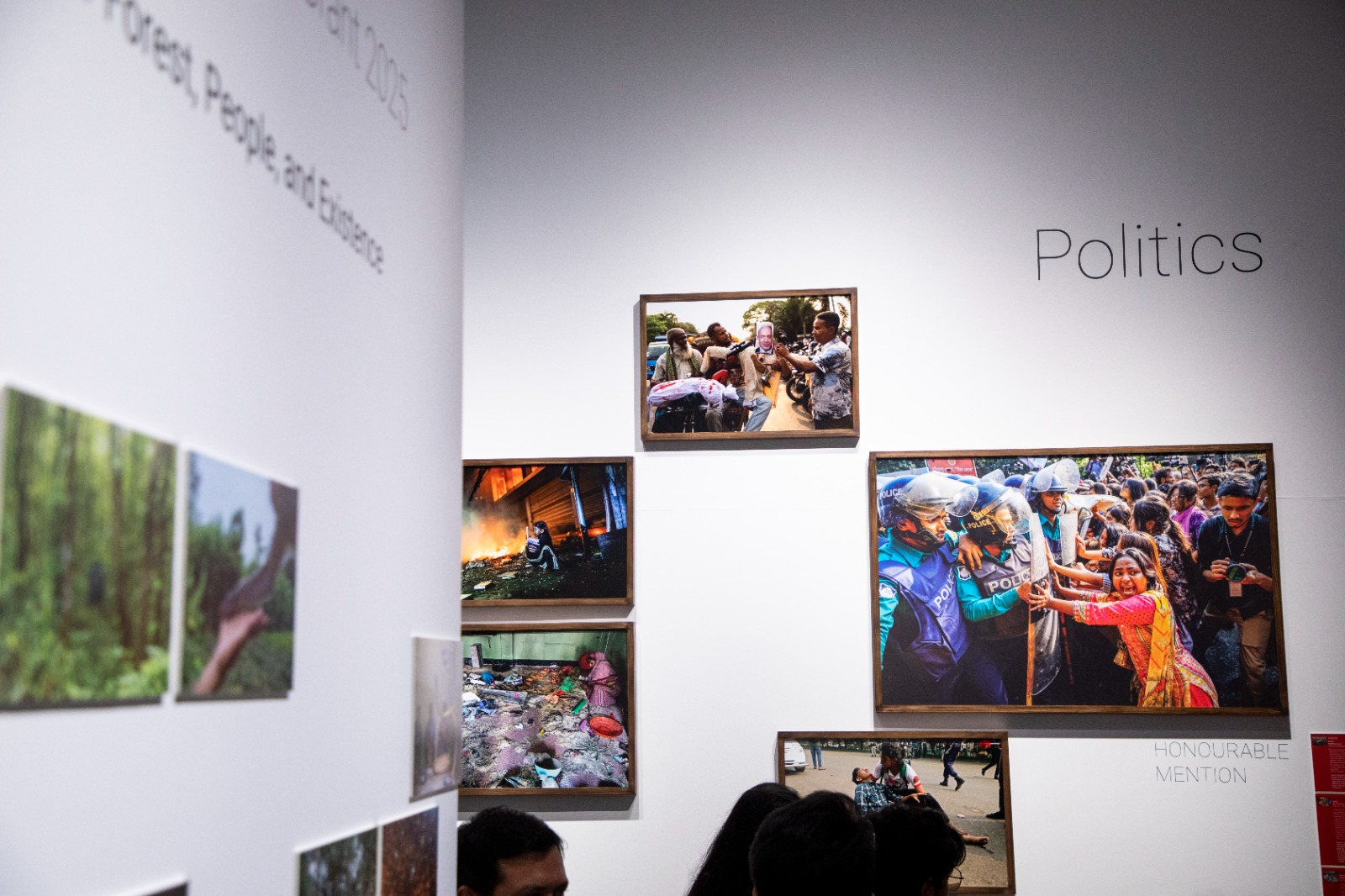
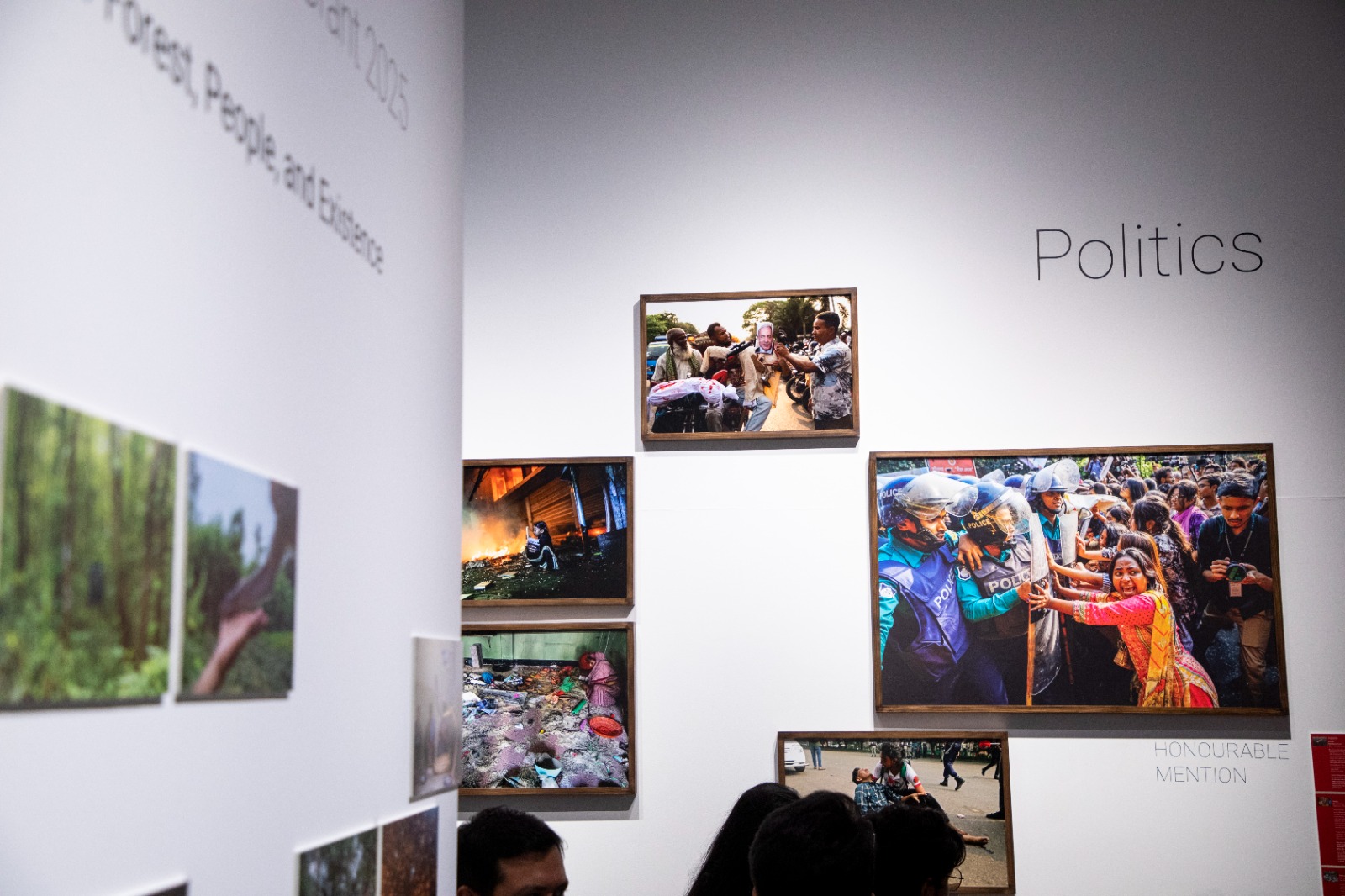
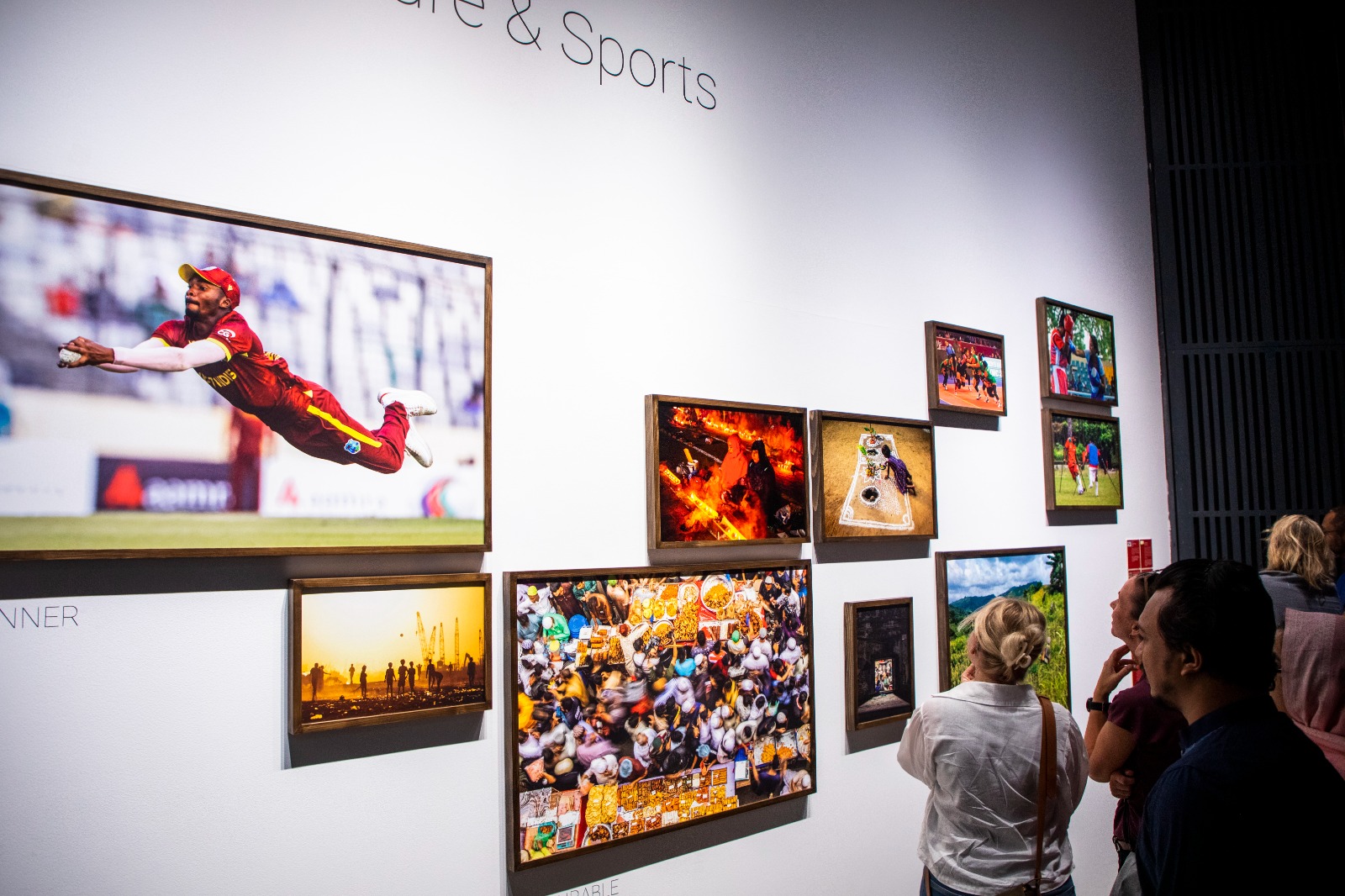
The competition, which opened for submissions in June, invited photojournalists from across Bangladesh to submit images taken in 2025. A total of 202 photographers from media organisations nationwide entered around 1,600 photographs spanning politics, public interest, economy, society, arts and culture, wildlife and nature, and documentary storytelling. From these entries, 32 photographs were selected for this year's exhibition.

The exhibition not only celebrates technical excellence but also recognises the role of photojournalists in documenting the country's defining moments—often from the front lines of tragedy, conflict and social change.
This year's entries were judged by Buddhojyoti Chakma, writer and photographer at Prothom Alo; Dina Hossain, assistant professor of practice at BRAC University's School of General Education and documentary filmmaker; Munir Uz Zaman, photojournalist at Agence France-Presse (AFP); and photographer, activist and Drik founder Shahidul Alam.
Speaking at the inauguration, renowned photographer and Drik founder Shahidul Alam argued that despite the growing dependence of news organisations on visual storytelling, photojournalists continue to receive too little recognition.
"Photographers in newspapers and mass media are not given much importance and are at the very bottom of that structure," he said. "To my knowledge, there isn't a single newspaper in Bangladesh that truly has a picture desk with trained photo editors. If there is one now, I would be happy to hear about it, but I'm saying this because the trend isn't there."
He noted that while photographs often generate the highest engagement across digital platforms, those who produce them rarely receive the recognition they deserve.
"Newspapers are very dependent on photographs. When those photographs appear on social media, they often receive the greatest reach. People discuss them and track their impact. Yet, for some reason, the people behind those images are not given their rightful place," he said, adding that photojournalists are often the ones taking the greatest risks on the frontlines.
Offering a different perspective, special guest Kamal Ahmed, former head of the Media Reform Commission and consulting editor of The Daily Star, said the status of photojournalists has changed significantly over the past four decades.
"When I began my career, photojournalists were often confined to the darkroom. In many newspaper offices, they did not even have their own desks," he said. "Today, however, almost every newspaper—particularly those with online operations—has a dedicated photography department. I have seen this not only at The Daily Star and Prothom Alo, but at many other media houses."
Ahmed said the shift has been driven by the demands of multimedia journalism, where images are needed almost instantly after events unfold.
"Photojournalism has earned an important place within journalism, and I believe its importance will only continue to grow," he said.
He cautioned, however, that while the profession has gained visibility, its practitioners remain vulnerable.
"The good news is that photojournalism has become increasingly important. The bad news is that we still have not established institutional, governmental or private mechanisms to ensure journalists' safety and security. We have made very little progress in this regard, and that remains our greatest concern."
One of the competition's jurors, documentary filmmaker and BRAC University faculty member Dina Hossain, said she approached the judging process not as a professional photographer but as a visual storyteller.
"I believe journalism and documentary storytelling ultimately share the same purpose—they bring forward stories that matter," she said. "Many of the photographs were technically outstanding, but the ones that stayed with me were those that told people's stories."
"The strongest entries remind us that great journalism isn't just about capturing a moment. It's about revealing greater truths and giving voice to stories that deserve to be heard."
She also praised the diversity of both the judging panel and the exhibition, saying she was particularly drawn to photographs centred on women's experiences. "I appreciate that Drik has tried to ensure diversity—not only in terms of gender, but in many different ways."
Fellow juror Buddhojyoti Chakma said he evaluated the entries from the perspective of someone who comes from the margins.
"What struck me was the attention given to Indigenous communities," he said. "There were also many powerful works focusing on women. Just as this competition has created space for stories about Indigenous people, perhaps there could also be an initiative dedicated solely to women's participation in photography and the stories they tell."
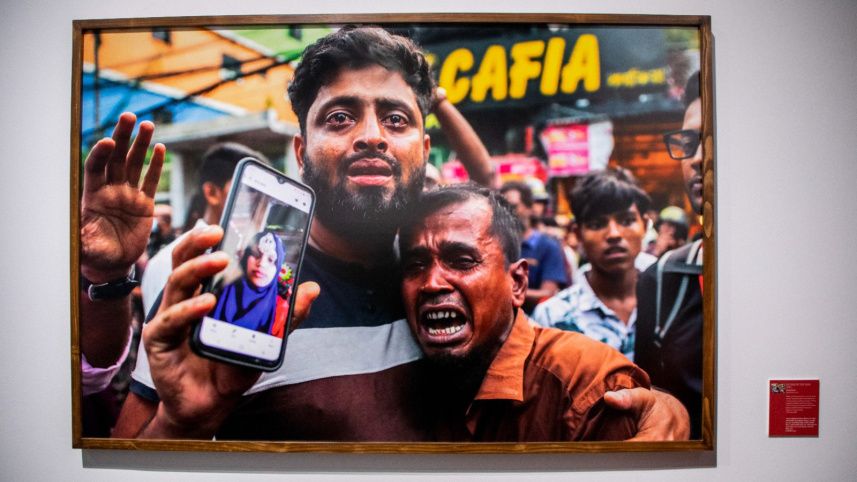
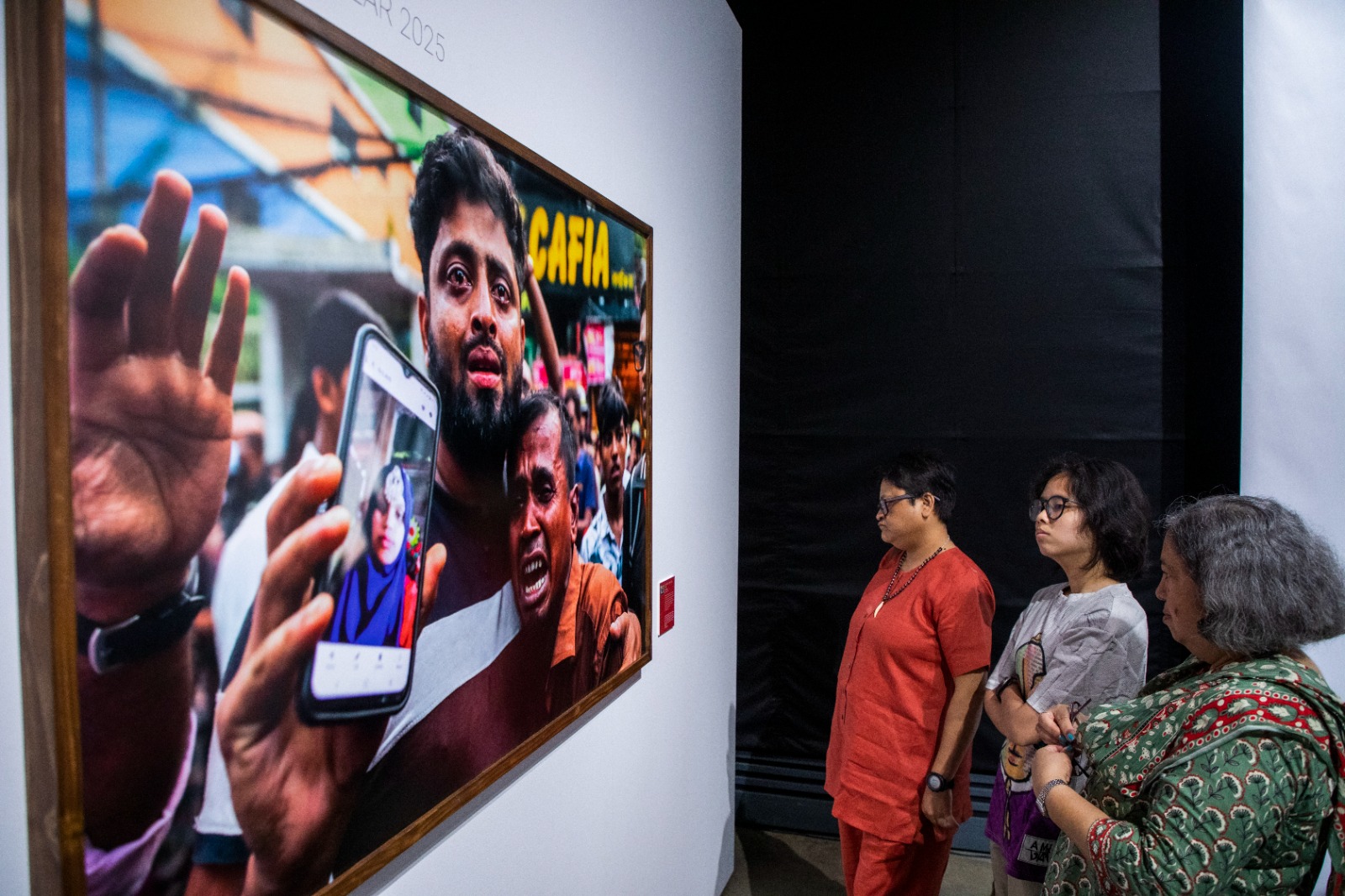
Among the 202 participants, Sazid Hossain, deputy head of photography at Prothom Alo, won the coveted Picture of the Year 2025 award.
 For all latest news, follow The Daily Star's Google News channel.
 His winning photograph, taken in Shiyalbari, Mirpur, on October 14, captures relatives searching for loved ones after a fire at a chemical warehouse killed 16 people. The blaze spread to a neighbouring building housing a T-shirt printing unit and garment factory, leaving many victims burned beyond recognition.
Recalling the assignment, Sazid said that when the fire first broke out, no one knew the scale of the tragedy.
"When I returned to the scene later that evening, family members had begun arriving after searching hospitals. They couldn't enter because the chemical fumes were overwhelming—even we, as journalists, could barely stay there. The photograph captures a father and a husband desperately searching for a missing woman," he said.
The image later gained international recognition after being published by National Geographic and The New York Times.
"At that point, people still didn't realise how many lives had actually been lost. Shortly after the image was transmitted, it was published by The New York Times," he said.
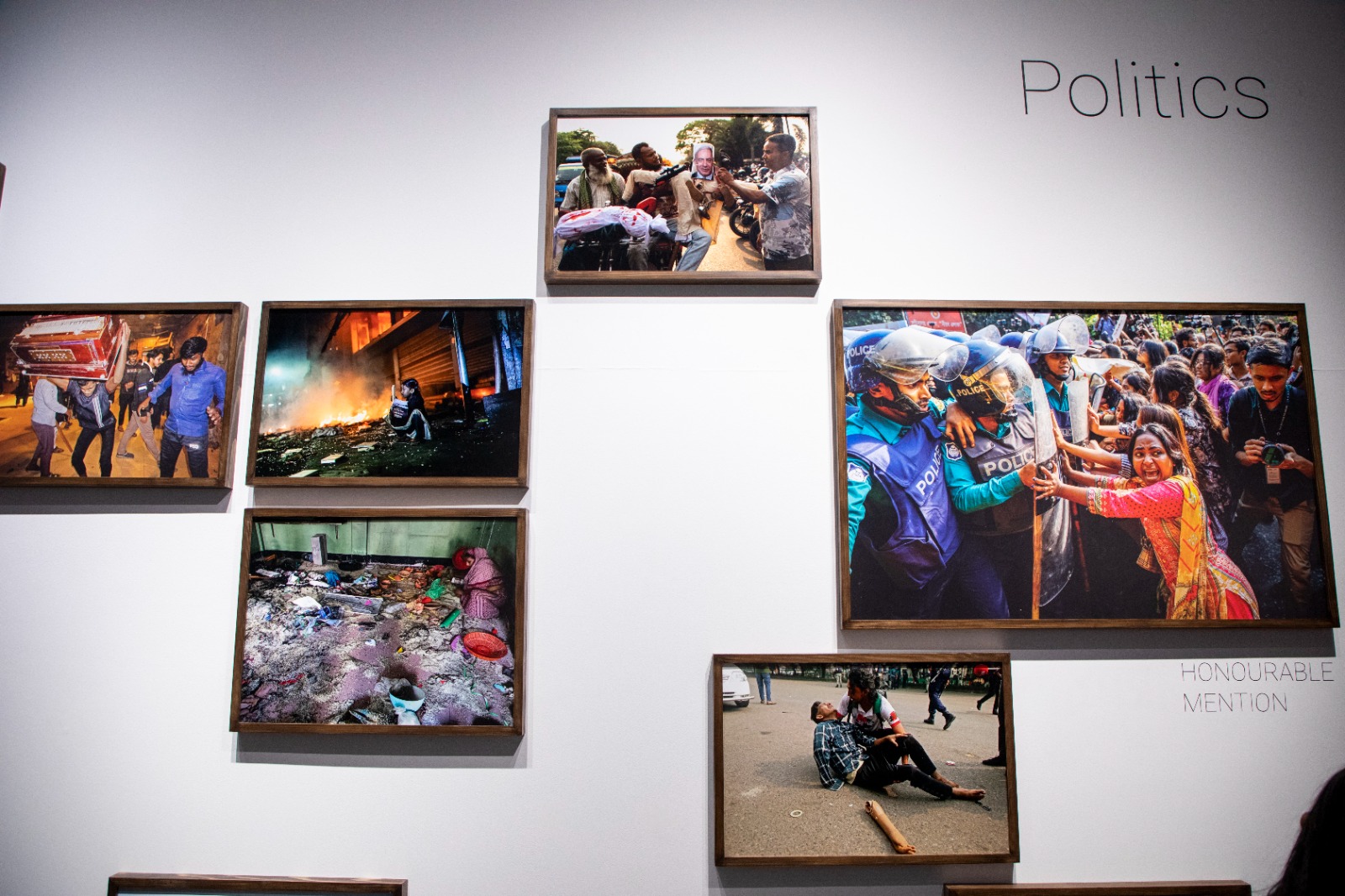
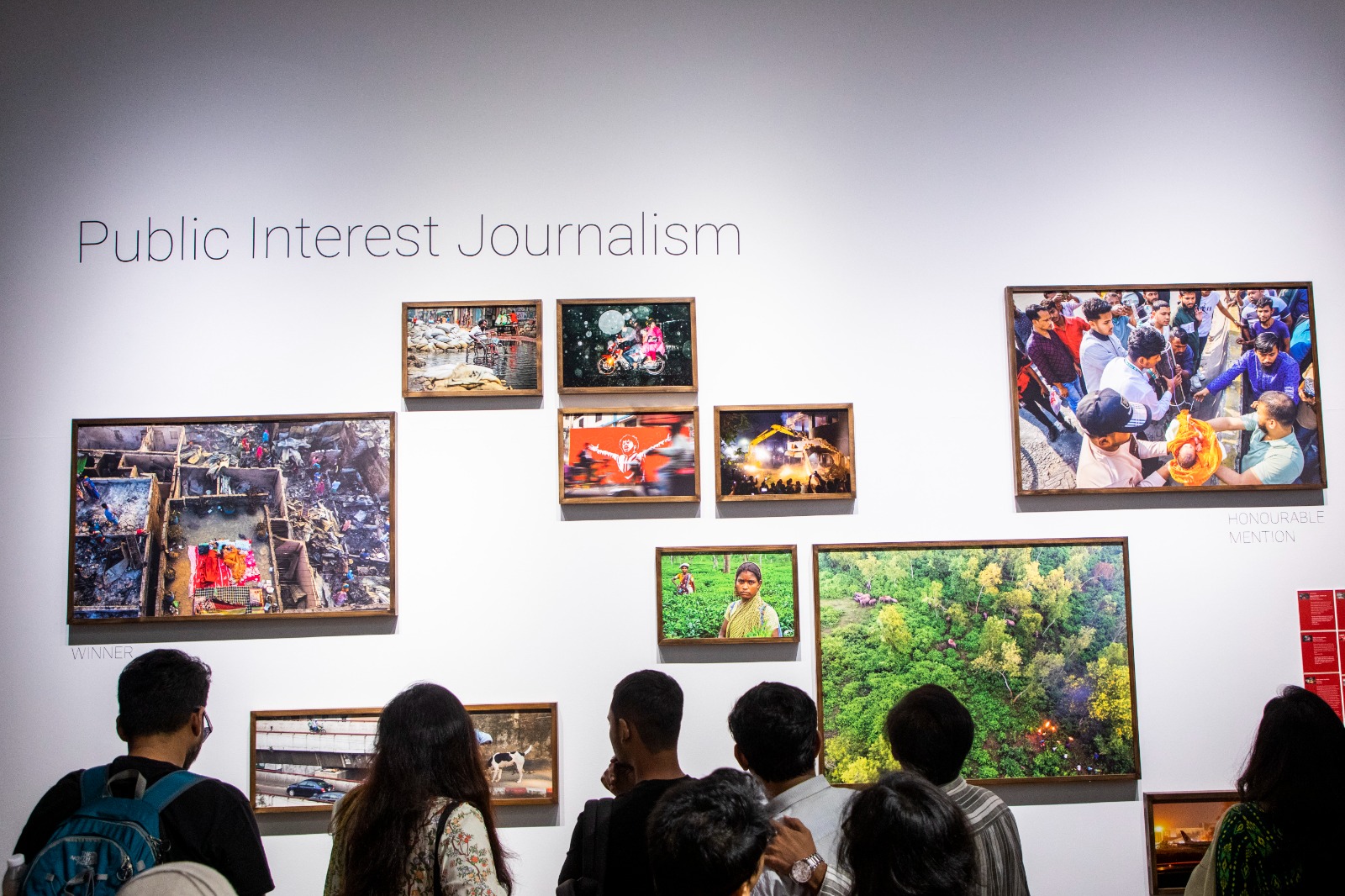
Md Mazharul Islam of Daily Times of Bangladesh won the Public Interest Journalism and Politics category.
He was recognised for two photographs—one documenting the arrival of Chief Adviser Tarique Rahman in Bangladesh and another showing the aftermath of the November 25 fire at Karail slum.
"The second photograph was taken the following morning. There was one rooftop that the fire hadn't reached, where a father and his son were sleeping. It was a moment that truly broke my heart," he said.
This year's winners are:Picture of the Year 2025: Sazid Hossain, Deputy Head of Photography, Prothom Alo. Public Interest Journalism and Politics: Md Mazharul Islam, Daily Times of Bangladesh. Honourable Mention (Public Interest Journalism and Politics): Md Mahmud Zaman, Head of Photography, Daily Times of Bangladesh. Arts, Culture and Sports: Tanvin Tamim, Sports Photojournalist, Daily Sun. Honourable Mention (Arts, Culture and Sports): Abdul Goni, Photojournalist, The Daily Ittefaq (currently with Daily Waadaa).
The Picture of the Year winner received Tk 100,000, while winners in each category received Tk 50,000. Honourable Mention recipients were awarded Tk 10,000, along with crests and certificates.
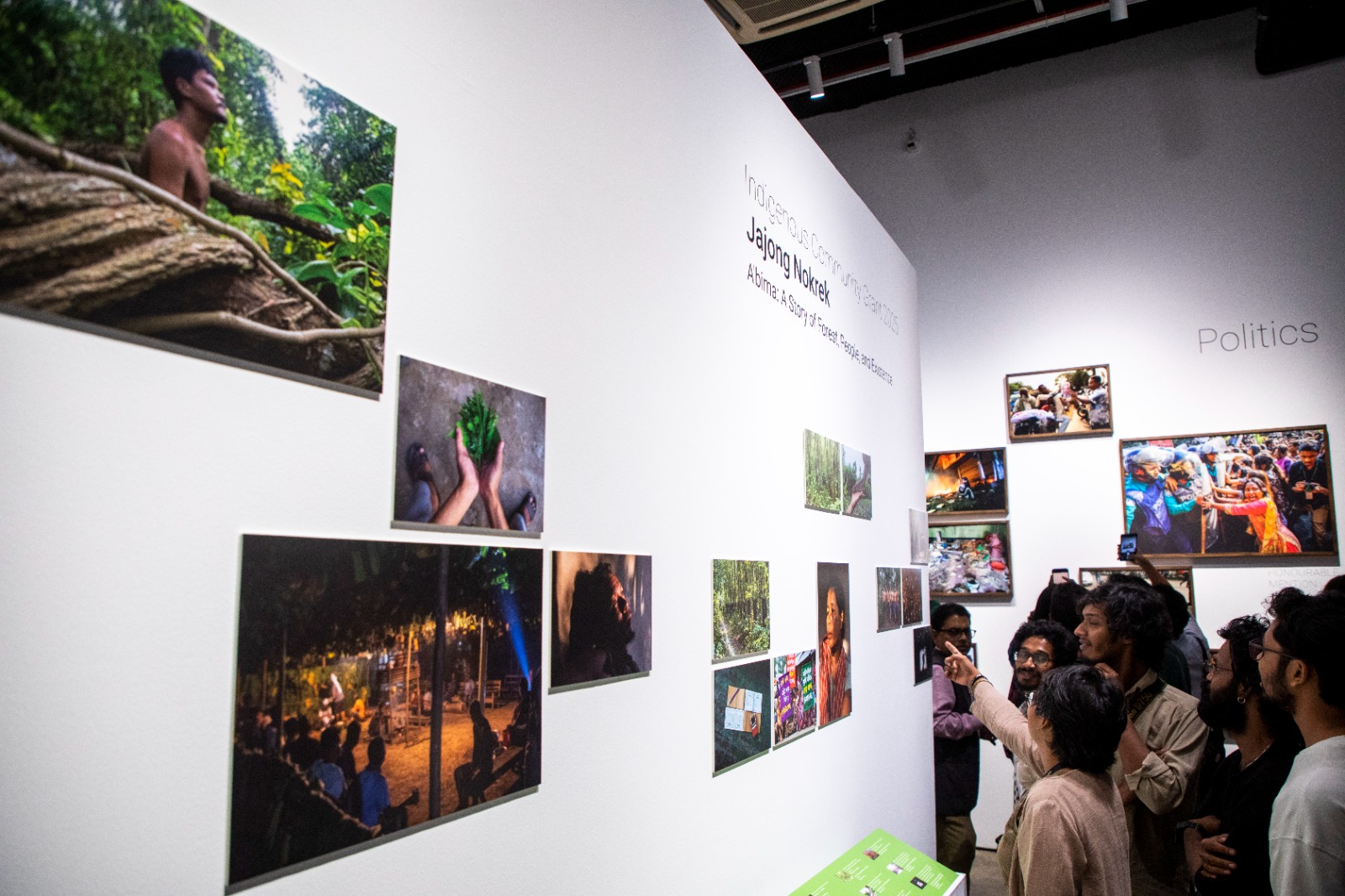
Drik also announced the recipient of the Indigenous Community Grant 2026. Indigenous photographer Mong Hai Shing Marma from Bandarban will receive financial support, year-long mentorship and the opportunity to exhibit his work at the Bangladesh Press Photo Exhibition 2027. This year's exhibition also features the work of Jajong Nokrek, recipient of the 2025 Indigenous Community Grant.
Drik launched the Bangladesh Press Photo Competition in 2021 to recognise the professionalism, skill and courage of Bangladeshi photojournalists documenting the country's defining moments from the front lines. Audiences interested in viewing the photographs can visit the exhibition at Drik from August 1 to 12, between 3:00 pm and 8:00 pm daily.
Comments