


How have we time-travelled to the 1980s?
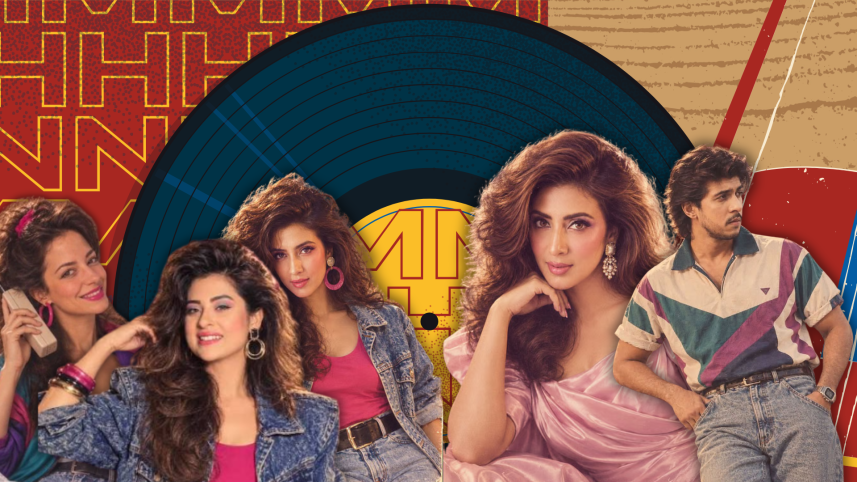
From 1980s hairstyles to sarees, today’s social media users are asking artificial intelligence to show them a version of themselves they never actually lived.
Scroll through social media these days and you may find something slightly surreal: familiar faces dressed in clothes from another era, standing against old-fashioned streets, posing like characters from a forgotten family album.

A couple who was born decades later suddenly appear as if they stepped out of a 1980s album art or film poster.
The photographs never existed.
But somehow, they feel like memories.
This is the latest wave of AI nostalgia, where generative AI transforms contemporary photographs into imagined versions of the past. From Instagram and Facebook to TikTok, people are asking AI what they might have looked like in the 1960s, 1970s, 1990s, or, most popularly, the 1980s.
And now, nostalgia has become personal.
Instead of simply watching someone else’s imagined 1980s, people are putting themselves into it.
And then comes the fun part.
One person posts their AI-generated 1980s portrait. Another sees it and thinks, “Wait, what would I look like?” Someone comments, “Try this prompt,” and suddenly, everyone is travelling back in time.
Friends, couples, siblings and families join in. The prompt gets copied, the pictures get posted, and the cycle continues.
The art of overdoing a trend
Of course, social media has one special talent: turning anything interesting into something everyone must do immediately.
One person starts a trend, and suddenly, we are all forcibly taken back to the 1980s.
The first few images may feel creative. But when everyone posts almost identical vintage portraits, the charm can quickly become a little… overdone.
The catch
Beyond the glamour, this trend also raises a looming concern that some netizens are beginning to discuss.
Generative AI requires substantial computing power and energy, not to mention waste vast amounts of freshwater for cooling.
So, ironically, futuristic technology is helping us recreate a supposedly simpler past while creating modern environmental concerns. As AI becomes more popular, its environmental footprint is becoming part of the conversation.
Aside from just the environmental cost of your prompts, another concerning matter is that we are feeding it more of our data than it could ever scour, voluntarily. Ever wonder why AI has gotten good at generating realistic images with accurate skin texture, pores, tones, and expressions? It’s because we feed it our own images to train itself. Every time these fleeting trends show up, we stand in line, ready to feed it more of our data.
When imagination looks like a memory
An old photograph tells us that a moment happened. An AI-generated photograph tells us that we need to take part in yet another trend.
The 1980s we see is definitely not historically accurate. They are polished, nostalgic and romanticised. But the curiosity behind them is real, and it can make us look like we belonged there, and apparently, that is enough to make the whole internet travel backwards together.
 For all latest news, follow The Daily Star's Google News channel.
Comments