


Beyond resorts: Experiencing Madhupur through Otithi’s community tourism
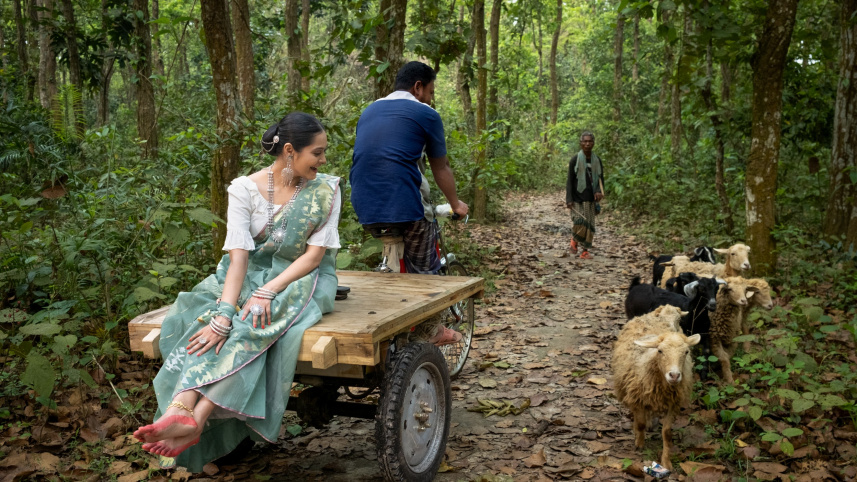
By the time we reached our homestay in Madhupur, Tangail, the distance from city travel had become more than geographical.
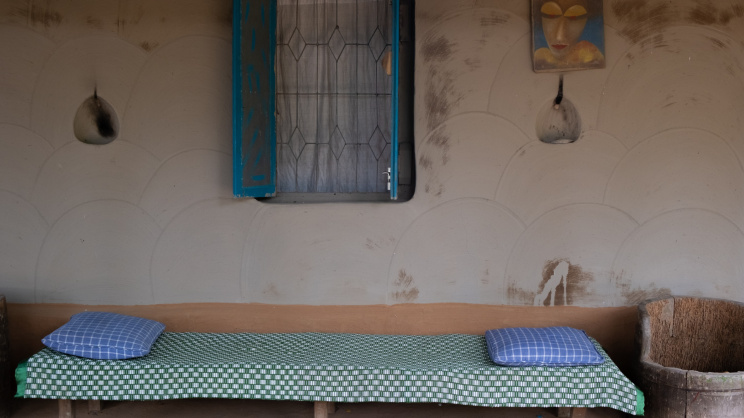
Our lodging itself deepened that impression. Built in mud and marked by an open kitchen, it felt less like a tourist facility and more like an extension of the place. Its quiet intimacy reflected a way of life closely tied to the Mandi, also known as the Garo, community.

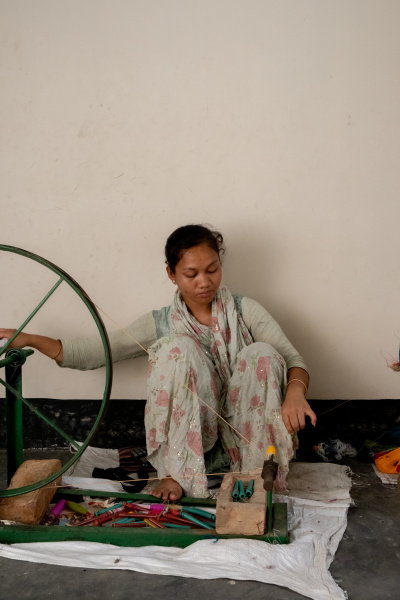
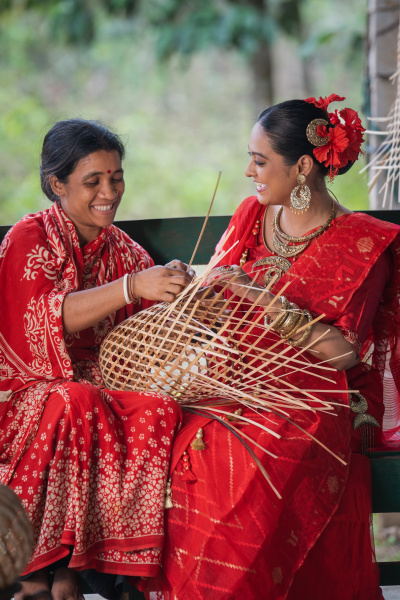
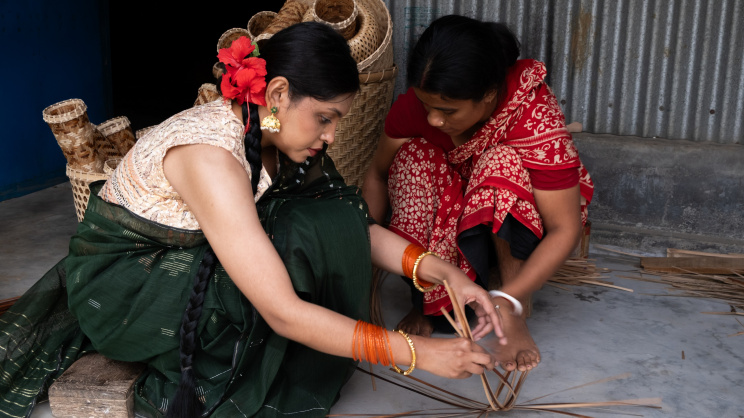
We were served local Mandi food, witnessed their bamboo craft and weaving firsthand, and briefly stepped into the rhythm of their everyday life. More than a place to stay, the homestay indeed captured the central promise of community tourism: that travel can move beyond accommodation into a more meaningful encounter with local culture.
What community tourism actually means
In Bangladesh, tourism is still largely imagined through the language of resorts. Community tourism proposes a different way of travelling. It is not centred on staying in a picturesque place, but on understanding the people who give that place its identity.
Nafisa Tasnim, Lead of Otithi at BRAC, explains, “When people approach Otithi, we tell them we are introducing them to the essence of a place.” For her, travelling to a destination means understanding its culture, its people, its specific food, traditions, and festivals, and recognising what makes that place distinct.
That distinction matters. In community tourism, accommodation is not the main event. As Nafisa points out, “Unlike resort-based travel, accommodation is not the primary focus here; what matters most is how much the traveller interacts with the local people and culture.”
She also noted that people often reduce the concept to homestays, when in reality that is only one part of a much larger model built around organised local participation, training, and direct community involvement.
Nafisa further elaborates, “For us, tourism is the art of storytelling. By hiring from within the community, we ensure that every guest experience is led by those who truly live the culture. It turns every visit into a meaningful exchange: visitors walk away with an intimate understanding of Madhupur’s identity, while the local community finds a new avenue to grow their prosperity, ensuring that those traditions and stories remain vibrant and flourish for generations to come.”
This matters because conventional tourism often absorbs local culture without redistributing enough dignity or income back to the people who sustain it. Community tourism, at least in its more ethical form, attempts to shift that balance.
Indeed, the time at Madhupur Homestay did not feel like it was designed merely to host outsiders for a night. It felt designed to place them, however briefly, within the rhythm of local life.
Food as hospitality, not performance
The meal, too, was part of the story.
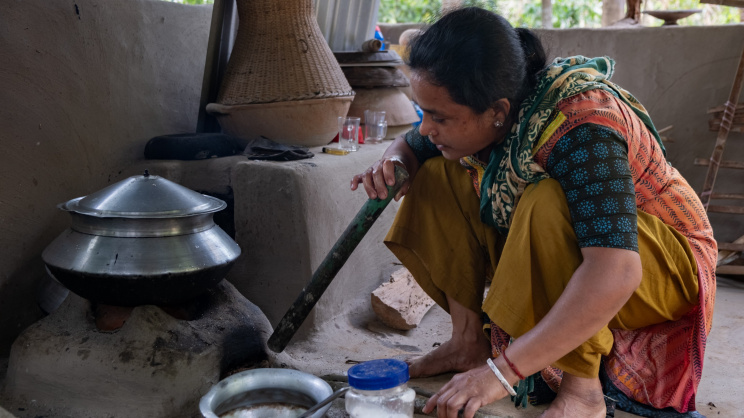
Before it reached the table, it began in the kitchen, where the cook crouched beside a traditional clay stove, roasting a whole chicken over firewood with steady, unhurried focus. Fresh, locally sourced ingredients and time-honoured recipes like Goppa and Khari came together in simple preparations where oil was notably absent, allowing the natural flavours of the food to stand on their own.
When the food was finally laid out in earthen and metal bowls on a woven mat, it felt less like a restaurant presentation and more like an invitation into a household rhythm. There was steaming rice, mashed preparations, vegetables, fried items, and other dishes that spoke of locality and familiarity rather than display. Everything felt deliberate.
What made the meal memorable was not simply flavour, though flavour was certainly part of it. It was the fact that the food arrived with its full context intact.
That is what community tourism can do at its best. It can return context to consumption, allowing food to be experienced not as an isolated item on a plate, but as an expression of people, place, and everyday knowledge.
 For all latest news, follow The Daily Star's Google News channel.
 The community behind the landscape
To speak of Madhupur only through its forests or muddy roads would be to leave the place half-told. The region is also deeply shaped by the Mandi community, also widely referred to as the Garo community, whose presence gives Madhupur much of its cultural texture and continuity.
The Mandi community has a longstanding relationship with bamboo and weaving. Bamboo has long been used to make baskets, fishing traps, storage items, tools, and household objects, not only because it was available, but because it became part of an entire way of living with the land.

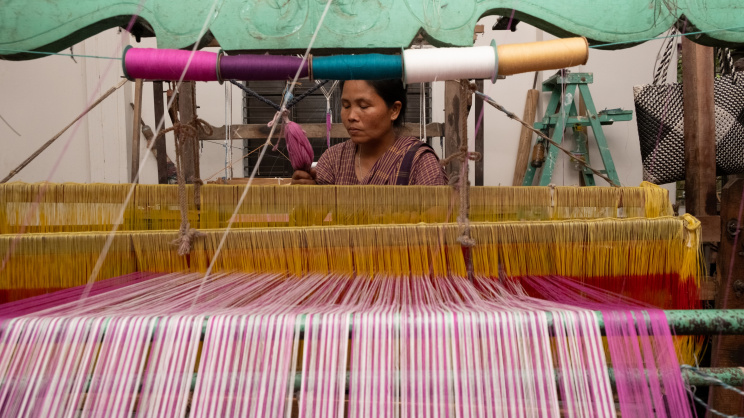
In much the same way, weaving has long carried both practical and cultural meaning. Garo women have traditionally worn garments such as the Dakmanda, a handwoven cloth marked by geometric motifs and a strong sense of identity, while weaving itself has historically been passed down within households, often from mothers to daughters.
Seen from that perspective, a visit to Otithi’s Madhupur Homestay is to encounter this heritage and a vibrant web of knowledge and labour that sustains the land and people, reflecting a living culture passed from generation to generation.
That is what gives the experience its depth. The visitor is not just looking at a place, but briefly encountering the lives and practices that continue to hold it together.
More than a place to stay
What stayed with us after leaving Madhupur was not just the landscape, but the feeling of having witnessed a place from closer than usual.
So often, travel allows only a surface impression. However, this place felt different, shaped by a living cultural world seen in Mandi food like Goppa and Khari, bamboo weaving, Dakmanda textiles, and community-rooted hospitality.
That, perhaps, is what made the stay memorable.
It was not polished in the way conventional tourism often is, but it felt sincere. And sometimes sincerity leaves a deeper mark than comfort, and this perhaps is the true beauty of community tourism, something we experienced here through BRAC’s Otithi, when, of course, approached with care and thoughtfulness.
Photo: Kamrul Hasan; Silvia Mahjabin
Comments