What Anthony Bourdain taught us about the honesty of taste
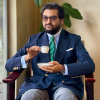
Two days ago, over a late lunch in the office cafeteria, someone treated me to a gourmet sandwich he had discovered recently and had since been his "favourite in Dhaka".
"So, isn't it the best sandwich in town?" he asked while we were devouring it.

"Yes," I replied after a short pause, though the word emerged in a tone more tentative than triumphant.
It was not dishonesty that slowed my answer. Quite the contrary. I wanted to be honest, but honesty, I realised, is rarely as simple as affirmation or denial. The sandwich was indeed delicious. Yet, I found myself unable to explain what prevented me from embracing it without reservation.
What subtle alteration would have aligned it with my own palate?
Perhaps a generous smear of pesto. Maybe a spicy burnt honey glaze that flirted with sweetness before surrendering to smoke.
The question lingered with me throughout the weekend.
Somewhere between idle contemplation and earnest introspection, I found myself thinking of Anthony Bourdain.
Not because I imagine myself capable of dissecting flavour with his confidence. Far from it. The appeal of Anthony Bourdain has never rested upon his palate alone. It has always been rooted in something rarer. His astonishing ability to transform food into language, and plate that into revelation.
There are many celebrated chefs. There are many gifted travel presenters. There have even been journalists who wrote elegantly about restaurants. Anthony Bourdain belonged to none of these categories entirely because he quietly dismantled them all.
He understood that every meal arrives carrying invisible luggage.
A bowl of noodles contains migration. A skewer of grilled meat contains conquest and survival. Bread carries memory. Spice remembers trade routes long forgotten by empires that once claimed to own them. Food was never merely sustenance to Bourdain. It was anthropology with seasoning, history served warm, and politics disguised as dinner.
His genius lay in recognising that every table is an archive.
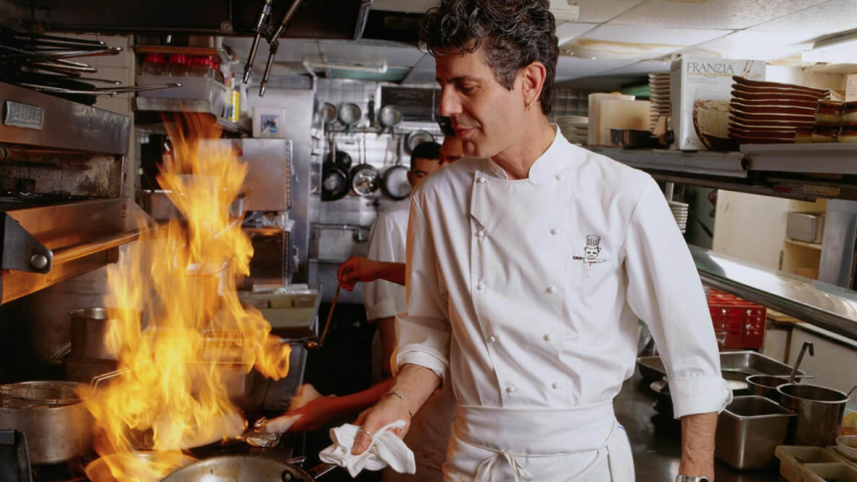
Born on June 25, 1956 in New York City and raised in New Jersey, Anthony Michael Bourdain's path was hardly preordained.
Before the world knew him as television's most compelling wanderer, he spent decades sweating inside professional kitchens, enduring the relentless hierarchy, profanity and exhaustion that often accompany the restaurant trade.
He was neither conventionally polished nor particularly interested in appearing respectable. Kitchens, as he often observed, were populated by misfits, immigrants and relentless perfectionists. It was precisely because he belonged among them that he could write about them without romanticism.
His life changed almost accidentally.
In 1999, an essay titled "Don't Eat Before Reading This" detonated like a grenade within culinary journalism. It stripped away the pristine theatre of fine dining and revealed the organised chaos beneath. Readers encountered a voice that was irreverent without being cynical, brutally honest without descending into cruelty, and deeply literate without parading its intelligence.
 For all latest news, follow The Daily Star's Google News channel.
 The following year came "Kitchen Confidential", a memoir that became both bestseller and manifesto.
Its success could easily have imprisoned Bourdain inside the comfortable persona of celebrity chef. Instead, it liberated him.
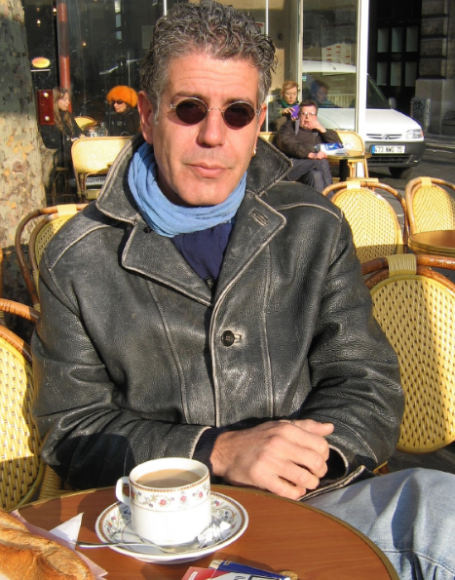
Television followed, first with "A Cook's Tour", then "No Reservations", "The Layover", and eventually "Parts Unknown". The programmes looked, on paper, like travel shows. In practice, they were something altogether more ambitious.
Bourdain rejected the glossy itinerary.
He had little patience for destinations engineered exclusively for tourists. Five-star hotels rarely interested him. Celebrity endorsements interested him even less. His curiosity belonged elsewhere, in crowded alleyways fragrant with charcoal smoke, family kitchens where recipes survived dictatorships, roadside stalls whose owners had never heard the word "artisanal", and conversations that wandered effortlessly from food to war, migration, identity and grief.
He approached unfamiliar cultures as revelation than inquisition, perhaps that remains his greatest contribution.
Western representations of foreign cuisines had often oscillated between exotic spectacle and patronising curiosity. Bourdain quietly dismantled both.
Dame Nigella Lawson once remarked upon his extraordinary ability to combine the erudite with the brilliantly slangy. It is perhaps the finest description of his writing ever offered.
He possessed that rare literary elasticity through which references to Joseph Conrad, punk rock, French philosophy and dive bars could coexist naturally within a single paragraph. His sentences sparkled with sardonic wit before quietly landing an emotional blow one scarcely anticipated.
He wrote like a novelist imprisoned inside the body of a chef. Or perhaps a chef masquerading as a novelist.
Yet all this eloquence would have amounted to little without his vulnerability.
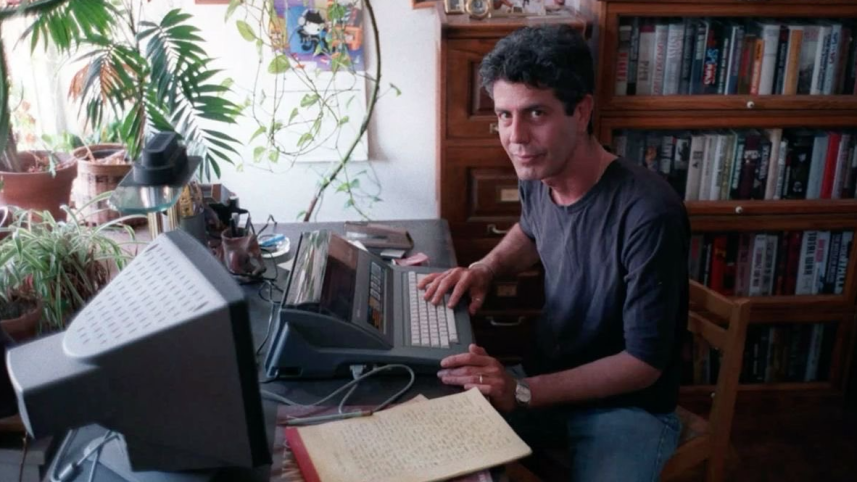
Unlike many public figures whose brands depend upon invulnerability, Bourdain consistently admitted uncertainty. He spoke candidly about addiction, excess, loneliness and regret.
He never sanitised his earlier life with retrospective wisdom. His flaws remained visible because he understood that honesty acquires credibility only when it includes one's own flaws.
That is perhaps why his death in 2018 reverberated with such uncommon force. The tragedy did not simply deprive the world of a gifted broadcaster. It shattered a comforting illusion.
We often mistake eloquence for equilibrium, humour for happiness, and worldly sophistication for inner peace. Bourdain reminded us, painfully, that a person may understand the world with breathtaking clarity while still struggling to reconcile themselves to it.
His death was heartbreaking not because it diminished his achievements, but because it exposed how little public brilliance reveals about private suffering.
It remains tempting, in hindsight, to search his work for hidden warnings or prophetic clues. Perhaps that temptation says more about our discomfort with complexity than about the man himself. Human beings are not novels whose endings retrospectively explain every preceding chapter.
Sometimes extraordinary lives simply remain unresolved.
Yet if tragedy forms the final page of Anthony Bourdain's biography, it should never become its defining sentence.
He reminded us that taste, in every sense of the word, begins with paying attention. Sometimes the most important thing we consume is not the food before us. It is the honesty with which we learn to describe its taste.
Mungdi brings hill cuisine to Dhaka

The dudh-cha versus rong-cha debate and how we hijacked a British tea party

An evening at Sumaya Khan’s Supper Club
Why Bangladesh must save its indigenous rice before it disappears
Why Sirajganj sweets taste different from anywhere else

The chef, the GenZ, the dreamer

Kishwar Chowdhury brings her book ‘Smoke Rice Water’ to Dhaka
Chef Zohra Maliha says you're throwing away good food
Reflection / The cutlet and the ‘journey by train’ essay