


Afghan women forced from jobs as Taliban take control
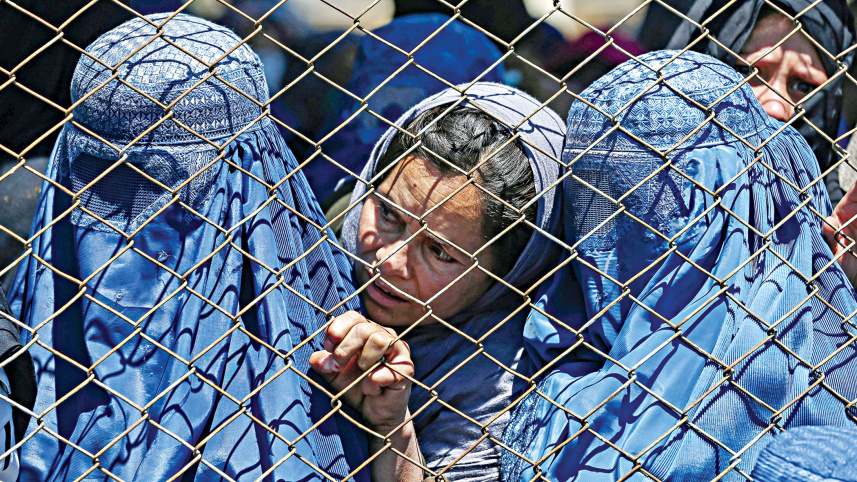
In early July, as Taliban insurgents were seizing territory from government forces across Afghanistan, fighters from the group walked into the offices of Azizi Bank in the southern city of Kandahar and ordered nine women working there to leave.
The gunmen escorted them to their homes and told them not to return to their jobs. Instead, they explained that male relatives could take their place, according to three of the women involved and the bank's manager.

"It's really strange to not be allowed to get to work, but now this is what it is," Noor Khatera, a 43-year-old woman who had worked in the accounts department of the bank told Reuters.
"I taught myself English and even learned how to operate a computer, but now I will have to look for a place where I can just work with more women around."
The incident is an early sign that some of the rights won by Afghan women over the 20 years since the hardline Islamist militant movement was toppled could be reversed if it returns to power.
The Taliban, who ruled Afghanistan from 1996 to 2001, have overrun many of Afghanistan's biggest cities in recent days and are closing in on the capital Kabul.
Under the group's strict interpretation of Islamic law, women could not work, girls were not allowed to attend school and women had to cover their face and be accompanied by a male relative if they wanted to venture out of their homes.
Women who broke the rules sometimes suffered humiliation and public beatings by the Taliban's religious police.
During hitherto fruitless talks over a political settlement in recent years, Taliban leaders made assurances to the West that women would enjoy equal rights in accordance with what was granted by Islam, including the ability to work and be educated.
Two days after the episode at Azizi Bank, a similar scene played out at a branch of another Afghan lender, Bank Milli, in the western city of Herat, according to two female cashiers who witnessed it. Three Taliban fighters carrying guns entered the branch, admonishing female employees for showing their faces in public. Women there quit, sending male relatives in their place.
Afghan women working in fields including journalism, healthcare and law enforcement have been killed in a wave of attacks since peace talks began last year between the Taliban and the US-backed Afghan government.
Scores of educated Afghan women took to social media to appeal for help and express their frustration.
"With every city collapsing, human bodies collapse, dreams collapse, history and future collapse, art and culture collapse, life and beauty collapse, our world collapse," Rada Akbar wrote on Twitter. "Someone please stop this."
 For all latest news, follow The Daily Star's Google News channel.
Comments