


Have we lost our moral limits?

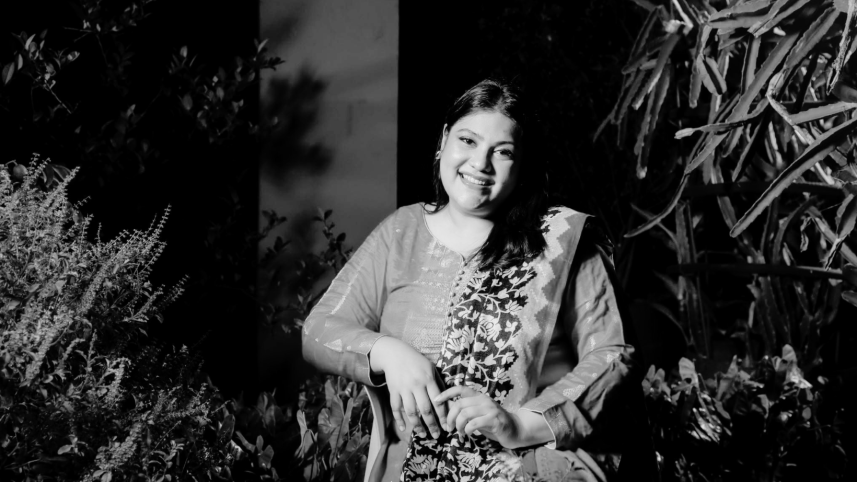
Kaarina Kaisar's body is barely cold. She died early today (Saturday) in a Chennai hospital, far from home, after a desperate battle with liver failure. She was young, talented, and beloved by a generation of Bangladeshis who saw in her something rare: an unapologetic woman who made them laugh while making them think.
However, as her father typed out his farewell in the small hours of this morning, strangers were celebrating. Not quietly. Loudly, gleefully, with religious invocations, sexual slurs, and -- in the most depraved corners of social media -- threats to rape her corpse.

This is Bangladesh in May 2026.
The hostility began even before she died. The moment news of her critical condition surfaced, Awami League supporters launched a coordinated campaign across Facebook and X, branding her a looter, a traitor, a “July terrorist”. Her crime was participating in the 2024 uprising that removed Sheikh Hasina from power.
Fact-checkers at Dismislab documented at least 53 such posts, traced to verified Awami League-affiliated profiles and groups. "Alhamdulillah," they wrote -- praise be to God -- as a young woman lay dying in an ICU far from her family.
After she died, they wrote it again, louder.
What we are witnessing is not one hatred but two, fused into something uniquely vicious.
The first is political. The Awami League spent 15 years constructing a world in which dissent was not merely wrong but morally contaminated -- anti-liberation, treasonous, deserving of punishment. The July uprising dismantled their government but not the culture of dehumanisation they spent a decade and a half perfecting.
For the mob celebrating Kaarina's death, this is not cruelty. In their warped moral universe, it is justice. That is what sustained authoritarian propaganda does to people. It controls them as much as it rots them from the inside.
The second hatred is older, deeper, and far more democratic in its distribution: misogyny.
Kaarina was a woman who was visible, outspoken, and entirely unapologetic about who she was -- including her body, which did not conform to conventional beauty standards.
Bangladesh's patriarchal gut finds that combination unbearable under any circumstances.
In Kaarina's death, the knives came out fully. The rape threats are not just political statements. They are the language of men who need to dominate women even after the women are gone -- a final, cowardly assertion of power over someone who can no longer fight back. The fact that she is dead does not shame these men. It emboldens them.
The government of Tarique Rahman must now answer a simple question: what does it stand for? Bangladesh has cybercrime laws. Threatening to rape a corpse is not protected speech by any legal or moral standard on earth. Every post, every profile, every account that issued such threats is traceable. The failure to act is not administrative delay -- it is a decision.
The BNP came to power through an election made possible by an uprising that Kaarina and thousands like her were part of. If that government cannot now prosecute those who are sexually threatening her dead body, it has already begun betraying the people whose sacrifices cleared its path to power. File the cases. Make the arrests. Do it visibly, and do it now.
Then there is the silence of a certain part of the liberal class -- the columnists, academics, cultural commentators, and drawing-room progressives who fill Dhaka's intellectual spaces with talk of justice and gender rights.
Their near-absence from this moment is its own verdict. When the woman being threatened happens to carry a political identity they find inconvenient to defend, many of them suddenly discover the virtue of restraint.
That is not nuance. That is moral cowardice with good vocabulary. If the rape threats against Kaarina do not move you to speak, you should have the honesty to stop calling yourself a progressive.
Less than two years ago, millions of Bangladeshis stood in the streets and demanded something better. They risked their lives for it. Kaarina Kaisar was among them. What is happening to her memory today -- the celebration, the slurs, the sexual threats -- is not a fringe anomaly. It is a mirror.
 For all latest news, follow The Daily Star's Google News channel.
 It shows us that the uprising changed the people in power without yet changing the country that produced them: a country where political loyalty overrides basic humanity, where a woman's body is always available as a site of punishment, and where the educated class reserves its outrage for occasions that carry no personal cost.
Kaarina Kaisar deserved better from the country she helped free. She still does. And Bangladesh will not be free -- not really -- until the people who celebrated her death and threatened her corpse face consequences, and the people who stayed silent find the courage to be ashamed.
Comments