


Love, secrets, and family in Monsoon Wedding
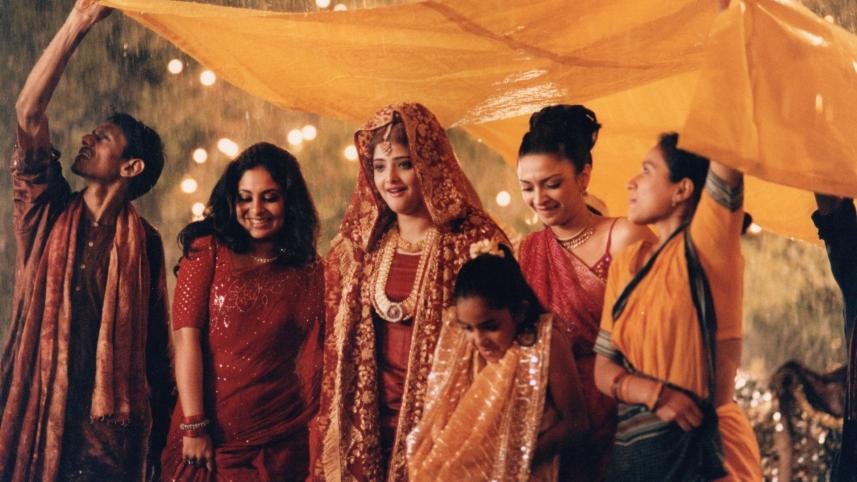
Mira Nair's Monsoon Wedding (2001) depicts the monsoon season, a time of love and rain, along with a grand South Asian wedding. The film plays like an ode to most big Indian Punjabi weddings, which are integrated with complex familial bonds, hidden trauma, tradition, and love at the centre of it all.
The film revolves around the wedding events of Aditi Verma, who is set to marry the non-resident Indian (NRI) from Houston, Hemant, who agreed to marry a bride selected by his parents. However, on Aditi’s part, the ordeal seems like a rash decision, being frustrated with her married lover’s unkept promises about divorcing his wife. While Aditi deals with the complexity of her love life, a split between traditional marriage and modern-day relationships, her father, Lalit Verma, saunters around the house in an attempt to bring the entire family together and arrange the festivities with the aid of the wedding planner, P K Dubey. The movie is filled with many subplots, the most conflicting one being Ria Verma, Lalit’s niece’s secret, while the most endearing is P K Dubey and the househelp, Alice’s, romance.

Monsoon Wedding also does an incredible job blending the bilingual tongue, the code switching from English to Hindi, to the Punjabi dialect, which most bilingual speakers can resonate with. Relatives are flying in from different parts of the world, each character different from the other, with various interests, which serve as a reflection of globalised values, expressing nuances of each individual’s search for an identity of their own in the newfound interconnectedness of the world, establishing a hybrid space where Western culture amalgamates with the traditional desi rituals and traditions.

Watching the film today, 25 years after it was made, to the modern-day audience, it may seem like it was way ahead of its time. Nair has touched base with subjects that may sound radical to the contemporary audience, given how a wedding environment has not stopped her from dealing with issues encapsulating sexual abuse and trauma, especially through Ria. However, it is through Lalit Verma, the troubled man who doesn’t want to accept his son’s identity as a chef, deeming it to be “unmanly”, that the plot takes a turn when he takes a stand for his niece, as if breaking years of generational curses, and that much is evident through Ria’s astonished yet relieved glance at her uncle.
Nair presents a typical middle-class family’s story, with the struggle with money, and the “well-off” uncles offering to help. The weight of the difficulties is toned down a bit with the addition of songs, laughter, and sweet moments of love, be that between Dubey and Alice or Pimmi’s nephew from Australia, Rahul and Aditi’s cousin, Ayesha. Unlike the typical Bollywood movies, where the scene cuts into a dance sequence between the protagonists, Nair’s Monsoon Wedding depicts a more realistic mode of bursting into songs, which is mostly during rehearsals and the wedding events themselves.
Monsoon Wedding combines joy, humour, music, and heartfelt drama, while also addressing social taboos, and each character’s performance is played out beautifully by the extraordinary cast. Over 20 years after its release, the film remains relevant to audiences – old and new –portraying more than a wedding story, offering an experience that remains even after the final dance.
 For all latest news, follow The Daily Star's Google News channel.
Comments