


Bangladesh's next strategic test isn't choosing sides

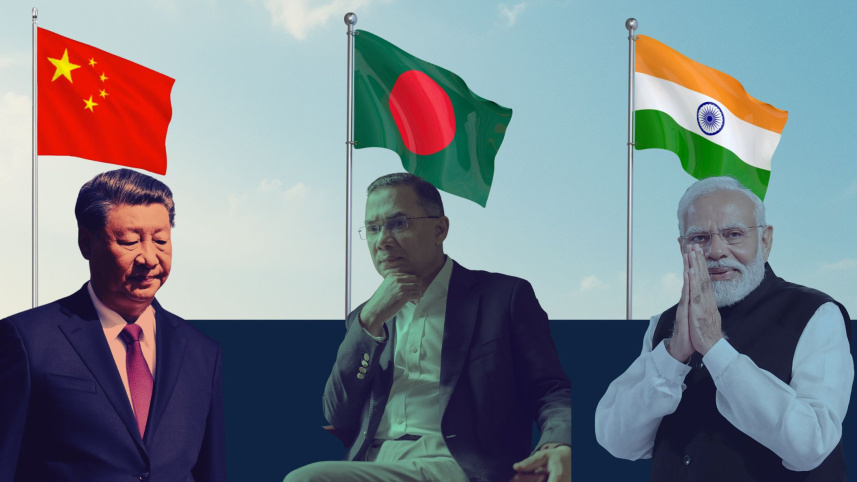
Once again, Bangladesh finds itself amid South Asia’s geopolitical discourse. The discussions over the Teesta River project, the reports on potential purchase of Chinese fighter jets, the revived China-Myanmar-Bangladesh economic corridor initiative, and the international debates over the future of Bangladesh’s democracy have given rise to a very predictable narrative—that of a gradual tilt towards China and increasing anxiety in New Delhi. This understanding is overly simplistic.
What we see here is not about Bangladesh choosing China over India, but about maintaining the country’s strategic autonomy in an environment where virtually all major policies—from infrastructure to defense, from water management to regional connectivity—carry geopolitical baggage. The case of the Teesta River Comprehensive Management and Restoration Project is illustrative here.

For many years, Bangladesh has been trying to reach a deal on Teesta water sharing. Despite lengthy talks and an agreed-upon deal in 2011, political considerations within India prevented the agreement from being completed. At the same time, the northern parts of Bangladesh were suffering from water shortages during the dry season and devastating floods during the monsoon.
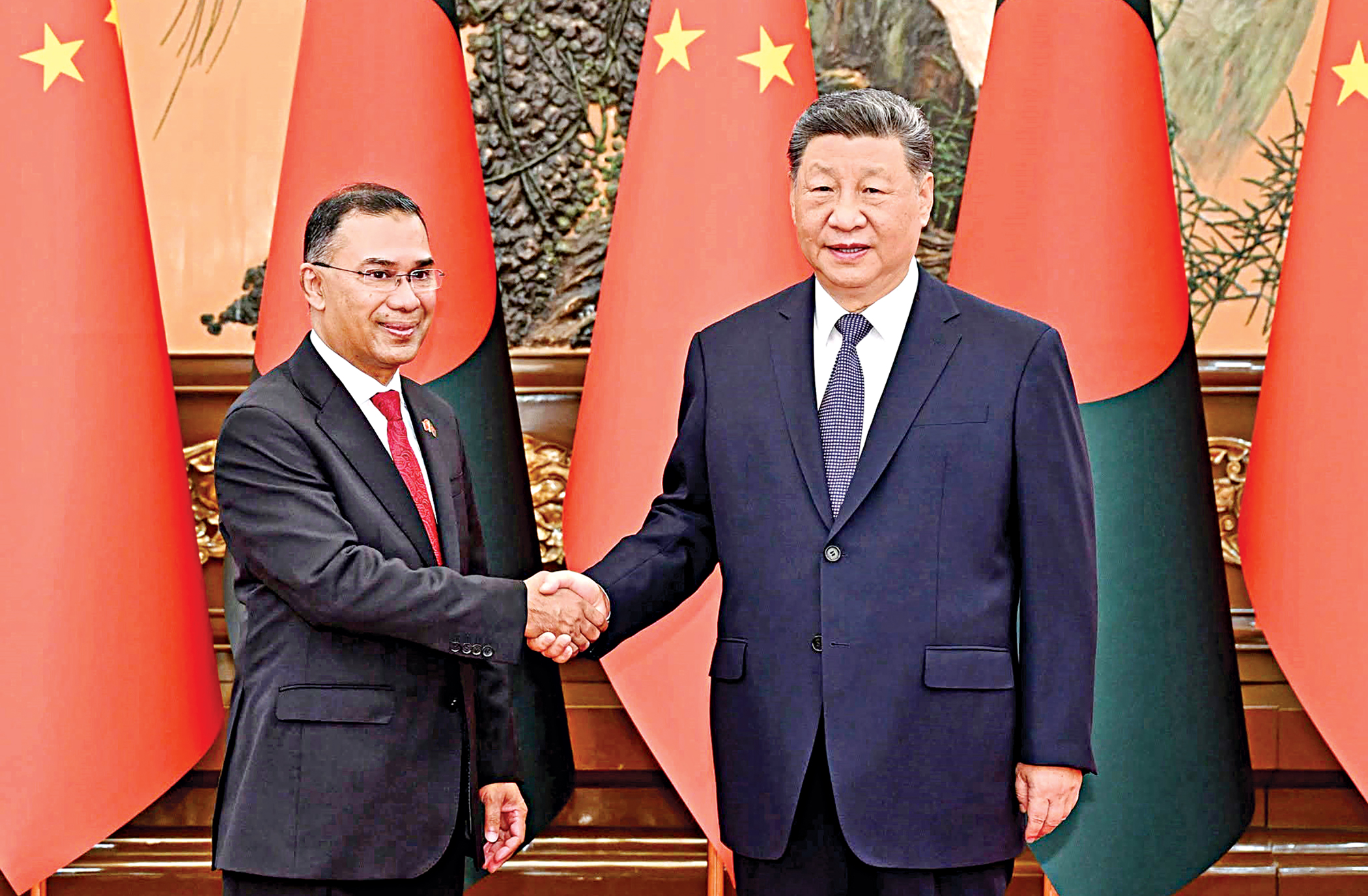
Against this background, Dhaka’s openness to Chinese assistance in restoring the river is not surprising. To Dhaka, this is first a development project related to flood control, irrigation, and river management. However, New Delhi interprets this development differently.
Water has always been one of the most sensitive topics in Bangladesh-India relation. The presence of Chinese investments along a river that flows from India to Bangladesh inevitably raises questions among Indian strategists. From their perspectives, both sides have the right to be concerned, but they must also understand each other.
The lesson is that development projects in South Asia can no longer be discussed in isolation from geopolitics. Another case in point is the reporting on a potential Bangladeshi purchase of Chinese J-10CE multi-role fighter jets as part of efforts to modernise its aging air force. Every sovereign state has the right to develop its capabilities according to its needs. The need to modernise Bangladesh Air Force cannot be ignored any longer. However, the purchase of new equipment often goes beyond the scope of military capabilities.
The acquisition of advanced Chinese fighter jets would inevitably impact Indian security calculus and add weight to perceptions of rising Chinese strategic presence in the Bay of Bengal. Therefore, Bangladesh finds itself in a difficult position.
Defence modernisation is inevitable, but diversification of equipment suppliers, transparency in the purchasing process, and military cooperation with various parties would reassure regional neighbours and the international community that Dhaka pursues military capability rather than alignment.
Finally, connectivity ventures appear to be becoming increasingly complex. Chinese officials continue to support the China-Bangladesh-Myanmar Economic Corridor (CBMEC), which connects Yunnan to the Bay of Bengal via Myanmar and Bangladesh. According to a recent statement by the Chinese ambassador at a press conference in Dhaka, the proposal is open to the inclusion of other countries in the region, including India, reinforcing China’s stance that the corridor is designed as an inclusive connectivity scheme rather than an exclusive geopolitical project.
However, whether India joins in or not is another matter entirely. Proximity is not necessarily a guarantor of connectivity. There is political instability in Myanmar, as large swathes of the planned route will pass through regions affected by the ongoing unrest caused by armed groups. The Rohingya refugee problem makes matters more complicated. These factors are much more concrete barriers than concerns about intentions.
Until stability is achieved in Myanmar, any grand connectivity schemes are likely to remain distant possibilities rather than near prospects. In this context, Bangladesh would do well to continue implementing projects with tangible benefits at present—modern port facilities, logistics infrastructure, industrial zones, and internal transport links—while carefully monitoring the feasibility of connectivity initiatives at the regional level. In the event of changes in the situation in Myanmar and a conducive political environment, Bangladesh would stand a good chance of benefiting from connectivity schemes involving China, India, and other regional players.
One of the most sensitive issues related to this problem is democracy itself. The international debate over banning political parties shows that internal political decisions are increasingly affecting the country’s external relations. Whether one supports or opposes the recent legal steps taken in the political realm, there is a certain strategic truth that cannot be overlooked: for countries pursuing diversified partnerships, diversified political legitimacy is needed.
The UN has called for the avoidance of political exclusion that undermines the principles of multiparty democracy. European experts welcomed the competitiveness of the 2026 elections, while emphasising the importance of inclusivity. Western governments increasingly evaluate long-term partnerships not only by economic but also by institutional criteria.
In other words, democratic legitimacy is no longer only a domestic issue. It is a part of foreign policy now. Considering the overall strategic environment, it appears that Bangladesh should avoid false alternatives.
China is an essential development partner, a major investor, and an important supplier of infrastructure and military equipment. India is the closest neighbour, the largest trading partner in the region, and an essential stakeholder in water, energy, security, and cross-border connectivity. The US and Europe remain the major partners in export markets, investment, and technological cooperation. None of these relations can be substituted for others.
The most successful middle powers in today’s fragmented international environment are those that cooperate with all major players without becoming dependent on any of them. It requires political and institutional confidence, consistent diplomacy, and strategic patience.
Bangladesh’s foreign policy has traditionally been based on the principles of “friendship to all, malice to none.” In today’s multipolar world, this philosophy requires a more nuanced interpretation. Strategic autonomy does not mean an equal distance from every player. It means making decisions based on national interest, not on outside pressure.
Any proposal from Beijing, New Delhi, Washington, Brussels, or Tokyo must be examined by asking the same questions: does it promote Bangladesh’s economic interests? Does it strengthen the national resilience? Does it help to maintain the policy of independence? Does it contribute to regional stability?
If the answer is positive, Bangladesh should move forward. Otherwise, no geopolitical pressure can or should change its position. The most valuable strategic asset of Bangladesh is not its geography alone. It is the ability to cooperate with many players without becoming anyone’s proxy. This delicate balance will define Bangladesh’s future much better than any fighter jet deal, river management project, or economic corridor ever could.
 For all latest news, follow The Daily Star's Google News channel.
 Zillur Rahman is a political analyst and president at the Centre for Governance Studies (CGS). He hosts “Tritiyo Matra” on Channel i. His X handle is @zillur.
Views expressed in this article are the author's own.
Follow The Daily Star Opinion on Facebook for the latest opinions, commentaries, and analyses by experts and professionals. To contribute your article or letter to The Daily Star Opinion, see our guidelines for submission.
Comments