


Stop turning divorce into a social punishment for women

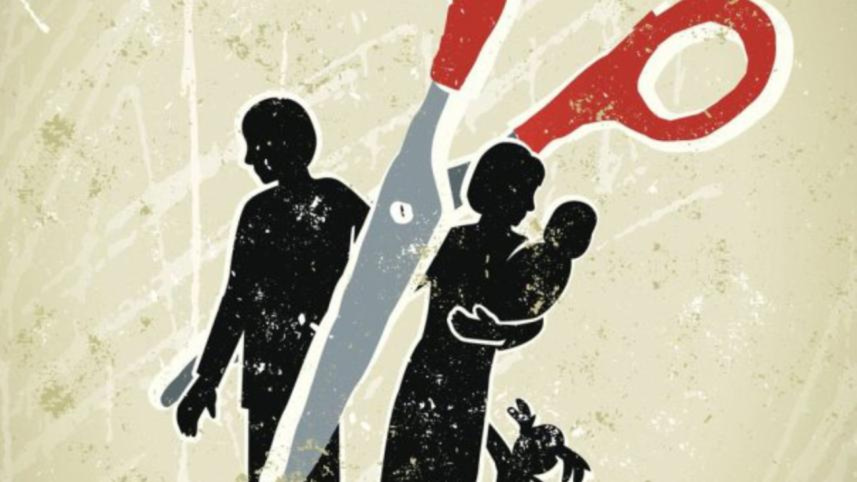
In Bangladesh, divorce is still too often treated not as a legal ending of a marriage not working as intended, but as a moral failure, especially on the part of a wife. While a widow is often met with sympathy, a divorced woman is more likely to face suspicion, gossip, and silent exclusion, as though the end of a marriage has reduced her worth rather than changed her marital status. That attitude is especially hard to defend in a society where divorce is no longer rare.
In June, a Prothom Alo investigation revealed that in Dhaka, a divorce was registered every 40 minutes on average. The number is rising outside the capital as well. The Bangladesh Bureau of Statistics has also shown that the crude divorce rate doubled, from 0.7 per 1,000 people in 2021 to 1.4 per 1,000 people in 2022. All this is proof that divorce is not an exception to social life anymore, but an inevitable part of it.

A marriage does not need to involve violence to justify its end. Some relationships fail because trust has eroded, priorities have changed, conflict has become unmanageable, or two people simply no longer wish to remain together. The enduring stigma around divorce becomes more troubling when placed beside the realities of marriage. The Bangladesh Violence Against Women Survey 2024 found that intimate partner violence remains widespread in Bangladesh, with 70 percent of women experiencing at least one form of it. So leaving a marriage is sometimes not a choice, but an essential step towards safety and dignity.
The unfairness lies in the way society reads women’s divorce as a mark on character while treating men’s divorce as a private life event. Erving Goffman described stigma as a process that discredits a person and turns identity into a social burden. That is exactly what happens when a divorced woman is made to carry shame for a relationship she did not control alone. Psychology helps explain why this stigma can be so damaging: repeated judgment can become internalised, making a woman absorb the shame others project onto her. Furthermore, children are also affected when adults turn separation into blame; they may grow up with fear, confusion, or divided loyalty instead of stability and care.
The burden is often heavier in rural Bangladesh, where women generally have fewer educational opportunities, less financial independence, and greater dependence on family and community networks. In such settings, divorce can carry wider social and economic consequences, affecting where a woman lives, whether she is supported, and whether she can rebuild her life with dignity.
So what we need to understand is that divorce is often a last resort, and not the failure it is portrayed as. The deeper failure belongs to a society that still confuses a woman’s marital status with her moral worth. Too often, that pressure does not come only from men. It comes from mothers, sisters, neighbours, and other women who have themselves absorbed the same harsh ideas of respectability and obedience. In that sense, the judgment of divorced women is not only imposed from outside; it is also reproduced within the very social circles where they should find understanding.
A just society would do more than tolerate divorce. It would recognise a woman’s right to choose whether she wants a partner or not, protect her privacy, and stop turning her personal life into a collective verdict. It would also shield children from the shame adults create around separation. Until that happens, divorce will remain a social punishment enforced by judgment, silence, and repetition, not merely a legal status as it should be.
Lina Dilruba Sharmin is a communications and knowledge management specialist.
Views expressed in this article are the author's own.
Follow The Daily Star Opinion on Facebook for the latest opinions, commentaries, and analyses by experts and professionals. To contribute your article or letter to The Daily Star Opinion, see our guidelines for submission.
 For all latest news, follow The Daily Star's Google News channel.
Comments