


Tarique Rahman’s India visit and the end of automatic deference

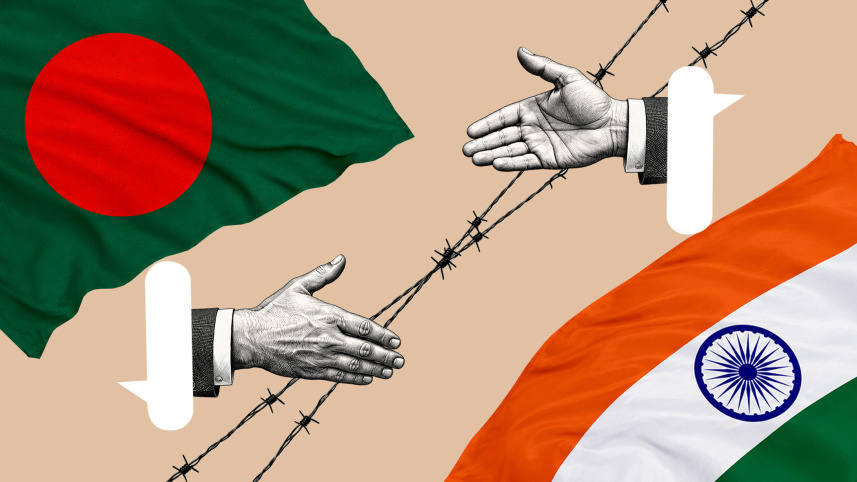
When a decision over whether to accept an invitation from New Delhi becomes a statement in itself, it signals that Bangladesh-India relations have indeed entered a new phase. Prime Minister Tarique Rahman’s decision not to immediately accept India’s invitation has triggered an unusually emotional response across sections of the Indian media. Meanwhile, Dhaka has maintained a noticeably restrained position: no rejection or public confrontation—only the insistence that any visit requires a “conducive environment” and that no final decision has yet been made.
This is not simply a story about a postponed bilateral visit. It is a story about how Bangladesh is attempting to redefine the grammar of its relationship with its giant neighbour. For decades, an early visit to New Delhi by a newly elected leader carried symbolic value. It was seen as signalling validation, legitimacy, goodwill, and a willingness to place India at the centre of Bangladesh’s regional diplomacy. That convention is now being clearly questioned.

One may recall how Indian High Commissioner to Bangladesh Dinesh Trivedi, while addressing an event in Dhaka on August 18, spoke of making Tarique Rahman’s Delhi visit “memorable.” Yet Dhaka chose not to confirm the visit. This seems to signal that high-level engagement with India can no longer be separated from several unresolved bilateral issues affecting Bangladesh’s sovereignty and democratic legitimacy. From Dhaka’s perspective, three issues stand out.
First, Dhaka has formally requested the extradition of former prime minister Sheikh Hasina to face judicial proceedings. India has neither accepted nor rejected the request, saying it is examining it under its legal procedures. For the BNP government, this is not merely a legal matter; it also concerns Bangladesh’s sovereign right to prosecute alleged crimes committed on its territory.
Second, Dhaka viewed India’s decision to allow Sheikh Hasina and her son to hold a press conference in New Delhi, where they sharply criticised Bangladesh’s government, as an affront to its sovereignty. Another unresolved issue concerns the border push-ins. Bangladesh has repeatedly accused Indian border forces of pushing people across the frontier without due process. Such unilateral actions undermine its control over its own borders—another core element of state sovereignty.
So, rather than rushing to accept the invitation, Tarique opted to sequence diplomacy, signalling that a ceremonial visit should follow, rather than precede, progress on issues that deeply resonate with the citizens. Unlike in the past, the government enters such negotiations with a relatively strong political mandate. More importantly, Bangladesh’s foreign policy options have widened of late.
Within months of taking office, Tarique prioritised visits to Malaysia and China before India. Dhaka has simultaneously deepened engagement with Gulf states while maintaining constructive relations with western countries. Discussions about closer security cooperation with Gulf partners—including proposals linked to the Mecca pact—illustrate how Bangladesh’s strategic options are broadening (even if no formal decision has been made). Whether one describes this as multi-vector diplomacy or strategic balancing, the underlying message is clear: Bangladesh no longer wishes to be seen as operating within a single country’s diplomatic orbit.
That, however, does not diminish India’s importance. India remains Bangladesh’s most consequential bilateral partner. It is a critical trading partner and an important energy supplier. But Bangladesh is equally important to India’s northeastern connectivity and border security, as well as being a market worth roughly $11 billion for Indian exports. Closer ties, however, will require both sides to navigate the unresolved issues surrounding Sheikh Hasina, cross-border tensions, and the wider trust deficit that has emerged as Bangladesh expands its strategic partnerships.
For the BNP government, Hasina’s continued political interventions from India have become a question of sovereignty. For New Delhi, handing over a former prime minister carries potential political and legal consequences. Neither side can easily concede without incurring domestic costs. The dispute is now less about one individual’s fate than about whether each government acknowledges the other’s political sensitivities.
In this saga, perhaps the most troubling development has come not from official diplomacy but from parts of India’s television and digital media ecosystem. Several opinion pieces and primetime discussions portrayed Bangladesh as an unreliable neighbour that must be “taught a lesson,” or warned against drifting towards China and Pakistan. Some framed Tarique’s hesitation as an affront to “India’s generosity.” Media rhetoric can gradually narrow diplomatic space. Every televised threat or nationalist headline strengthens anti-India sentiment inside Bangladesh, making compromise politically more difficult for Dhaka. Equally, every anti-India slogan in Bangladesh reinforces hawkish voices in New Delhi.
For much of the past decade or so, New Delhi viewed Bangladesh primarily through the lens of border security and the stability provided by Sheikh Hasina’s government. That framework no longer reflects its political reality. Treating every disagreement as evidence of Chinese or Pakistani influence risks becoming a strategic misreading. Alienating Bangladesh through coercive rhetoric serves little strategic purpose. As a confident regional and aspiring global power, India should not expect automatic deference from its neighbours. Instead, it should create political conditions in which cooperation becomes rational and the mutually beneficial choice. That lesson is evident across much of South Asia, where relations with neighbours such as Nepal, Sri Lanka, the Maldives, and now Bangladesh have often become more difficult whenever perceptions of Indian dominance have overshadowed the language of partnership.
For the Muslim-majority Bangladesh, there is an additional layer of unease. The rise of anti-Muslim and anti-Bangladeshi rhetoric in India’s domestic politics has gradually eroded the goodwill that India once enjoyed among many in Bangladesh. For decades, India was admired not only for its role in Bangladesh’s Liberation War, but also for its democratic institutions, secular traditions, and cultural pluralism. As that image has come under strain, public perceptions in Bangladesh have changed as well. This shift in sentiment is increasingly shaping the country’s domestic politics and narrowing the space for pursuing a visibly India-friendly policy.
However, Bangladesh should resist reducing India to a permanent adversary. Geography is an enduring reality. Nearly every major issue, ranging from water and migration to energy and regional trade, requires sustained cooperation regardless of political differences. Tarique Rahman has not declared a diplomatic rupture with India, nor has Narendra Modi withdrawn the invitation. That is encouraging.
The real test now is whether both governments can move beyond the assumptions that defined the past. Bangladesh rightly seeks recognition as a sovereign equal rather than a subservient junior partner. Tarique Rahman’s cautious approach signals that Bangladesh is prepared to engage India on the basis of mutual respect—not automatic deference. India, understandably, seeks reassurance that a changing Bangladesh will remain a constructive regional partner. But it must also respect Dhaka’s demand for reciprocity. Only then can a future Delhi visit become memorable.
Shakeel Anwar is a former journalist at the BBC.
Views expressed in this article are the author's own.
Follow The Daily Star Opinion on Facebook for the latest opinions, commentaries, and analyses by experts and professionals. To contribute your article or letter to The Daily Star Opinion, see our guidelines for submission.
 For all latest news, follow The Daily Star's Google News channel.
Comments