


UAE’s exit from OPEC: What comes next?

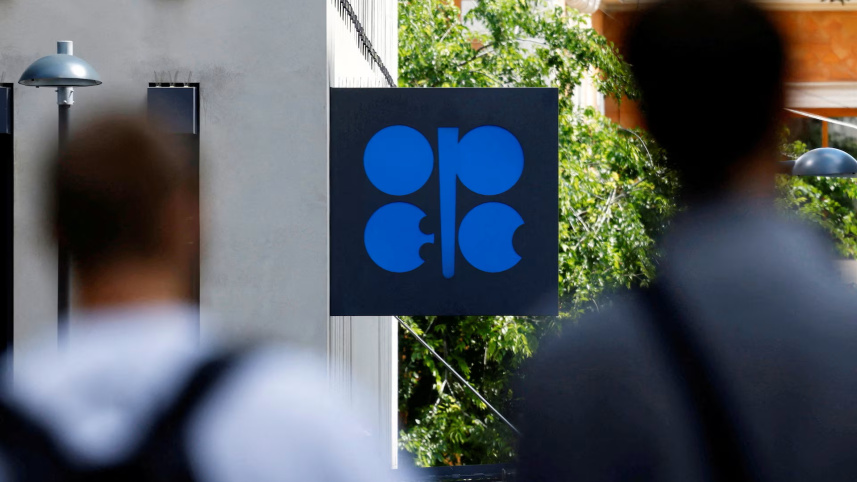
The global energy market has again heated up, but not because prices are rising. The United Arab Emirates has announced that it is leaving the Organization of the Petroleum Exporting Countries (OPEC) and also withdrawing from OPEC Plus. The decision is set to take effect from May 1, 2026.
The timing could hardly be more sensitive. The Middle East is going through extreme instability, with the United States (and Israel) stuck in a war with Iran that has already created a historic energy shock for the global economy. The UAE’s decision has made the situation murkier. The oil market now faces a major shift, one that is not only economic but also geopolitical.

UAE Energy Minister Suhail Mohamed al-Mazrouei said the move was made to protect the country’s national interest. Asked whether the UAE had consulted Saudi Arabia, OPEC’s most influential member, the minister was direct: no prior discussion had taken place with any country. It was an independent policy decision. That answer says a lot: OPEC is no longer the united bloc it once claimed to be.
For years, disagreement inside OPEC has been growing. The UAE’s exit has made those internal fractures visible. OPEC countries still produce roughly four out of every 10 barrels of crude oil in the world, but their collective discipline has weakened. One major reason is the rapid rise of American oil production. As US shale oil reshaped the market, OPEC’s old monopoly power began to fade. To defend its influence, the group built OPEC Plus with Russia.
The biggest reason behind Abu Dhabi’s decision, however, is its own economy. Through Abu Dhabi National Oil Company, the UAE has raised its oil production capacity. It can now produce about 4.8 million barrels a day, but OPEC’s quota allowed it to pump only around 3.2-3.6 million. Since the UAE’s production cost is relatively low, the quota system became an economic burden. Outside the cartel, it can now produce oil on its own terms, invest more freely, increase supply, and raise revenue.
Energy analysts see this as a major loss for OPEC. Jorge Leon of Rystad Energy has described it as a significant shift in power. Losing a member with 4.8 million barrels of daily capacity is not a minor event. The UAE has the will, money, and infrastructure to produce more. Its departure removes one of OPEC’s strongest tools for managing the market.
The decision also reflects the changing relationship between Saudi Arabia and the UAE. For years, Riyadh dominated OPEC, while Abu Dhabi was seen as a close partner. That era is ending. In recent years, the two countries have drifted apart over regional leadership, economic influence, and Red Sea politics. The issue of the Houthis needs no new introduction. The message is blunt: the two Gulf powers are no longer willing to compromise easily.
It goes without saying that the current geopolitical crisis, especially the war in Iran, has accelerated this exit. The UAE long marketed itself as a safe and stable Gulf hub, and the war has damaged that image. Iranian retaliatory attacks have reportedly targeted the UAE heavily, with more than 2,800 drones and missiles fired towards it, more than at Israel or any other Gulf country. Tourism has suffered, flights have been disrupted, and many expatriates have left in fear. As the broader economy comes under pressure, oil revenue has become more important.
The crisis in the Strait of Hormuz also matters. Around one-fifth of the world’s crude oil passes through this narrow waterway. The war has made shipping through it highly risky. The UAE, however, is better positioned than many neighbours as it can export more than half of its oil through land pipelines, bypassing Hormuz.
Abu Dhabi has also been changing its military and diplomatic alignments. After Iran’s attacks, it has seen that Arab allies offer limited protection in moments of real danger. Since the Abraham Accords of 2020, the UAE has deepened relations with the US and Israel. It sees ties with Israel as a tool for expanding influence in the Middle East and as a direct channel to Washington. Old Arab alliances no longer command the same trust.
This final exit is therefore a warning sign for OPEC’s future. Energy analyst Homayoun Falakshahi has called it the biggest blow in the group’s history. Qatar, Angola, and Ecuador have left OPEC before, but none was a top producer like the UAE. According to the International Energy Agency, the UAE’s departure will cut OPEC’s total production capacity by 13 percent.
Alongside Saudi Arabia, the UAE was one of the few members with serious spare production capacity. Without it, the market enters a more uncertain phase. Saudi Arabia will face the main burden of stabilising supply. Riyadh may remain the only credible swing producer, but that is a difficult role. If it cuts production alone to lift prices, its own fiscal reserves will come under pressure.
For consumers, the picture is mixed. Monica Malik, chief economist at Abu Dhabi Commercial Bank, believes the UAE’s exit may help ordinary consumers and the wider world economy, because Abu Dhabi can now send more lower-cost oil into the market. In the short run, average prices may fall. But volatility could rise sharply. A weaker OPEC will struggle to absorb future supply shocks, which is bad news for import-dependent regions such as South Asia and Europe.
The move may also benefit countries like Bangladesh. If Abu Dhabi competes for market share, developing importers could buy oil at more competitive prices. But they should not mistake cheaper oil for energy security. A fragmented OPEC means more uncertainty, not less.
Theoretically, the decision weakens a cartel. OPEC’s quota system worked like a repeated game: members accepted limits today because cooperation promised rewards tomorrow. The UAE’s exit breaks that trust. If one disciplined member walks away, others may begin cheating on quotas. The cartel may move towards competitive overproduction, a Nash equilibrium where everyone pumps more and prices fall.
Hotelling’s Rule also explains Abu Dhabi’s thinking. If oil demand may decline in the long run because of the energy transition, rational producers will try to extract more value now rather than leave resources underground. The UAE is doing exactly that.
As mentioned earlier, the UAE’s exit carries consequences that stretch far beyond oil markets and will have implications in the strategic domain. If Abu Dhabi begins offering crude at competitive prices to large importers like India, it will quietly stress-test existing energy partnerships, including India's heavily discounted Russian oil relationship. Delhi will face a real choice between price, politics, and strategic loyalty, and that choice will say much about how far the Russia-India understanding can bend under economic pressure.
A weakened OPEC gives Washington considerable leverage; the US no longer needs to manage a unified cartel, and can instead cultivate bilateral energy deals with individual members, reshaping influence across the Gulf on American terms.
The exit also accelerates a broader crisis of multilateral institutions. If OPEC, one of the most economically powerful cartels in history, cannot hold its major producers, it sends a troubling signal to other collective frameworks, from trade blocs to security arrangements, that national interest will always outlast institutional loyalty when the stakes are high enough. The exit may also trigger a quiet scramble among the remaining OPEC members to court non-Western refiners—China, especially—offering sweetheart deals that fragment the market further into competing bilateral arrangements rather than any coherent pricing order. All this suggests how collective institutions often break not only from outside pressure, but from the clash of interests within.
OPEC has survived many storms. This one may prove harder to contain.
 For all latest news, follow The Daily Star's Google News channel.
 Syed Raiyan Amir is senior research associate at KRF Center for Bangladesh and Global Affairs (CBGA). He can be reached at raiyancbga@gmail.com.
Views expressed in this article are the author's own.
Follow The Daily Star Opinion on Facebook for the latest opinions, commentaries, and analyses by experts and professionals. To contribute your article or letter to The Daily Star Opinion, see our guidelines for submission.
Comments