


We take lab reports on trust. How can we make them more reliable?

When we get a physician-prescribed blood test done at a diagnostic centre, we usually assume the report to be correct. We rarely ask: if the same sample were tested at a different laboratory would we get a similar result, or who checks the quality of the laboratory behind the report? These questions matter.
Bangladesh High Court has expressed serious concern over medical negligence, including cases involving alleged failures in diagnosis and treatment. At the same time, studies show that some Bangladeshi patients seek healthcare abroad because of concerns about the quality and reliability of domestic healthcare services, including diagnostic procedures.

A laboratory report is more than numbers on a piece of paper. Doctors rely on it to make decisions about diagnosis and treatment, so the results must be accurate and reliable. Every result depends on people, materials, instruments and testing methods. Even with trained staff and good equipment, we need a strong quality system to check the laboratory’s work, find errors, identify problems, understand their causes and ensure that patients receive trustworthy test results. This is where proficiency testing (PT) and reference materials (RM) come in as the missing link.
In laboratory testing, RM are the “standards” or “benchmarks.” They are like a ruler, which is used to check if other rulers are measuring correctly. In other words, reference materials are carefully prepared, well-characterised, highly stable pure substances with a known and exact value that provide a reliable point of comparison. Laboratories can use them to check testing methods, instruments and reagents, compare their results with an established reference, and establish traceability. A strong RM system therefore helps laboratories answer an important question: can we trust the number produced by this test?
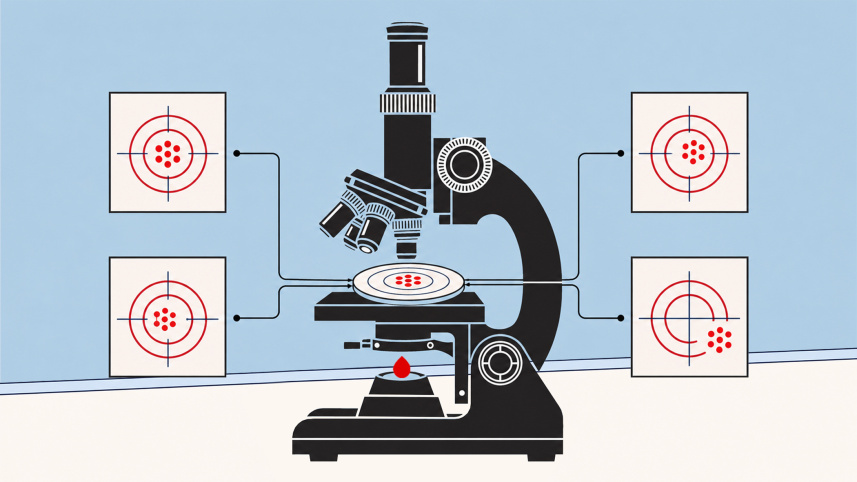
Meanwhile, PT is like an external exam for diagnostic laboratories. In a PT programme, an independent institute/central body sends coded test materials or RM to multiple laboratories. Each lab tests the sample and returns its results to the central body. By comparing these results, the central authority can identify which labs are performing accurately and which ones may have systematic errors in their testing process. The important point is that PT should not simply be treated as a pass-or-fail examination. It should be able to indicate what issues a laboratory might be facing and how those can be traced back to their root causes. Internationally, ISO/IEC 17043:2023 sets the requirements for the competence and impartiality of PT providers.
In Bangladesh, thousands of diagnostic laboratories as well as healthcare centres operate through various instruments, reagents and techniques. This will definitely result in some differences. One of the reasons for the differences is the limited number of biological reference materials available, along with poor external quality assurance (EQA) or PT programme. Through a PT programme, laboratory performance can be described in three simple categories:
Category A – Satisfactory: The laboratory’s result is close to the expected value and falls within the acceptable range defined for a particular PT programme.
Category B – Needs Attention: The result is somewhat different from the expected value, but it does not necessarily mean that the laboratory has failed. Instead, the laboratory should review its testing process.
Category C – Unsatisfactory: The result is substantially different from the expected value and requires investigation and corrective action.
Behind these three simple labels is statistical analysis. The PT provider calculates how far each laboratory’s result is from the assigned value while considering the expected variation of the measurement. Statistical rules and limits should be established for each PT programme and testing method. They should not be treated as universal regulatory cut-offs. This distinction is important because one result should not automatically become a final judgement about a laboratory.
For example, if 97 out of 100 laboratories produce results within the expected range while three laboratories produce markedly different results, those three laboratories deserve attention. Their results may indicate problems with calibration, reagents, sample handling, staff competency or testing procedures, and result interpretation. More importantly, repeated PT results can tell us whether a laboratory is improving, remaining stable or repeatedly experiencing problems.
A nationally coordinated RM and PT system could strengthen Bangladesh’s health and quality infrastructure. For the Directorate General of Health Services (DGHS), PT data could identify laboratories needing training, technical support, or supervision. For the Bangladesh Accreditation Board, the PT participation records could support quality improvement and accreditation readiness. For the Directorate General of Drug Administration (DGDA), reliable reference materials and laboratory-performance data could assist in evaluating locally manufactured and imported in-vitro diagnostic products and reagents.
Although RM and PT programmes can be obtained from abroad, this may increase costs and may not fully address Bangladesh’s national disease priorities. Developing biological reference materials locally could create new scientific and industrial opportunities. Local RM, quality-control panels and PT services could support laboratories, manufacturers and researchers while creating skilled job opportunities, reducing dependence on imported materials and generating a new revenue source.
For a PT programme to be trusted, the organisation conducting it should be technically competent and sufficiently independent from the laboratories being assessed. An independent provider can reduce conflicts of interest and make the results more credible in accordance with ISO/IEC 17043:2023.
Bangladesh Reference Institute for Chemical Measurements (BRiCM) under the Ministry of Science and Technology can play a role in developing the national reference system. The institute has been assigned various roles through amendments to its governing law to develop, maintain, and distribute biological reference materials and apply them in proficiency testing/equality assessment programmes. Therefore, to build a stronger health system, better use of this scientific institution, its human resources and infrastructure should be made.
However, the goal should not be to create another system that simply gives laboratories a certificate. The real goal should be continuous improvement. A reference material provides the common benchmark. PT shows how laboratories perform against that benchmark. When a problem is identified, the laboratory investigates the cause and takes corrective action. Subsequent PT rounds can then show whether performance has improved. This creates a cycle of testing, identifying problems, correcting them and improving.
This approach can strengthen confidence among patients, clinicians, laboratories, regulators and manufacturers by creating a common language for laboratory quality improvement. For Bangladesh, reference materials and proficiency testing should therefore not be viewed as merely technical laboratory activities. They can become important building blocks for a more reliable, transparent and internationally credible diagnostic system.
Mamudul Hasan Razu is scientific officer at Bangladesh Reference Institute for Chemical Measurements (BRiCM). He can be reached at: razu_ss86@yahoo.com.
Views expressed in this article are the author's own.
Follow The Daily Star Opinion on Facebook for the latest opinions, commentaries, and analyses by experts and professionals. To contribute your article or letter to The Daily Star Opinion, see our guidelines for submission.
 For all latest news, follow The Daily Star's Google News channel.
Comments