


Why stakeholders matter in reimagining urban healthcare governance

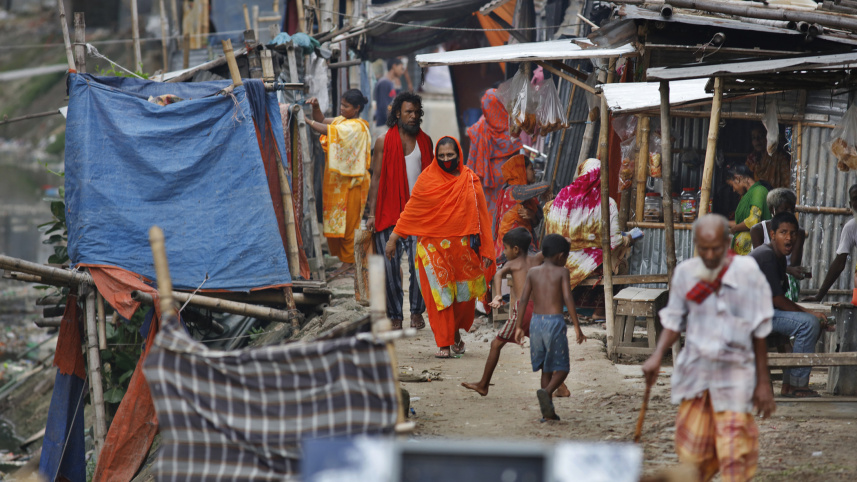
Recent discussions surrounding the transfer of Bangladesh’s Urban Primary Health Care Service Delivery Project (UPHCSDP) have largely focused on the distribution of administrative responsibilities between ministries. Of course, the issue extends far beyond institutional handover. The central question is not simply about who will manage the project, but about how uninterrupted, equitable, and sustainable healthcare services will continue for millions of vulnerable urban residents.
Since its inception in 1998, the UPHCSDP has evolved into one of Bangladesh’s most significant public-private partnership (PPP) initiatives in the health sector. Developed with strong support from the Asian Development Bank (ADB) and other development partners, the programme emerged at a time when rapid urbanisation had exposed major gaps in healthcare access for low-income urban populations. Unlike rural areas, where government health structures had stronger operational networks, urban primary healthcare remained fragmented and underserved.

The project introduced an innovative PPP approach that combined government stewardship, donor financing, NGO-led implementation, and community engagement. Over time, this model became internationally recognised for its flexibility and effectiveness in delivering urban primary healthcare services in densely populated settings.
One of the most overlooked realities in current discussions is the central role NGOs have played in implementing the programme. For decades, NGOs have not merely supported the project; they have managed clinics, maintained outreach systems, recruited health workers, built community trust, and ensured service continuity under challenging urban conditions. Thousands of doctors, nurses, paramedics, outreach workers, counsellors, and support staff working under the project are employed through NGO systems rather than the government structure.
As a result, many of the programme’s operational strengths including community linkages, accountability mechanisms, and service delivery efficiency have been built through NGO-led systems. Any transition process that excludes the implementing NGOs from meaningful consultation risks weakening the very foundation upon which the programme has operated successfully for nearly three decades.
Another major concern relates to infrastructure. A large number of UPHCSDP facilities operate from rented premises which are located strategically within underserved communities. Questions regarding lease continuation, operational expenses, utilities, maintenance, and uninterrupted service delivery remain insufficiently addressed. These are not minor administrative details. Temporary disruption of maternal care, immunisation services, reproductive health counselling, or treatment for chronic illnesses could directly affect the wellbeing of millions of urban residents.
The success of the UPHCSDP demonstrates that a PPP was not a temporary compromise, but rather a strategic strength. The model worked because it combined government legitimacy, development financing, NGO agility, and community responsiveness. Bangladesh’s global achievements in family planning, immunisation, and community health have historically emerged out of collaborative partnerships rather than rigidly centralised systems. Urban healthcare challenges today, including climate-induced migration, overcrowding, adolescent vulnerability, non-communicable diseases, mental health concerns, and gender-based violence, require similarly coordinated and multi-sectoral responses.
Transitions of this scale are most effective when stakeholders feel a sense of ownership over the process. In contrast, abrupt top-down decisions often generate uncertainty and even resistance at operational levels. There is growing concern that the current transition process risks becoming overly administrative rather than consultative. A programme developed over nearly 30 years cannot be sustainably transferred through procedural directives alone.
The transition process therefore requires transparency, phased planning, operational mapping, financial clarity, and human resource considerations. More importantly, it requires collective responsibility among all stakeholders. This is not about institutional control; it is about protecting essential healthcare services for millions of urban citizens.
Development partners must also remain part of the conversation. ADB’s involvement in the programme has included not only financing (much of it through sovereign loans), but also technical guidance, monitoring systems, and policy support over several decades. Excluding development partners from substantive consultation would risk overlooking valuable institutional experience and lessons learned.
There is still time for constructive dialogue. A broader national consultation process involving government ministries, NGOs, development partners, urban local government representatives, health professionals, and community voices could help identify operational risks, clarify future partnership models, ensure service continuity, and strengthen financing mechanisms. Such engagement would enhance the credibility and sustainability of the transition, not delay it.
Bangladesh now stands at an important crossroads in terms of urban health governance. The challenge is not merely whether administrative ownership changes, but whether the country can preserve and strengthen the successful elements built over decades while adapting to emerging urban realities. The future framework must retain the strengths of partnership, protect institutional memory, ensure uninterrupted services, and prioritise people over procedures.
Urban health systems cannot be sustained through directives alone. They depend on trust, coordination, inclusion, and practical realism. Bangladesh has repeatedly demonstrated its ability to innovate through collaborative public health approaches. The transition of urban primary healthcare should become another example of that national wisdom grounded in inclusion, continuity, and long-term public interest.
Dr Noor Mohammad is executive director at Population Services and Training Center (PSTC).
Views expressed in this article are the author's own.
Follow The Daily Star Opinion on Facebook for the latest opinions, commentaries, and analyses by experts and professionals. To contribute your article or letter to The Daily Star Opinion, see our guidelines for submission.
 For all latest news, follow The Daily Star's Google News channel.
Comments