Dhaka accidentally built the city planners now want. Can we make it liveable?
Look closely at how Dhaka actually moves, and a different story emerges. The buses and horns take the headlines, but at street level, most people are simply walking. They walk to the corner shop, to school, to the kitchen market, to the mosque, to the rickshaw stand that carries them the last kilometre. The city the world files under “gridlock” is, on the ground, one of the most walking-dependent places on earth.
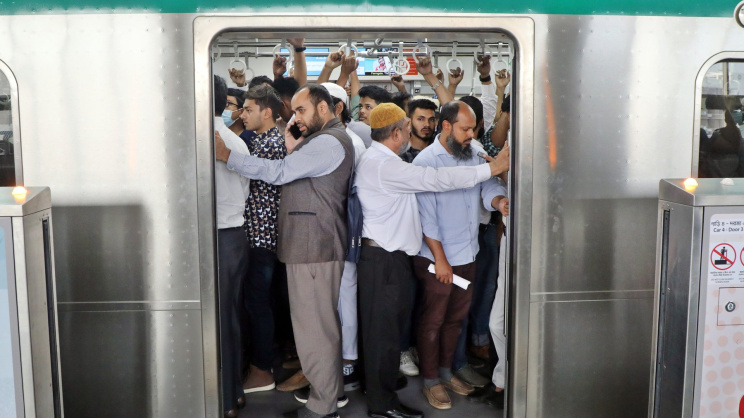
That is not a matter of temperament. It is a matter of how close everything is. The latest household survey behind the government’s Updating and Revised Strategic Transport Plan (URSTP) counted about 38 million trips on an average day across greater Dhaka, up from roughly 28 million in 2014. Most of those trips never leave the neighbourhood: around six in ten are shorter than two kilometres, and about eight in ten are under five.
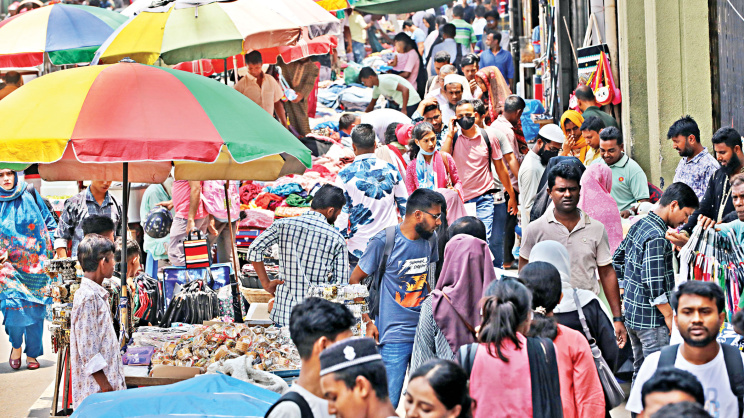
Walking is the single largest mode, accounting for close to 38 per cent of trips, while rickshaws carry a quarter or more. The private car, the machine that reorganised cities across the West, accounts for well under one trip in twenty.
This is the anatomy of a compact city, whether or not anyone set out to build one. The phrase is worth examining more closely, because its history is often misunderstood.
A borrowed idea and a mistaken one
The compact city was not invented in Asia. The term comes from a 1973 book by two American mathematicians, George Dantzig and Thomas Saaty, who sketched a dense, resource-thrifty settlement in which distance, and therefore waste, was kept to a minimum. Europe took up the idea and developed it through the 1990s, from the European Commission’s 1990 Green Paper on the Urban Environment to a wave of research on what a “sustainable urban form” should look like. Tokyo and Hong Kong are highlighted as living proof that millions can live well at high density around good public transport, but the two cities are exhibits in the argument, not its birthplace. The distinction matters for Dhaka because it shows that the compact city was always a deliberate answer to a specific error: sprawl.
Sprawl, too, is misremembered. No one drew up the low-density, car-dependent American suburb as an ideal to aspire to; it emerged from a series of policy choices. Federal mortgage insurance rewarded new detached houses over dense old neighbourhoods, a vast publicly funded highway programme reshaped the map, and single-use “Euclidean” zoning pulled homes apart from shops and workplaces. The car finished the job. Sprawl is what a country gets when land is cheap, fuel is cheap and the rulebook forbids mixing. Dhaka has none of those conditions: land here is scarce and dear, fuel is costly, and the rules against mixing have rarely held.
What failed in Dhaka was not planning as such, but the imported belief that a living city can be sorted into zones. The mixed, stacked, ground-floor-shop neighbourhood kept reasserting itself because, in a city this dense, it is the arrangement that works.
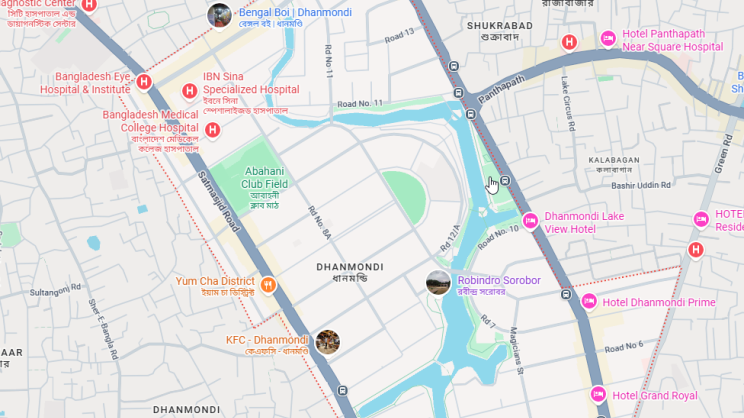
Dhaka has been planned, and repeatedly—Wari, then Dhanmondi, Gulshan, Banani and Uttara, each laid out as an orderly, largely residential district. In almost every case, the single-use plan dissolved under the pressure of daily life. Dhanmondi’s quiet residential roads filled with schools, clinics, banks and restaurants; Gulshan and Banani sprouted offices and shops on plots meant for houses. Eventually, the state stopped resisting and began charging conversion fees instead. What failed in Dhaka was not planning as such, but the imported belief that a living city can be sorted into zones. The mixed, stacked, ground-floor-shop neighbourhood kept reasserting itself because, in a city this dense, it is the arrangement that works.
From compact city to fifteen minutes
This brings us to the idea now fashionable in design magazines. The “15-minute city”, associated with the urbanist Carlos Moreno and adopted by the mayor of Paris, asks a plain question: can you reach the essentials of daily life—work, food, health, schooling and somewhere to unwind—within a quarter-hour walk or cycle from home? It is the compact city’s younger cousin, but not simply a rebranding. The compact city is an argument about form: density, mixed use and the structure that allows public transport to pay for itself.
Moreno’s version is an argument about time, and it adds a fairness test: those fifteen minutes must belong to everyone, not just to well-serviced enclaves.
By the first measure, Dhaka is already there. Proximity is the one resource this city has in surplus: a kitchen market, a pharmacy, a school and a mosque sit within a few minutes of nearly every home. Curiously, it is often the poorest quarters that come closest to the fifteen-minute ideal, because a shopkeeper who lives above the shop and a worker who walks to the factory cannot afford to be anywhere else. Where Dhaka fails is on the two harder tests: whether that proximity can be reached safely and with dignity, and whether it is genuinely shared.
What the metro can and cannot do
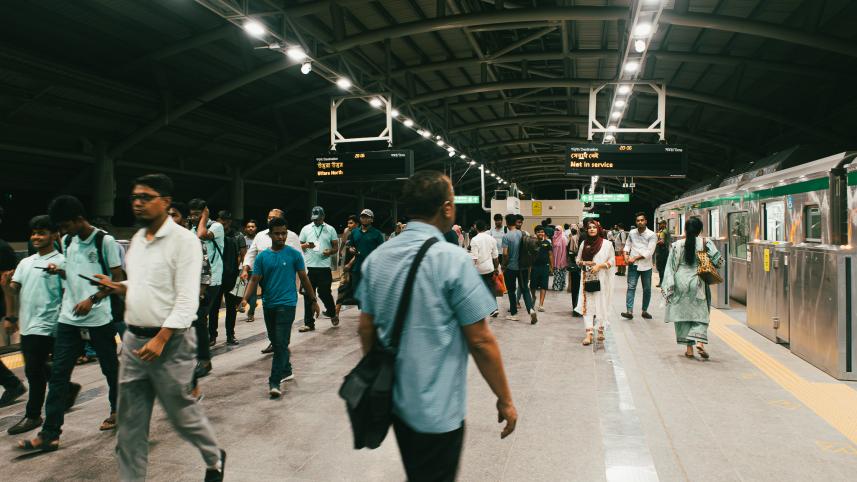
It is important to recognise the limits of costly solutions, because they shape what can realistically be achieved. The Metro Rail, the city’s proudest new asset, carries around 350,000 passengers on a normal day and has touched 400,000 at its busiest. Set against 38 million daily trips, that works out to roughly one journey in a hundred. Even once every planned line is built, years and many billions of dollars from now, independent assessments of the government’s own projections put metro rail at somewhere near eight per cent of all trips, while the URSTP itself targets under a fifth for public transport of every kind by 2045. The metro is worth having, but it will not, on its own, move Dhaka. The overwhelming majority of journeys will remain short, local and made on foot or by rickshaw for a long time yet.
It is tempting to say the metro will “solve” mobility, or to quote a comforting figure for how many millions it moves. The numbers do not support that comfort. What they support is something humbler and more useful: Dhaka’s core pattern of movement—short trips, mixed streets, walking and paratransit—is not going to be engineered away by rail.
It is tempting to say the metro will “solve” mobility, or to quote a comforting figure for how many millions it moves. The numbers do not support that comfort. What they support is something humbler and more useful: Dhaka’s core pattern of movement—short trips, mixed streets, walking and paratransit—is not going to be engineered away by rail. Studies of how people actually chain their daily journeys confirm the same thing. Most Dhaka residents travel by a single mode, predominantly walking or taking a rickshaw, stitching two or three local stops into one loop. Policy should build on that reality rather than try to reshape it around the model of a Western commute.
A closing window
But the accidental compact city is not stable, and it is changing fast in the wrong direction. The bus system, which carried close to 29 per cent of trips in 2009, has collapsed to around 9 per cent, hollowed out by fragmented ownership and cut-throat competition on the road. Into that vacuum has rushed the motorcycle, whose share has roughly tripled in under a decade. The motorcycle is the compact city’s enemy in miniature. It allows people to live further from work, consumes road space that walking and cycling depend on, and normalises speed on streets where children still play.
At the same time, the green cover that makes density bearable keeps shrinking, while average road speeds have fallen from about 21 km/h in 2007 to walking pace.
With every year that passes without deliberate action, Dhaka moves closer to a sprawling, motorised and permanently congested future it can least afford. The advantage the city still possesses—proximity—is gradually being eroded. That is why the choices made now matter. Dhaka still has the foundations of a compact city: short trips, mixed-use neighbourhoods and a strong culture of walking. Planning should build on these strengths while they remain. Wait another decade, and the city may instead face the far more difficult and expensive task of reversing sprawl, as many Western cities are now attempting to do.
No room for romance
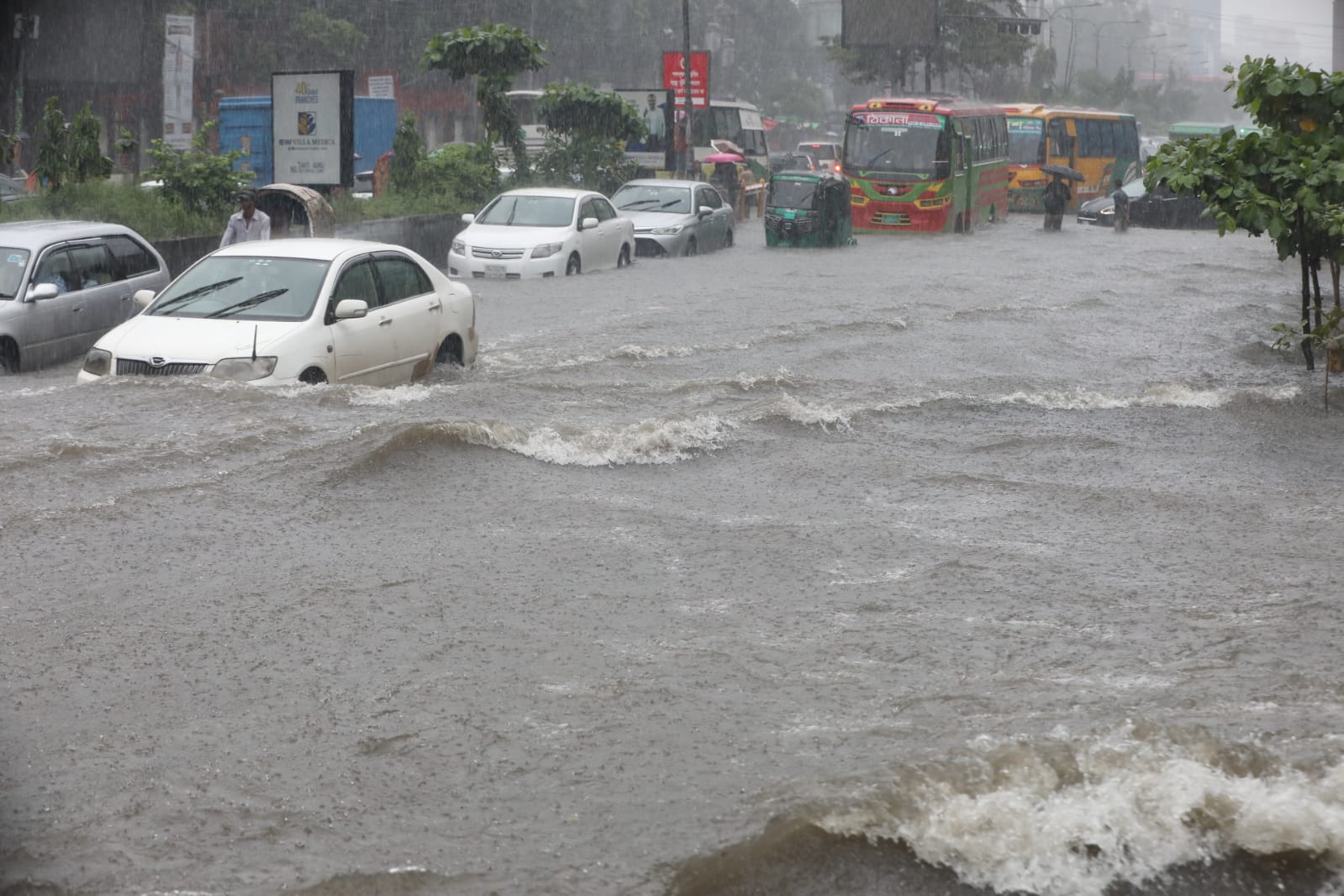
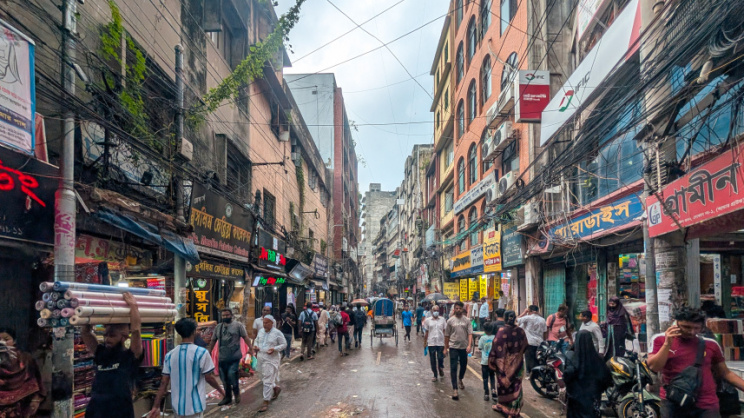
None of this is a case for romanticising how Dhaka lives now. For millions, the city’s compactness means overcrowding without adequate services. A large share of residents live in informal settlements. Drainage fails, waterlogging is routine, sewage is barely treated, and the footpaths, where they exist at all, are narrow, broken and colonised by parked motorcycles and stalls—more than a hundred kilometres of them are under illegal occupation. Dhaka has the density of a compact city but lacks much of the infrastructure and essential services needed to make that density liveable.
Heat compounds the problem. A fifteen-minute walk may be pleasant in a European spring, but in Dhaka’s heat it can be exhausting, especially as the city continues to lose trees and shade. Governance presents another obstacle. Repairing a single footpath can require coordination among the development authority, two city corporations, the transport authority and utility agencies—a level of institutional coordination that is often difficult to achieve.
The task, then, is formidable. Turning Dhaka’s accidental compactness into a planned, liveable, fifteen-minute city will require sustained political commitment, substantial investment in basic urban infrastructure and, crucially, government agencies capable of working together. It is far easier and more politically attractive to inaugurate a flyover than to widen ten kilometres of footpath and plant trees along it. The transformation will be neither quick nor cheap, but allowing the city to continue on its present trajectory will ultimately be far more costly.
The direction, however, is clear, and many of the first steps are relatively straightforward. Reclaim footpaths for pedestrians while providing vendors with regulated spaces rather than simply evicting them. Create protected lanes so that rickshaws and cyclists are not forced to compete with fast-moving traffic. Build safe crossings at street level, where people actually cross, rather than relying on footbridges that pedestrians often avoid. Turn the small vacant plots the city still holds into pocket parks, making the creation of breathing space as important as filling every available gap.
Recognise mixed use in planning rules, while enforcing meaningful limits on noise, waste and other disturbances. And treat the rickshaw not as an inconvenience to be removed, but as an integral part of the transport system that already provides much of the city’s last-mile connectivity.
The benefits would extend far beyond shorter commutes. A city where much of daily life takes place within a kilometre or two naturally requires less fuel, produces fewer transport emissions and puts less pressure on its roads. But making such a city liveable also requires something more fundamental: learning how to share limited urban space—footpaths, lanes, parks and patches of shade—in a city where millions of people live in close proximity.
Dhaka does not need to become Paris, Tokyo or Hong Kong. It needs to become a better version of what it already is: a city where almost everything is close at hand, and where that proximity is made safe, green and accessible to everyone. The answer will not come from importing another city’s model wholesale. It must begin with understanding how twenty million people already move through Dhaka and building around that reality—before the opportunity is lost.
Dhrubo Alam is deputy transport planner at the Dhaka Transport Coordination Authority (DTCA).
Send your articles for Slow Reads to slowreads@thedailystar.net. Check out our submission guidelines for details.
Can Bangladesh produce its own knowledge?
How we are killing Dhaka
Can Bangladesh afford not to invest in Bhola’s gas?
Bangladesh’s renewable policy: Still too little but not too late
Prabhat Patnaik speaks / Why the Global South must rethink export-led growth
Bhotekoshi flood: Another warning from the Himalayas. Are we listening?
Renewing the Ganges Water Sharing Treaty: What should Bangladesh do?
What it really costs to live in Dhaka
Why Nepal’s devastating floods should no longer surprise us