Bangladesh between India and China: The dilemma of defence diversification
Bangladesh’s recent defence engagements with Beijing and New Delhi suggest a widening security portfolio. But having more partners does not automatically produce greater autonomy. The real test is whether diversification expands Dhaka’s choices or simply distributes dependence across several relationships.
Within six days, Bangladesh held two defence conversations that appear more significant when viewed together. On September 3, Bangladesh and China discussed professional military training, educational exchanges, technological cooperation and Beijing’s continued support for Bangladesh’s defence modernisation. Six days later, Bangladesh and India discussed joint military training, exchanges among military officials, disaster management, regional peace and maritime security. Neither meeting alone represents a major geopolitical shift, since Bangladesh has maintained defence relations with both countries for years. Yet their timing is notable because the government has simultaneously begun to articulate a clearer foreign policy position.
On September 10, Foreign Minister Khalilur Rahman said Bangladesh would pursue sovereign equality, strategic balance and the avoidance of excessive dependence on any single power or alliance. The important question, therefore, is not whether Bangladesh is moving closer to India or China. It is whether Dhaka can turn its expanding defence relationships into a coherent hedging strategy that strengthens military capability without sacrificing strategic autonomy.

Beyond simple India-China balancing
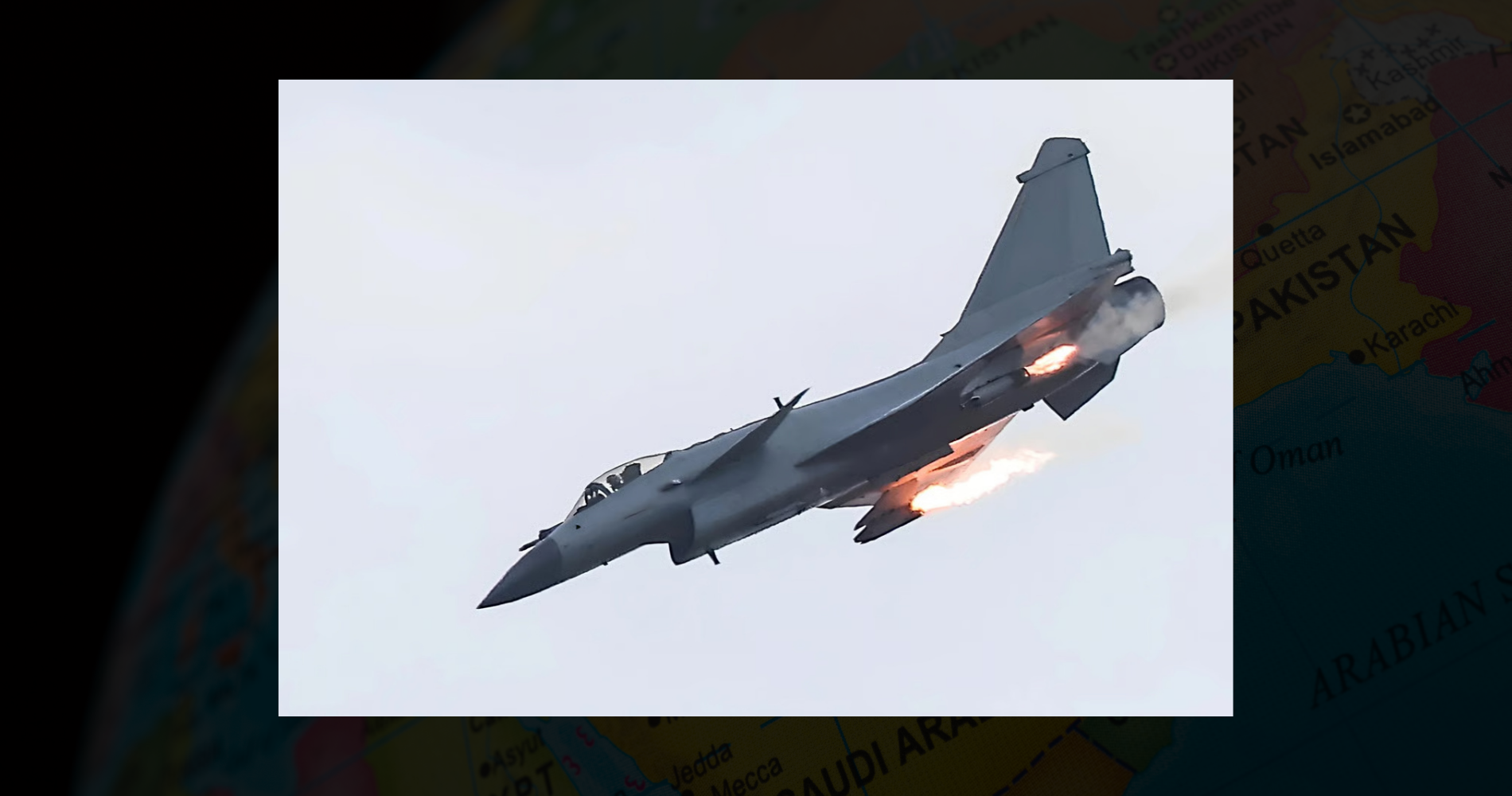
Describing Bangladesh’s current approach simply as “balancing India and China” misses an important point. The two defence relationships are fundamentally different. China has long occupied a prominent position in Bangladesh’s military modernisation. Chinese-origin aircraft, naval platforms, missile systems and other equipment have been integrated into the armed forces over several decades. More recently, Bangladesh has been considering further Chinese acquisitions, with discussions over J-10CE fighter aircraft and attack helicopters demonstrating the continuing importance of China to Bangladesh’s force-modernisation plans.
India’s role is different. It is not simply another defence supplier. Geography makes India a permanent security interlocutor. Bangladesh and India share a long border and a common maritime environment, while their security concerns intersect in areas such as disaster management, transnational crime, maritime safety and military-to-military communication. The latest bilateral discussion, therefore, centred on training, disaster response and maritime security, areas where cooperation follows naturally from geographic proximity.

This difference can actually work in Bangladesh’s favour. Strategic autonomy does not require Dhaka to maintain mathematically equal relations with India and China, nor does Bangladesh need to buy identical amounts of military hardware from both sides. A more effective strategy would be functional diversification: cooperating with different partners in different domains according to Bangladesh’s own requirements. China may remain important for certain platforms, technology and military modernisation; India may be more relevant for neighbouring security, maritime coordination and professional military exchanges; other partners may provide capabilities that neither offers.
If Dhaka deliberately allocates different functions to different partnerships, its defence diplomacy becomes more sophisticated than simple balancing. The point is not to achieve symmetry between competing powers, but to ensure that no single relationship becomes dominant across all critical domains of national security.
Capability comes with long-term dependence
The greatest challenge lies in distinguishing military capability from strategic autonomy. A new fighter aircraft, submarine or missile system can strengthen Bangladesh’s immediate military capacity, but advanced defence equipment is rarely a one-time purchase. Aircraft require spare parts, weapons, technical support, pilot training, software and future upgrades. Naval platforms require servicing, specialised components and continued technical expertise. The relationship between buyer and supplier can therefore last for decades, which is why the strategic cost of a weapons system cannot be measured only by its purchase price. Bangladesh must also calculate lifecycle dependence.

The issue is not specific to Chinese systems. American, European, Russian, Turkish or Indian platforms can generate the same problem. The more technologically sophisticated a capability becomes, the more difficult it may be to operate and sustain it independently of its original supplier. This is particularly relevant as Bangladesh considers advanced platforms such as the J-10CE. Even if such an acquisition significantly improves its air-combat capability, Dhaka must consider whether missiles, maintenance, radar integration, software and upgrades would create a level of supplier dependence that narrows its future options. The key question should therefore be: what choices will this acquisition leave Bangladesh with ten or twenty years from now?
An agreement that expands immediate military power but limits future freedom of action may strengthen capability while weakening autonomy. This tension should sit at the centre of Bangladesh’s defence planning because strategic independence is shaped not only by what a country owns, but also by whether it can sustain, replace and adapt those capabilities without excessive reliance on a single external actor.

The Bay of Bengal makes hedging more difficult
Bangladesh’s maritime location adds another layer of complexity. The Bay of Bengal has become increasingly connected to broader Indo-Pacific competition. India views the Indian Ocean as a core strategic environment, while China’s growing economic and maritime presence has increased Beijing’s stake in the region. Bangladesh sits directly within this evolving strategic space. As a result, defence decisions made primarily for domestic requirements can easily be interpreted by outside powers as geopolitical signals. A submarine purchase may be viewed through the prism of Chinese maritime influence, a naval exercise with India may be interpreted as evidence of Dhaka moving towards an India-centred security framework, and a port or surveillance project may similarly attract strategic interpretations far beyond its immediate purpose.
Bangladesh cannot prevent other powers from interpreting its decisions in geopolitical terms, but it can define the logic behind those decisions more clearly. Cooperation with India in search and rescue, disaster response, maritime safety or countering transnational crime serves clear Bangladeshi interests. It does not require Dhaka to adopt India’s broader strategic position towards China. Similarly, acquiring military equipment from China does not require Bangladesh to support Beijing’s wider regional strategic preferences.
The principle should therefore remain simple: cooperation with India should not mean participation in containing China, while cooperation with China should not require strategic distance from India. For Bangladesh, this distinction is essential because the Bay of Bengal is precisely where defence cooperation and great-power rivalry increasingly overlap. The challenge is to ensure that Bangladesh’s maritime policy remains centred on its own priorities rather than becoming an extension of someone else’s strategic competition.
More partners can also mean more dependencies
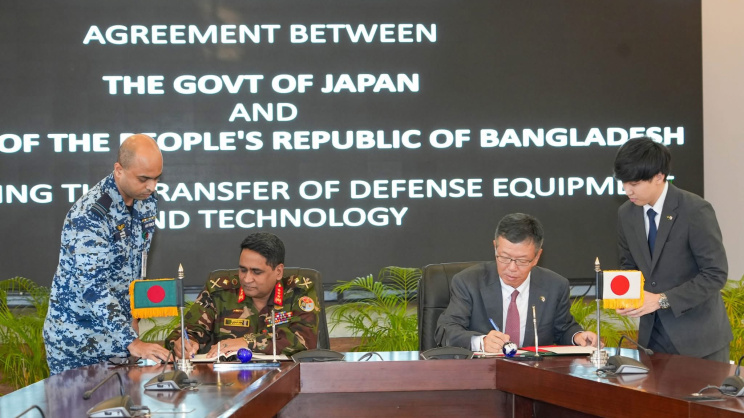
Bangladesh’s defence diversification already extends beyond India and China. In February, Bangladesh and Japan signed an agreement establishing a framework for defence equipment and technology transfer, joint research and development, and exchanges of military experts. Türkiye has also emerged as a significant partner, with Dhaka and Ankara agreeing to strengthen defence cooperation and explore deeper institutional and industrial ties. At first glance, expanding the number of defence partners seems exactly what a small state should do. If Bangladesh has several suppliers and security partners, no single country should be able to dominate its choices. But this logic has limits.
More partners do not necessarily produce less dependence. Bangladesh may reduce excessive reliance on one country while simultaneously becoming dependent on several countries in different areas. China could remain indispensable for one aircraft fleet, Türkiye for another system, Japan for particular technologies, and India for certain training or maritime functions. Instead of eliminating dependence, Dhaka could simply create multiple dependencies.
This does not mean diversification is undesirable. Distributed dependence may be strategically safer than overwhelming dependence on one supplier, but diversification must be managed carefully. There are also operational costs. Equipment from different countries may require separate ammunition, maintenance systems, training programmes and logistical networks. What looks politically attractive as diversification may become militarily inefficient. Bangladesh therefore needs to strike a difficult balance between political diversification and operational coherence.
The objective should not be to maximise the number of suppliers, but to create enough alternatives to prevent any single partner from becoming indispensable while maintaining a force structure that remains financially and operationally sustainable. For a small state, the most effective response to bipolar pressure may therefore not be to seek a perfect balance between two major powers, but to expand the range of credible alternatives available to policymakers.
Hedging works only when Bangladesh sets the agenda
This leads to the most important issue. A country is not necessarily pursuing a hedging strategy simply because several major powers want to cooperate with it. China may offer aircraft or technology, India may propose military training, Japan may provide defence equipment, and Türkiye may offer joint production. Each proposal may make sense individually, but accepting several attractive offers does not automatically produce a coherent national strategy.
For hedging to strengthen autonomy, Bangladesh must determine its own priorities first. Dhaka needs to decide which capabilities are necessary, which forms of foreign dependence are acceptable, where domestic production should be developed, which areas require supplier diversification, and which sensitive capabilities should remain under stronger national control. Only after answering these questions should external partnerships be incorporated into Bangladesh’s defence strategy.
Otherwise, Dhaka risks allowing foreign offers to determine the structure of its armed forces rather than using foreign partnerships to implement a Bangladeshi strategy. This is particularly important now that the government has explicitly committed itself to avoiding excessive dependence on any single power or alliance. In defence policy, that principle cannot simply mean distributing diplomatic attention evenly among different capitals. It requires coordination between military procurement, foreign policy, defence-industry development and long-term strategic planning.
Successful hedging therefore demands more than saying yes to multiple partners; sometimes, strategic autonomy requires the ability to say no. A financing package may be attractive but create excessive lifecycle dependence. A sophisticated platform may improve capability but lock Bangladesh into a single technological ecosystem for decades. An offer of deeper security cooperation may be useful but come with political expectations that exceed Bangladesh’s interests. A small state demonstrates agency not simply by obtaining more offers, but by possessing the institutional capacity to reject offers that constrain its future choices.

Not choosing also requires a strategy
The September defence conversations should therefore not be interpreted as evidence that Bangladesh is choosing between China and India. Nor are two meetings enough to demonstrate that Bangladesh already possesses a fully developed hedging doctrine. What they reveal is a broader transformation in Bangladesh’s strategic environment. China remains important to military modernisation. India remains unavoidable because of geography and shared security concerns. Japan and Türkiye are expanding their roles. Other partnerships are also likely to grow as Bangladesh seeks new capabilities. This gives Dhaka greater choice, but it also creates a more complicated network of dependencies.
The success of Bangladesh’s defence hedging should therefore not be measured by how many partners it has or whether Beijing and New Delhi receive equal diplomatic attention. It should instead be measured by whether each new relationship leaves Bangladesh with more room for manoeuvre than it had before. That is the real difference between diversification and strategic autonomy.
Bangladesh does not need to choose between India and China, but refusing to choose is not a passive policy. It requires disciplined procurement, functional diversification, careful management of lifecycle dependence, greater domestic capacity and clear limits on how far external security cooperation should extend. For Bangladesh, therefore, the central question is not simply who it cooperates with today. It is whether, after entering those partnerships, Dhaka will still be able to make tomorrow’s decisions on its own terms. For a small state navigating an increasingly competitive Bay of Bengal, that may be the most meaningful measure of strategic autonomy.
Mohd Amdadul Haque is a doctoral candidate in the Department of International Politics at Shandong University and an assistant professor in the Department of Political Science at Gopalganj Science and Technology University. He can be reached at milon93@gmail.com.
Send your articles for Slow Reads to slowreads@thedailystar.net. Check out our submission guidelines for details.

What Bangladesh should ask before joining the Makkah Pact

Nepal’s difficult passage: Political change meets ecological crisis

BRICS at 20: Why the New Delhi Summit matters to the Global South

From Balfour to sanctions: Why the UK’s ban on Israeli settlement trade matters

Ganges Water Treaty: A new bargain or a new dispute?

Bangladesh and the Mecca Pact: The national security questions we are missing
From Chinese fighter jets to the Mecca Pact: Bangladesh’s strategic future?

Is Bangladesh the next base for Chinese scam networks?

The politics of fear: From Gaza's paper kites to ‘unsafe’ on campuses