


Tigresses still chasing World Cup relevance

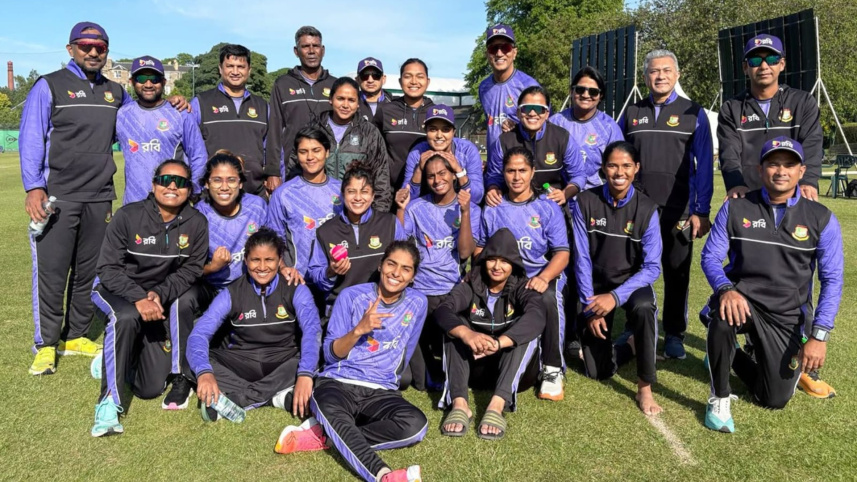
Since 2014, Bangladesh have been regular participants at the ICC Women's T20 World Cup, and the 2026 edition beginning today will be their seventh appearance. On paper, that makes the Tigresses an experienced World Cup side. In reality, they are still searching for meaningful progress.
In their maiden appearance in 2014, Bangladesh defeated Sri Lanka and Ireland. Yet across the next four editions, they failed to win a single match before ending the drought with a victory over Scotland in 2024. For a team that have spent more than a decade at the highest level, three wins from 25 World Cup matches leaves a lot to be desired.

A similar pattern has emerged in the 50-over format. Bangladesh qualified for the ODI World Cups in 2022 and last year, managing just one victory in each campaign.
The problem is not a lack of competitiveness. they have often pushed stronger sides close, only to falter at decisive moments. Those recurring failures, however, point towards deeper structural issues.
The most obvious concern is the team's limited progress over the past decade. While women's cricket has evolved rapidly, the Tigresses continue to struggle around the 130-140 mark in 20-over fixtures as scoring rates worldwide rise. Teams such as Scotland, the Netherlands and Ireland now regularly post totals of 150-plus, while the Tigresses often find such targets beyond reach.
Even Sri Lanka, once a comparable opponent, now consistently outperform Bangladesh. Consequently, the historic 2018 Women's Asia Cup T20 triumph increasingly looks like an isolated achievement rather than the start of sustained growth.
Mindset remains another concern. There is still a belief that bowlers can defend modest totals, but conditions in England and Wales are unlikely to reward that approach. The women in red and green possess only one genuine pace threat in Marufa Akter, and even she struggled to make a significant impact during the recent tri-series and warm-up matches.
Those preparations offered little encouragement. Defeats to Scotland and the Netherlands in the tri-series, followed by losses to New Zealand and Ireland in warm-ups, have raised serious doubts about Bangladesh's ability to compete consistently at this mega event.
The second major issue is the absence of a strong player pipeline. While continuity has value, difficult decisions become necessary when performances stagnate. India have left out established names such as Harleen Deol, Amanjot Kaur and Sneh Rana, while Australia omitted Darcie Brown based on form and team requirements.
Bangladesh rarely enjoy such luxury. Several players continue to retain their places partly because there are no ready-made alternatives.
That brings attention back to a domestic structure that remains fragmented. The Women's Bangladesh Premier League was expected before the World Cup but now appears increasingly unlikely. This year the Dhaka Premier League did not take place, the National Cricket League has frequently changed formats, and the Bangladesh Cricket League itself is irregular. The result is a system that does little to prepare players for international demands.
What can be expected from the Nigar Sultana Joty-led side at this World Cup? Will it be another tournament of participation, or can they finally take a meaningful step forward?
Before departure, Joty and her teammates spoke confidently about winning three group-stage matches. Recent results, however, suggest that ambition may be easier stated than achieved. Bangladesh have been drawn alongside Australia, India, South Africa, Pakistan and the Netherlands. Their campaign begins against the Netherlands in Birmingham on June 14, and a positive start could provide valuable momentum.
Current form offers little indication of a giant-killing run. While Bangladesh supporters will hope the team can take a step forward, above all they will want to avoid another World Cup overshadowed by missed opportunities and disappointment.
 For all latest news, follow The Daily Star's Google News channel.
Comments