


The Finest Things in Bangladesh Have Always Existed in Private
Some of Dhaka's most accomplished residential architecture belongs to a world that has never appeared in a magazine. Commissions pass by referral, from one household to the next, and much of the finest work being built in the city today, in Gulshan, Baridhara, and beyond, is never photographed for publication or put forward for a prize. This tradition runs back to Muzharul Islam, the modernist who founded Bangladesh's architectural profession and sat on the first Master Jury of the Aga Khan Award for Architecture in 1980, though he was never a laureate himself. The architects who have since won it work in the lineage he began.
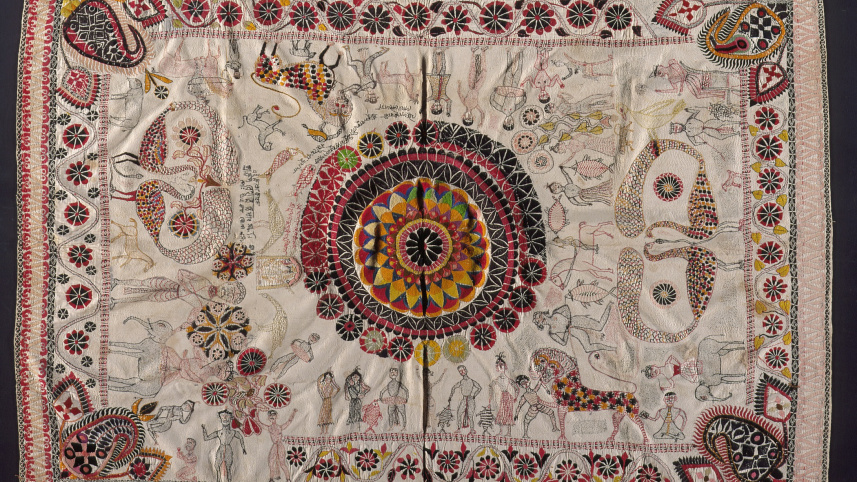
The pattern repeats elsewhere. Bangladesh has a real culture of private art collecting, built through personal introduction rather than public auction or gallery representation, much of it never catalogued or exhibited. It has a genuine market for antique furniture, heritage textiles, and bespoke craftsmanship that changes hands through personal networks rather than retail. And it has a layer of premium real estate known chiefly to people who already own into it, moved by word of mouth rather than advertisement.

None of this is unique to Bangladesh. What is unique is the absence of anything built alongside it. Milan has Salone del Mobile, launched in 1961, and a design press that has spent decades turning private taste into public canon. Paris has the Comité Colbert, founded in 1954 to define and defend what French luxury means. Tokyo has its Living National Treasures, a formal state designation that documents a master craftsman's technique and funds its transmission before it disappears with him. Bangladesh has none of these. Its taste is real. Its record is not.
Ask whether this privacy is a virtue, a form of discretion in a country where visible wealth invites visible risk, or a failure, a refusal to build the institutions that might have let Bangladeshi taste travel the way Bangladeshi cloth once did, and the answers will not agree.
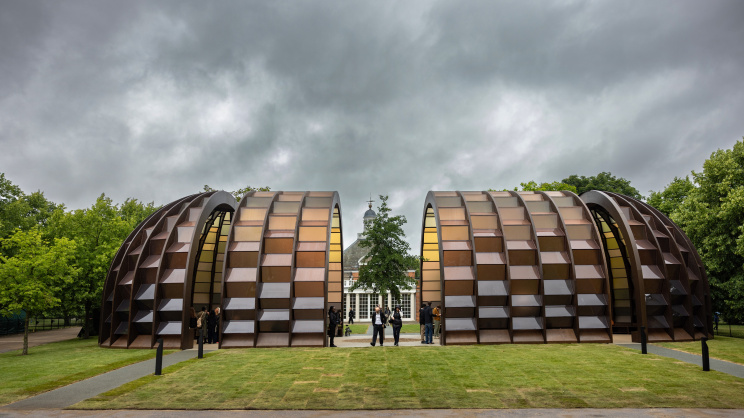
But something has started to shift. Marina Tabassum's Serpentine Pavilion commission in 2025 put a Bangladeshi architectural sensibility in front of an international public that had never had reason to look, the first time a Bangladeshi architect has held the commission. Her influences include the critic Kenneth Frampton, whose writing on regional modernism she has cited directly, and who invited her to deliver the Kenneth Frampton Endowed Lecture at Columbia University. Earlier this year, a Bangladeshi designer brought jamdani to Australian Fashion Week, reworking a handwoven sari into a runway gown rather than presenting it as ethnographic craft. None of this was inevitable, and it is not yet a pattern. It may simply be a few doors opening at once. But for a country whose finest things have always stayed indoors, a few open doors isalready something.
The country’s luxurious heritage should be the wrapping for Bangladesh as the country takes its position in the global stage.
 For all latest news, follow The Daily Star's Google News channel.
Comments