


As Bangla QR Expands, Cyber Security Must Keep Pace
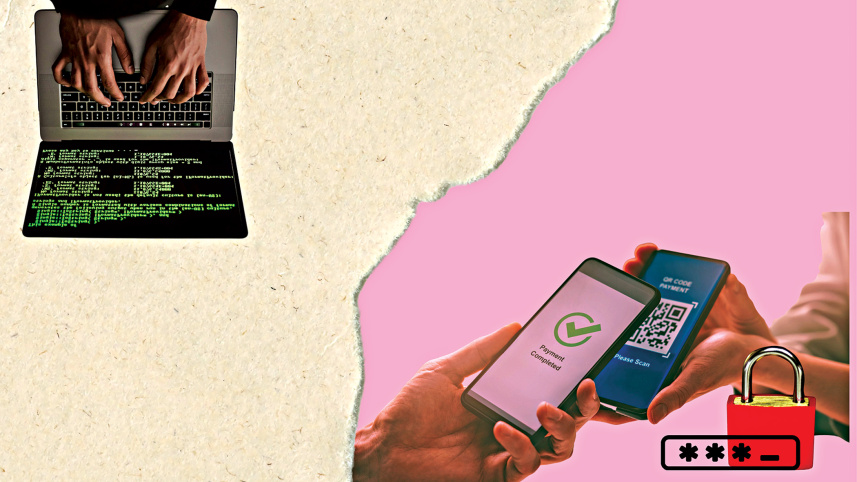
Unlike a web address printed on paper, a QR code hides its destination from the user. Customers cannot immediately determine whether the code directs them to a legitimate payment gateway or a fraudulent website.
This characteristic has fuelled the rise of “quishing”, which is QR code phishing. Rather than sending suspicious hyperlinks via email or text message, criminals create malicious QR codes that redirect victims to fake banking portals or counterfeit payment pages designed to steal usernames, passwords and financial information.

The scam relies on trust. Users often assume that a QR code displayed at a shop, shared through social media or printed on promotional material is genuine, making them less cautious than they might be when clicking an unfamiliar web link.
How fraudsters exploit QR codes
One of the most common methods involves replacing legitimate QR codes with counterfeit ones. A fraudster simply prints a fake payment sticker and places it over the merchant’s original code. Customers unknowingly transfer money to the criminal’s account while believing they have paid the business. Similar scams have already been reported in countries including Singapore, Australia, the United Kingdom and the United States, highlighting that QR code fraud is neither theoretical nor limited to one region.
Cybercriminals are also using QR codes in phishing campaigns disguised as discount offers, event registrations, parcel deliveries and cashback promotions. Once scanned, victims may be redirected to convincing fake websites that request sensitive financial information or install malicious software on their devices. With advances in artificial intelligence, these fraudulent websites are becoming increasingly sophisticated, making them harder to distinguish from legitimate banking platforms.
Staying safe while using Bangla QR
Security experts stress that QR payments themselves remain secure when used through authorised banking and mobile financial service applications. Most payment apps display the recipient’s name and transaction amount before asking users to confirm payment. Taking a few seconds to verify these details can prevent many forms of fraud.
Consumers should avoid scanning QR codes received from unknown sources or those attached to unsolicited promotional messages. Suspicious-looking stickers, damaged labels or QR codes that appear to have been pasted over another code should also be treated with caution. Merchants, meanwhile, should regularly inspect their payment stickers for signs of tampering and replace damaged codes promptly. Positioning QR codes where employees can easily monitor them can reduce opportunities for criminals to replace them with fake stickers.
Building trust in Bangladesh’s digital payments
The long-term success of Bangla QR will depend on public confidence. Bangladesh has already demonstrated strong growth in digital financial services. A unified QR payment system has the potential to further expand financial inclusion by making cashless transactions easier for businesses and consumers alike.
Built on the global EMVCo specification, Bangla QR secures transactions through end-to-end encryption and tokenisation, ensuring that merchants cannot access or store sensitive customer account details. To complement this, participating banks integrate additional security measures, including transaction limits, device binding, real-time fraud monitoring, and multi-factor OTP authentication for larger transfers. This entire ecosystem is regulated by the Bangladesh Bank, which enforces a standardized security baseline across all participating institutions and provides a structured dispute resolution mechanism to protect users.
However, awareness must grow alongside adoption. Financial institutions, regulators and payment providers will need to invest in continuous public education on emerging scams, safe digital payment practices and reporting mechanisms for fraudulent activity.
 For all latest news, follow The Daily Star's Google News channel.
Comments