


Inclusive growth, cashless future
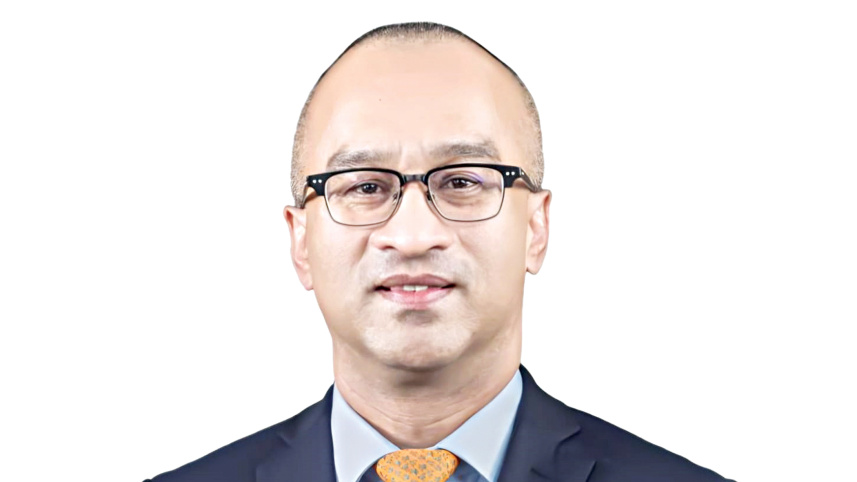
Mashrur Arefin
Managing Director and CEO
City Bank PLC.

At City Bank, we are enabling Bangla QR payments through Citytouch to broaden accessibility. Our goal is to deploy 300,000 QR standees over five years, making digital transactions a cornerstone of Bangladesh’s cashless journey.
Bangla QR revolutionises digital payments by bridging the gap between formal banking and grassroots commerce. Mashrur Arefin, Managing Director and CEO of City Bank PLC, discusses how a unified, interoperable payment infrastructure is essential for driving Bangladesh toward a truly cashless future and ensuring financial inclusion for all segments of society.
The Daily Star (TDS): How do you perceive the role of Bangla QR in driving Bangladesh’s transition toward a truly cashless society?
Mashrur Arefin (MA): Bangla QR’s strength is interoperability, creating a common payment platform across banks and MFS providers. It allows customers to pay any merchant using their preferred app through a single QR code. Building a cashless society is about changing payment habits. Bangla QR makes digital acceptance affordable even for small merchants, enabling payments to reach neighbourhood shops and local markets where cash still dominates.
TDS: How are banks, MFS providers, and fintech companies collaborating to ensure seamless, cross-platform transactions for the end consumer?
MA: This is one of the best examples of industry-wide collaboration. Over 50 institutions, including 46 banks and several MFS providers, have united under a common standard. The momentum is encouraging, with 66,000 new codes deployed recently. Furthermore, the central bank’s decision to cap merchant rates has made the proposition more attractive for businesses, ensuring a frictionless and efficient experience for all participants.
TDS: How can we make Bangla QR a natural, daily habit for everyday retail transactions?
MA: We need widespread merchant acceptance so customers can use Bangla QR everywhere, from cafes to roadside tea stalls. A secure, frictionless experience is vital to building long-term trust. Once consumers begin using it for routine purchases, it gradually becomes a habit. By combining awareness campaigns with tangible user incentives, we can ensure that choosing a digital scan feels more convenient than reaching for cash.
TDS: What additional policy support, tax incentives, or infrastructure developments are needed? What additional policy support, tax incentives, or infrastructure developments can accelerate the nationwide rollout? to accelerate the countrywide rollout?
MA: While our foundation is strong, the focus must shift toward encouraging usage. Targeted incentives for cash-heavy sectors like fuel stations and educational institutions could greatly accelerate adoption. Additionally, tax incentives or rebates for merchants accepting digital payments would encourage more businesses to formalise and embrace the system. Continued investment in digital infrastructure and financial literacy will also be essential. When digital payments become more convenient and rewarding than cash, adoption will accelerate naturally, bringing us closer to a truly cashless economy.
 For all latest news, follow The Daily Star's Google News channel.
Comments