


The burden of being the eldest child
“You have to be an example to others.”
I grew up listening to these words almost every day. Words that, I believe, many firstborns can relate to. These words may seem simple, casually passed off on a daily basis, but they carry a deep weight of responsibility and an exhaustion that is often left unsaid.

Psychology has a term for this: oldest child syndrome, which shapes the firstborn into someone responsible, perfectionistic, and often a third parent to the other siblings. These traits may sound like virtues, but they are virtues no child ever asks for. Being the eldest means carrying responsibilities you were never prepared for. You are the one expected to keep it together, to be the pillar everyone leans on, but who is there for you when you break down?
The eldest child grows up fast. All those small, unhurried joys of childhood do not last long for them. They simply feel the pull to outgrow them too soon.
In the dead quiet of the night, when everyone else is asleep, the eldest child often lies awake, overwhelmed by the what-ifs and maybes of life. Not necessarily because anyone imposed these worries on them, but because they took them on themselves, knowing that if something goes wrong, the family will look to them first.
Jawad Ishmam, the eldest of six siblings, recounts the time when his father suffered a stroke. “I was in college when it happened,” Jawad says. “He was in the ICU, clinging to dear life. I looked at my mother and siblings and realised, for the first time, that they were looking to me for guidance. Though my father recovered, life for me after that changed forever.”
Growing up, just like any other firstborn, I personally had no one to help me navigate the intricacies of life. No one to teach me how to ride a bicycle, to help me with my studies, to play with, or to run to when things got difficult. Yet, I made sure my little sister did not have to go through the same. The eldest often becomes a third parent without ever deciding to. And this comes with a burden of expectations: to be successful, capable, and the one who keeps the family steady.
Researchers at the University of Essex found that within a family, firstborns are 16 percent more likely to excel academically. Not because they had the best of everything, but because they felt they needed to be. Jawad feels the same: “All my life, I lived for my family. Every decision, every choice I made was with their future in mind. I always had this internal drive to work harder, because there are faces that look up to me.”
In many ways, the eldest is caught in a generation gap. Their parents are often too far removed to fully understand them, while their siblings are too young to fully grasp what their older brother or sister is going through. So, the eldest child naturally keeps their problems to themselves and has to figure things out alone. People may praise them and appreciate their efforts, but that warmth comes with an unspoken expectation attached. Studies suggest firstborns are 35 percent more likely to experience depression. One of the most common struggles I have observed among eldest children is the pull of whether to follow their passions or go after a stable, secure life. Do you chase what your heart dreams about, or do you choose the path that keeps your family steady?
For Muntasir*, being the eldest of three always meant putting family first. “I always wanted to be an architect,” says Muntasir. “I even got into the best architecture school in Bangladesh, but studying architecture does not offer the kind of financial security that you hope for. Hence, I chose BBA over my passion. No one forced me into that decision; just a few concerned questions from the people around me. I made the choice on my own, and I am glad I did.”
The life of an eldest daughter, however, is a different story altogether. Everyone expects the eldest son to be responsible and provide for his family in the future, but for the eldest daughter, it is more than that. From an early age, she is expected to be many things all at once: a good daughter and sister, and then, a good wife and a good mother. Yet, unlike the eldest son, she is rarely celebrated for carrying that weight.
Zara*, the eldest of two sisters, knows this well. “Everyone expects so much of me,” she says. “Sometimes I myself don’t know what exactly is expected of me. I have to manage the home and the outside world at the same time. In all honesty, I love my family, but it does get overwhelming. Daughters in our society are always expected to be perfect. And being the eldest only adds to that. Balancing home and a career gets really difficult.”
Listening to all their struggles and frustrations, I asked myself, would I change any of it? Never.
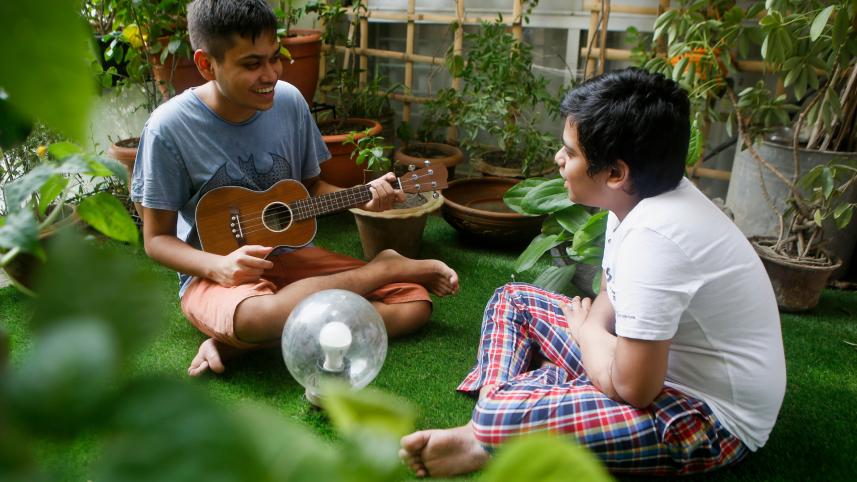
I love being an elder brother to my sister. I love being greeted every day by her grinning face. Being the first person to read her poems, listening to her daily rants, singing along to songs together, and arguing over which Harry Potter book is the best. I love every bit of it.
When asked the same, Zara’s answer came almost immediately: “I would not trade anything in this world for those memories. My sister and I have grown up now, both busy building our own lives. But I miss it. I miss making ponytails of her hair, reading her bedtime stories, fighting over the TV remote, and listening to Taylor Swift together. I was the person she ran to in the dead of night, when she had a bad dream, crawling under the blanket, cuddling close. Not my parents. Me.”
Our stories are completely different. But Zara and I agree on one thing: life is short, and only a special few get to experience this kind of love. We are lucky to be among them.
*Names have been changed upon request.
Irfan spends his time writing, travelling, doomscrolling, and occasionally attending class for a degree he believes will be useful someday. Send him cat reels at irfan.ink63@gmail.com.
 For all latest news, follow The Daily Star's Google News channel.
Comments