


From a failed first audition to five decades of brilliance: Azizul Hakim reflects on his journey
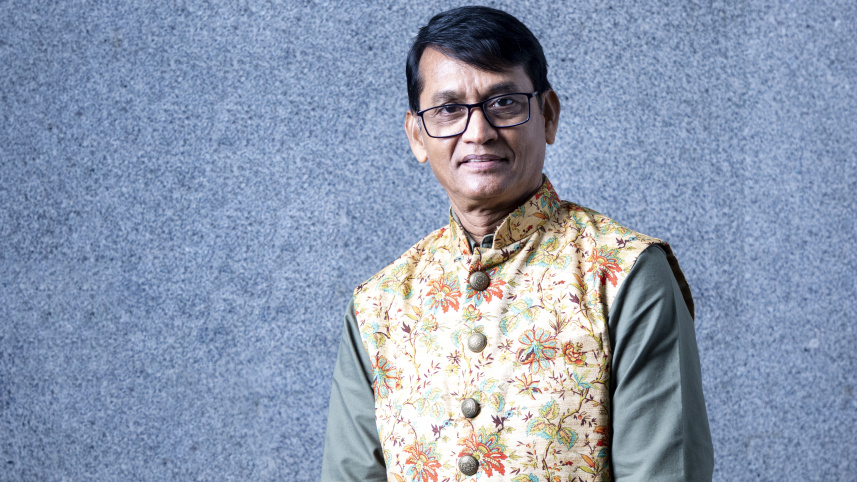
Few actors have enjoyed the enduring popularity that Azizul Hakim commanded during the golden era of Bangladeshi television in the 1990s. Through a string of hit weekly dramas, he became one of the country's most beloved screen stars. Alongside television, he built an acclaimed career on stage with Aranyak, which he joined in 1977, and in films such as “Joyjatra” and “Shankhanil Karagar”.
This year marks 50 years of his acting career.

In an exclusive conversation with The Daily Star, the veteran actor reflected on the journey that began with childhood curiosity, survived an early rejection and blossomed into a five-decade career.
“I still remember going to the cinema as a little boy and wondering how the people on the screen could talk just like real people,” he recalled.
His family encouraged him to take part in school cultural programmes, from solo acting and poetry recitation to dress-as-you-like competitions.
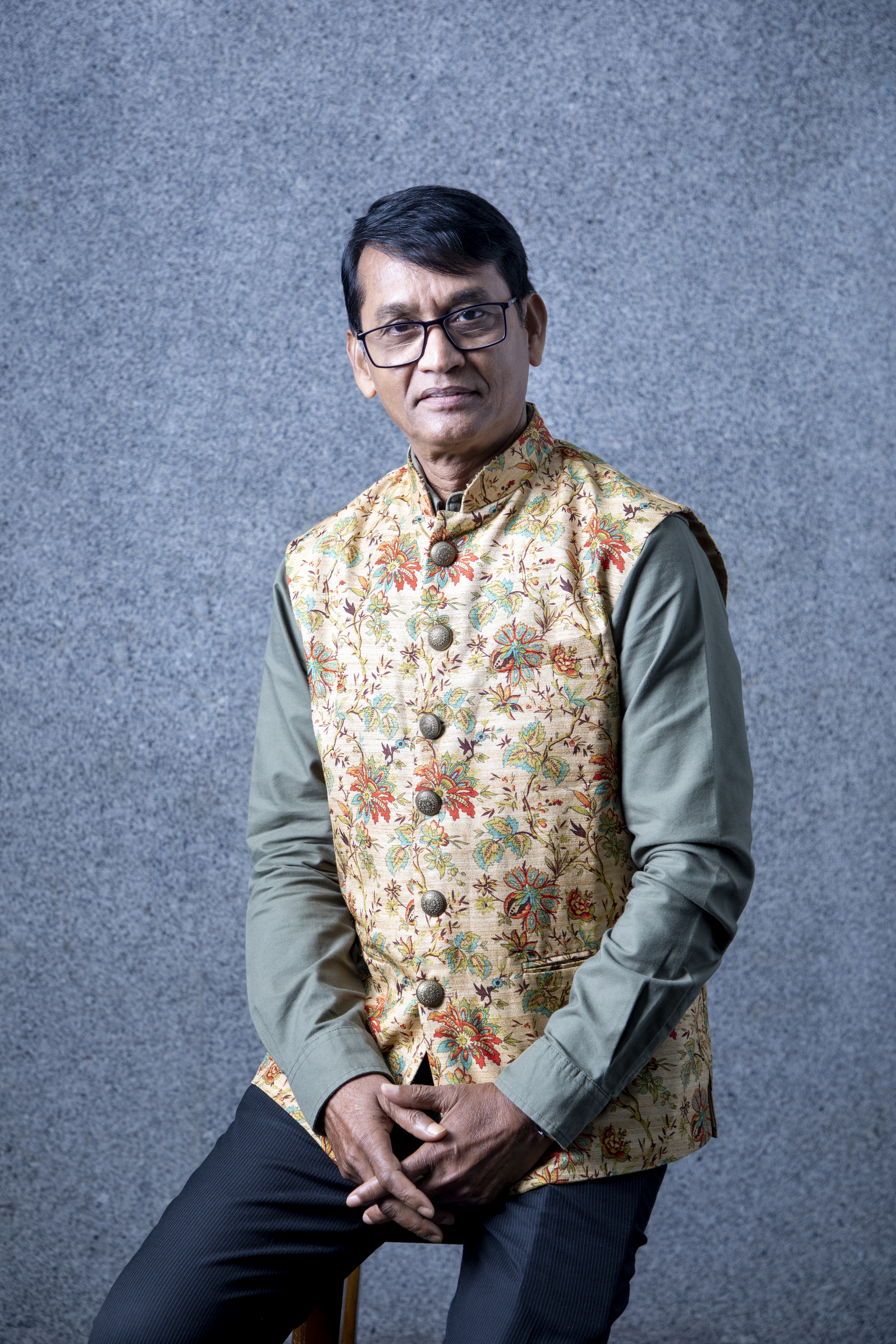
"My parents always encouraged me. They helped me prepare my costumes and performances. Looking back, I think that's where the dream first began."
Although he had no plans of becoming a professional actor at the time, he was fascinated by theatre.
"I didn't know how or when my dream would come true, but I never stopped dreaming."
A defining moment came while he was studying at Jashore Zilla School, where his father, a government employee, was posted. Every year, his father's office staged a play, and Hakim rarely missed a rehearsal.
"I would sit and watch every rehearsal because I loved it so much." One day, someone asked if he wanted to act. "I immediately said yes.” That spontaneous invitation led to his first stage performance.
After moving to Dhaka, he began watching television dramas and films more seriously before auditioning for Bangladesh Television (BTV). The panel included Hasan Imam, Syed Ahsan Ali Sydney and Mamunur Rashid—artistes he had admired for years.
"I became terribly nervous in front of the camera. I wasn't prepared, and I failed the audition. I went home heartbroken." The disappointment proved to be a turning point.
Instead of giving up, Hakim found his way to Aranyak Theatre, where Mamunur Rashid was rehearsing “Ora Kadam Ali” at Willes Little Flower School in Kakrail.
"Mamun bhai told me theatre was a difficult place. He said if I worked hard, remained disciplined and kept practising, perhaps one day I would be able to act."
Hakim accepted the challenge. As part of his training, Mamunur Rashid required every newcomer to memorise the entire script of “Ora Kadam Ali”, not just their own role.
Eventually Hakim was cast in the production, although his first appearance was a silent role as a passenger at Sadarghat.
"I didn't have a single line, but I was thrilled because it was my first time on stage with Aranyak."
His opportunities gradually expanded. He was later given a small speaking role before expressing interest in playing the much older character of the Sareng, a boat captain who spoke in the Noakhali dialect.
"The actor who played the role couldn't travel outside Dhaka, and I already knew the character by heart. Mamun bhai wasn't sure I could do it because of the dialect and the age difference."
Hakim demonstrated the role during rehearsal and won over his mentor. "From then on, whenever ‘Ora Kadam Ali’ was staged, I played the Sareng."
 For all latest news, follow The Daily Star's Google News channel.
 Looking back, he credits Mamunur Rashid for shaping his career. "He was our master craftsman. He taught us acting, playwriting and directing. Everything we learned came from him."
That trust extended beyond acting. When Mamunur Rashid wrote “Pathor”, he asked Hakim to direct the production. "I was overjoyed."
The play received critical acclaim, marking Hakim's successful debut as a theatre director.
Despite his growing reputation on stage, television remained his biggest ambition. He and fellow actor Salahuddin Lavlu eventually approached Mamunur Rashid for guidance.
"He told us to prepare ourselves properly. Then he would recommend us." The advice paid off.
Hakim made his television debut in 1981 in “Ekhane Nongor”, written by Mamunur Rashid, after successfully passing another BTV audition.
“I started with a very small role and spent the next four years playing supporting characters.”
His breakthrough came in 1984 when he landed the lead role in “Tobuo To She”. "That was my first opportunity to play the hero on television.”
Film was the next dream to come true. “I had always wanted to work in cinema.”
When director Mostafizur Rahman, who had previously cast him in television dramas, offered him a role in “Shankhanil Karagar”, he accepted immediately. "There wasn't a moment's hesitation."
Reflecting on five decades in the profession, Hakim remains grateful for a journey that began with a child's curiosity in a cinema hall, was strengthened by discipline in theatre, and blossomed into one of the most enduring careers in Bangladeshi entertainment.
"Somehow, half a century has passed," he said. "I'm still acting, and I still feel the same excitement whenever I face an audience."
Comments