


A life lesson guised as a jury board
Walking into the second day of exploring the French Riviera, it is rather telling how you can make random discoveries in little sessions spread around the Croisette. Whether it’s Peter Jackson randomly announcing the next “Tintin” film in a Q&A session or Alia Bhatt announcing the 57th IFFI, the festival has no shortage of surprises to offer.
This is why it was all the more surprising that the events of the first day—especially the main jury’s press conference—are still lingering in my mind.
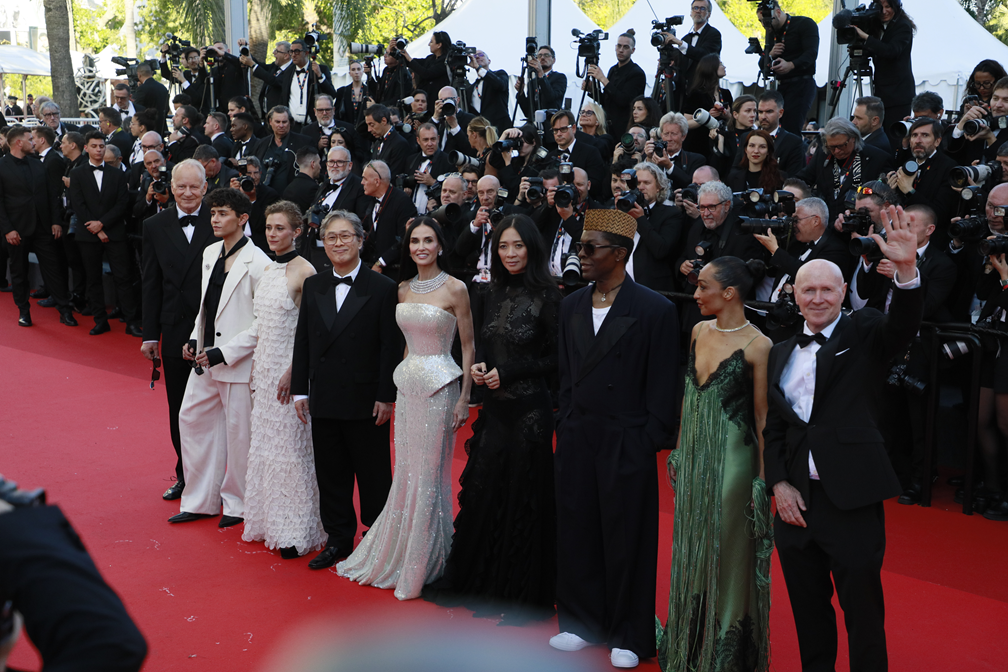
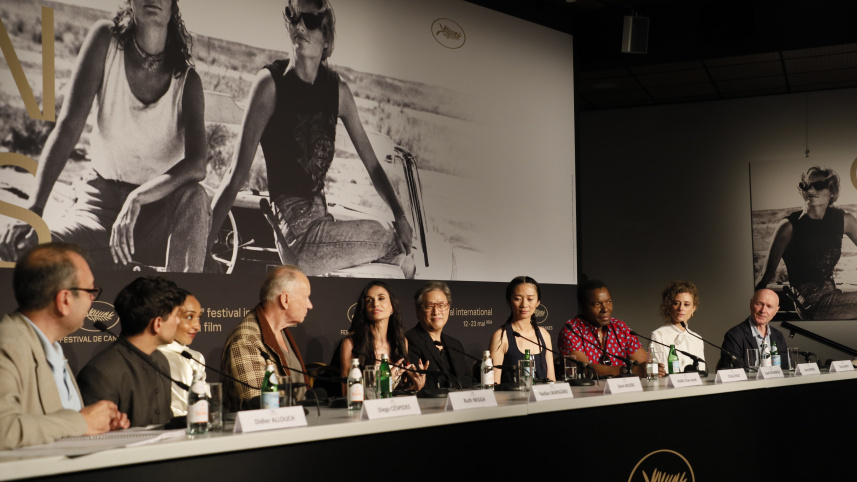
The jury table this year felt like a literal map of the “expanding centre” Park Chan-wook described: a collection of voices that refused to be flattened into a singular aesthetic. Presided over by Park, the group brought together a staggering range of perspectives, from the Hollywood resilience of Demi Moore and the Swedish gravity of Stellan Skarsgård to the poetic naturalism of Chloé Zhao and the fierce Irish-Ethiopian presence of Ruth Negga. They were joined by veteran Scottish screenwriter Paul Laverty, known for his unapologetic political edge, along with visionary Belgian director Laura Wandel, Ivorian-American actor Isaach De Bankolé, and young Chilean filmmaker Diego Céspedes.
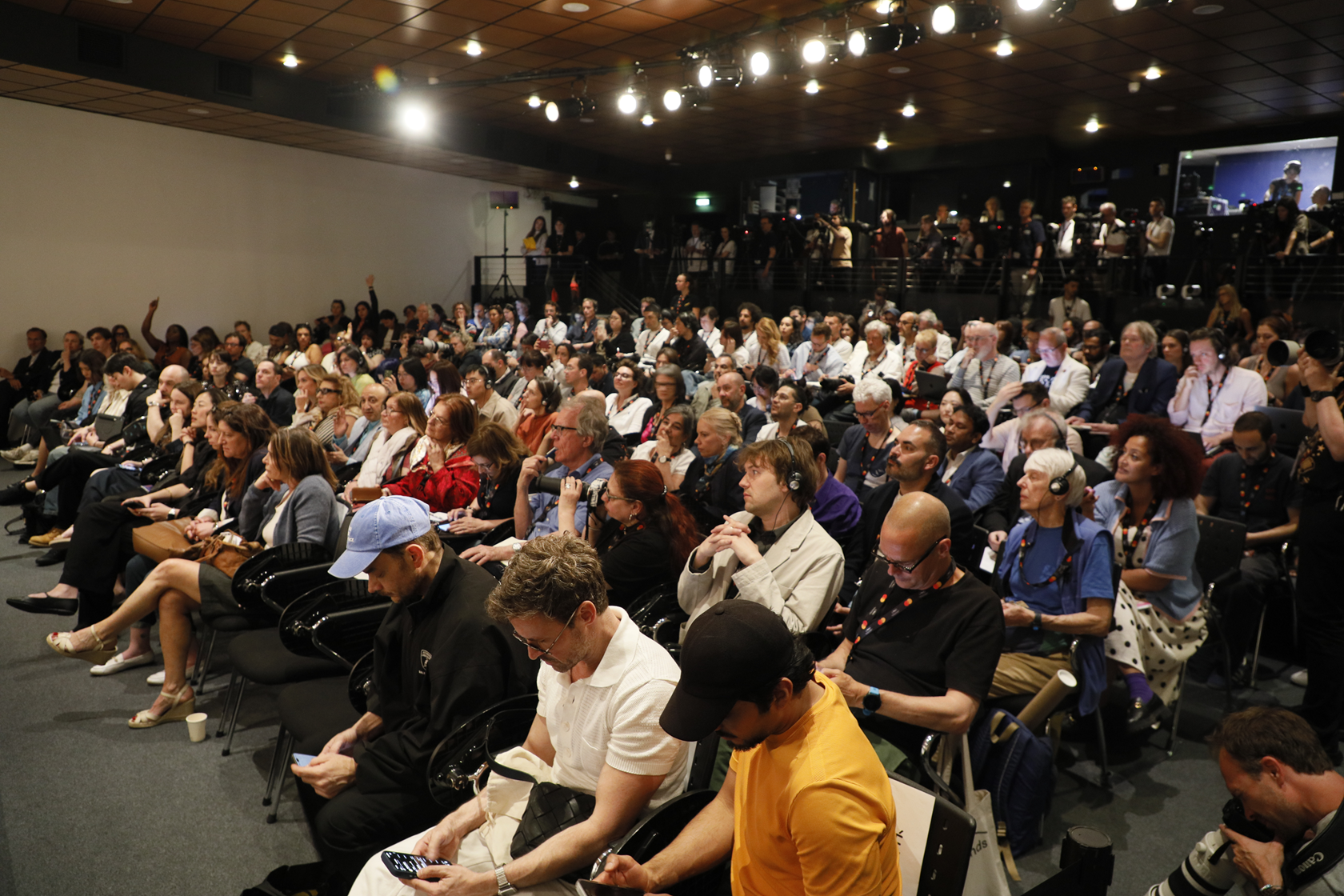
There is no bypassing the prodigal, eccentric genius of Park Chan-wook. Questions flew in from English, French, and Korean-speaking journalists, bouncing off the walls of a room that felt like the very epicentre of the zeitgeist.
It isn’t a new phenomenon by any means; in fact, Cannes has always functioned through the friction of translation. But this year, Park’s deliberate, unhurried pause as he waited for the interpreter to catch up felt like a power move. It was a quiet, staggering reminder that he didn't need to meet the world on its linguistic terms; the world had already met him on his artistic ones. He wasn’t rushing to bridge the gap; he let the bridge come to him.

In response to a journalist’s question regarding how it feels to lead this Jury, Park answered in a more profound way than expected: “In 2004, when I debuted here with “Oldboy", barely any South Korean films were seen at Cannes.” Of course, I only understood what he said when his interpreter, neatly ‘tucked’ behind him, explained it in English.
The wonder for me was twofold: first, Bangladesh arguably stands at the precipice of where Park was two decades ago with “Oldboy”. Even as I still argue that we have a minimal presence at Cannes, four young filmmakers are here with their scripts as part of the Cannes Docs.
Secondly, the confidence with which Park stands firm with his mother tongue, instead of ‘apologising’ for his English, is astounding. We are conditioned to believe that sounding "international" is the same as being internationally relevant. We are trained, from the classroom to the newsroom, to think that a heavy accent is a signal of "lesser" education, and that international spaces belong naturally to others and only conditionally to us.
You see it in our cultural DNA: journalists apologising for their English before asking a question, or filmmakers flattening the jagged edges of their stories to make them "palatable" for a Western gaze.
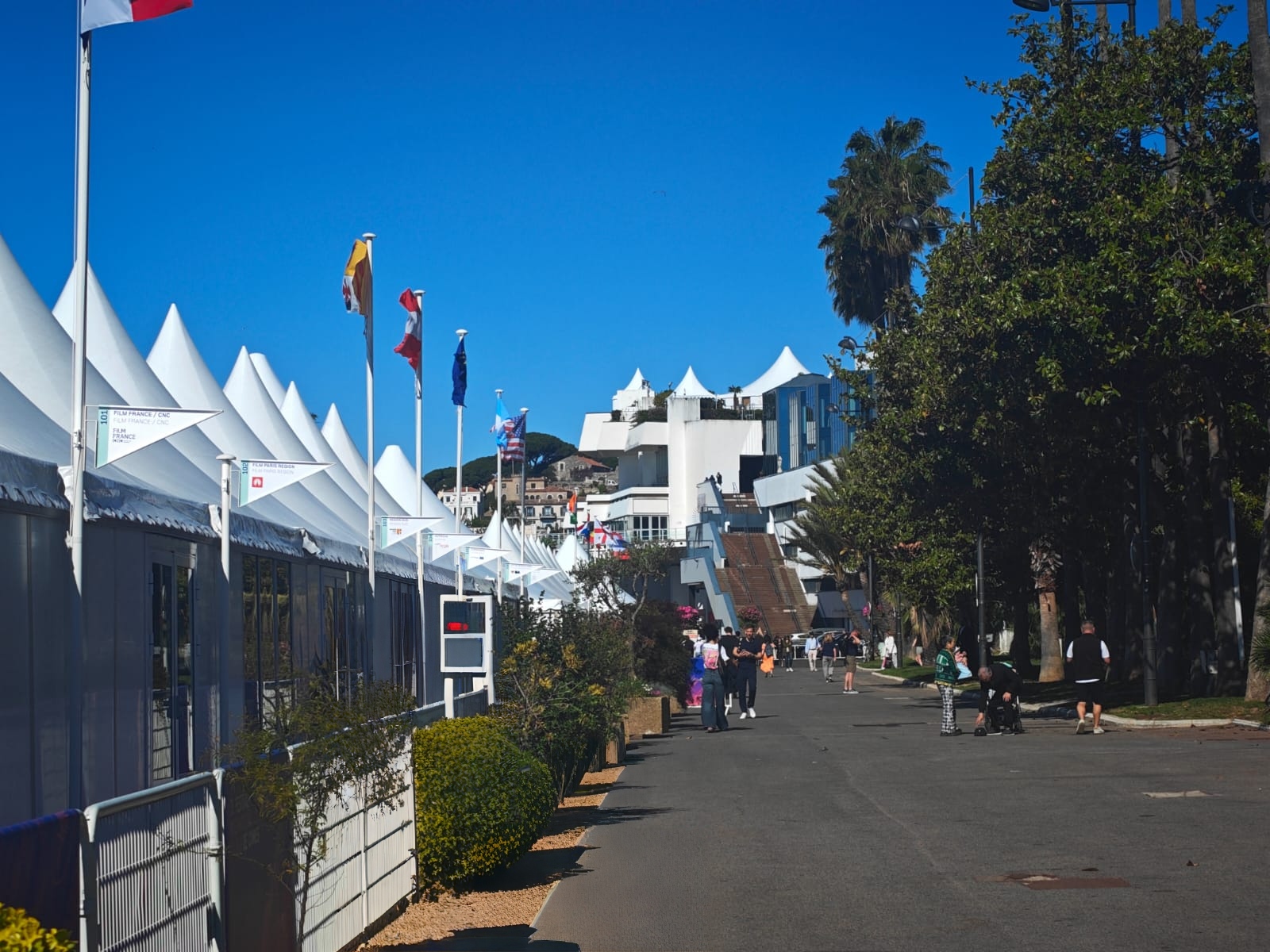
This sentiment of "identity as power" echoed throughout the jury’s remarks. When Demi Moore addressed the looming shadow of AI, she noted that while technology might mimic the form of art, it can never replicate the soul and spirit of the creator. That soul is rooted in heritage—in the specific rhythm of a language, the unique ghosts of a home, and the "un-translatable" nuances of our own skin.
But what hit like a sledgehammer was Irish screenwriter Paul Laverty breaking the festival bubble to slam the "blacklisting" of actors for their political stances—particularly regarding the bombing of women and children in Gaza—even if he did not explicitly name the conflict in every sentence. “Shame on those who bomb women and children. Shame on those who blacklist actors like Javier Bardem and Mark Ruffalo for speaking up against their misdeeds.”
Laverty dropped a bombshell on his way out of the press conference, which the delegation of international journalists immediately embraced and cheered vehemently.
The author is the Entertainment Editor at The Daily Star.
 For all latest news, follow The Daily Star's Google News channel.
Comments