


Tagore and the art of getting love wrong

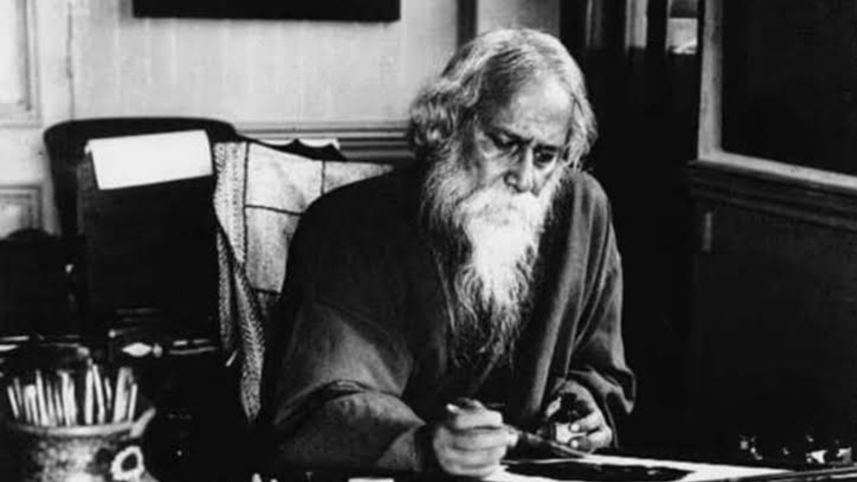
Every year, around this time, there is a familiar way in which we return to Rabindranath. His songs are sung a little more often, his portraits appear a little more frequently, and his words, polished by repetition, begin to feel almost sacred in their certainty. Love, in this commemorative space, is often presented as something lyrical and complete, something that arrives fully formed in melody and verse. But each time I return to his stories, I find myself unsettled by a quieter, more uncomfortable truth: Tagore rarely wrote love as something that resolves. He wrote it as something that misfires. It is not the absence of love that defines his narratives, but its misinterpretation. His characters feel deeply, sometimes overwhelmingly so, but they do not always understand what they feel, or what others feel in return. And it is within this gap, between emotion and understanding, that his stories begin to fracture.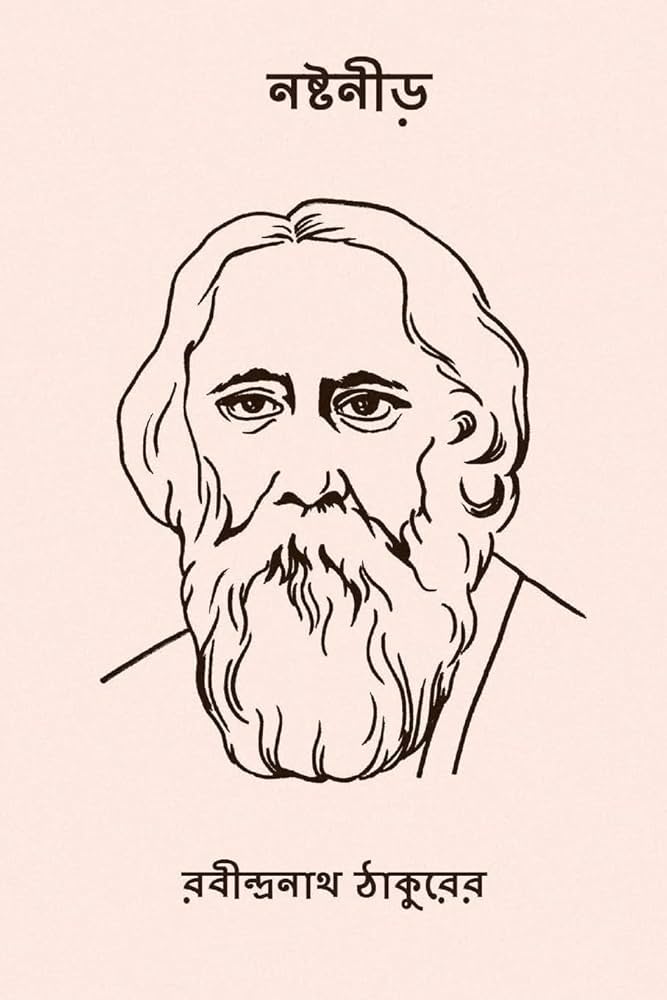
In "Nashtanirh", the relationship between Charu and Amal is often remembered for its restraint, for the delicate way in which affection unfolds without declaration. But beneath that restraint lies a persistent failure to recognise what is happening in real time. Charu’s loneliness slowly transforms into a form of emotional dependence, one that finds expression in shared conversations and intellectual companionship. Amal, aware but evasive, never fully confronts the weight of that connection. And Bhupati, perhaps the most tragic figure in this quiet triangle, remains almost entirely unaware until the emotional rupture has already occurred. What is lost here is not just a relationship, but the chance to understand it before it becomes irreversible, as love dissipates under delayed recognition.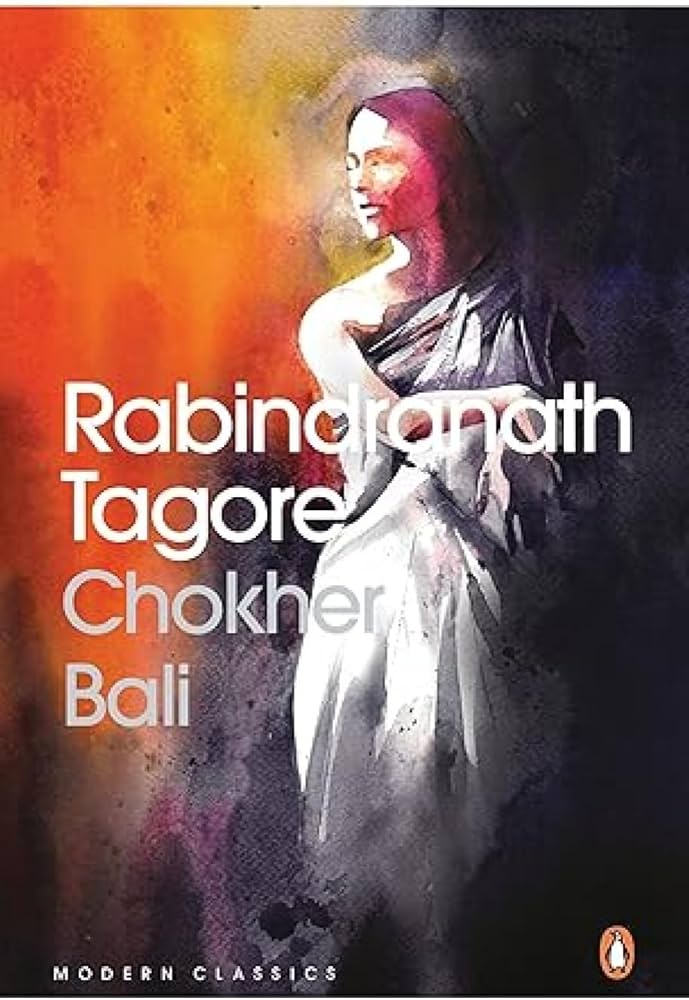
In "Chokher Bali", the misreading is more volatile, almost restless in its movement. Mahendra confuses desire with entitlement, treating his feelings as self-justifying rather than interrogating their impact. Binodini, far more perceptive, navigates love as both agency and vulnerability, often shifting between the two with a sharp awareness of her own position. Asha, caught between them, becomes the emotional ground on which these competing interpretations unfold. What makes the narrative so unsettling is not simply betrayal, but the fact that each character believes, at some point, that they are acting out of love. The tragedy lies in the lack of a shared language. Love exists, but it is defined differently by each person, and those definitions never quite align.
This pattern deepens in "Ghare Baire", where love becomes entangled with ideology, identity, and self-perception. Bimala’s attraction to Sandip is bound up with a sense of awakening, a movement beyond the confines of her domestic world. But Sandip mistakes admiration for devotion, reading her emotional openness as validation of his own authority. Nikhil, on the other hand, embodies a quieter form of love as he is patient, principled, and almost excessively restrained. Yet even this restraint becomes a form of misreading. In believing that love must be non-possessive, he fails to recognise the need for emotional presence. Each of them operates within a different emotional framework, responding not to each other as they are, but to the versions they have constructed in their own minds. It would be easy to describe these as stories of complicated relationships, but that description feels insufficient. What Tagore reveals, again and again, is not just complexity, but a kind of emotional illiteracy. His characters are not devoid of feeling; they are overwhelmed by it, misled by it, and often unable to interpret it with clarity. They hesitate when they should speak, speak when they should reflect, and act only when the moment has already passed.
This is perhaps why so many of his narratives resist closure. In "Shesher Kobita", Amit and Labanya arrive at a love that is intellectually rich and emotionally aware, yet deliberately left unfinished. Amit, with his tendency to aestheticise emotion, treats love as something to be shaped, articulated, even performed. Labanya, however, resists this framing. She recognises that to be loved as an idea is not the same as being understood as a person. Their decision to part is not framed as failure, but it carries a quiet incompleteness nonetheless. Love here is set aside because it cannot fully exist within the terms being offered. In "Noukadubi", the misreading takes on a more literal form. Relationships are built on mistaken identities, with affection developing under false assumptions about who someone is. The emotional stakes become intertwined with factual uncertainty, raising a disquieting question: if love emerges from misrecognition, what remains of it when the truth is revealed? Tagore does not resolve this tension neatly. Instead, he allows it to linger, refusing to offer the comfort of a definitive answer.
What strikes me, returning to these stories now, is how familiar this all feels. We often assume that emotional confusion belongs to another time, that we, with our language of self-awareness and communication, have moved beyond such misreadings. But the patterns persist. The tendency to project our own expectations onto others, and then feel betrayed when those expectations are not met. The habit of delaying honesty until it becomes impossible. The quiet substitution of clarity with assumption. If anything, the world we inhabit today, with its constant communication and curated expressions of emotion, should make understanding easier. And yet, it often seems to complicate it further. We speak more, but not always more honestly. We interpret quickly, but not always accurately. In this sense, Tagore’s characters do not feel distant or outdated. They feel uncomfortably close.
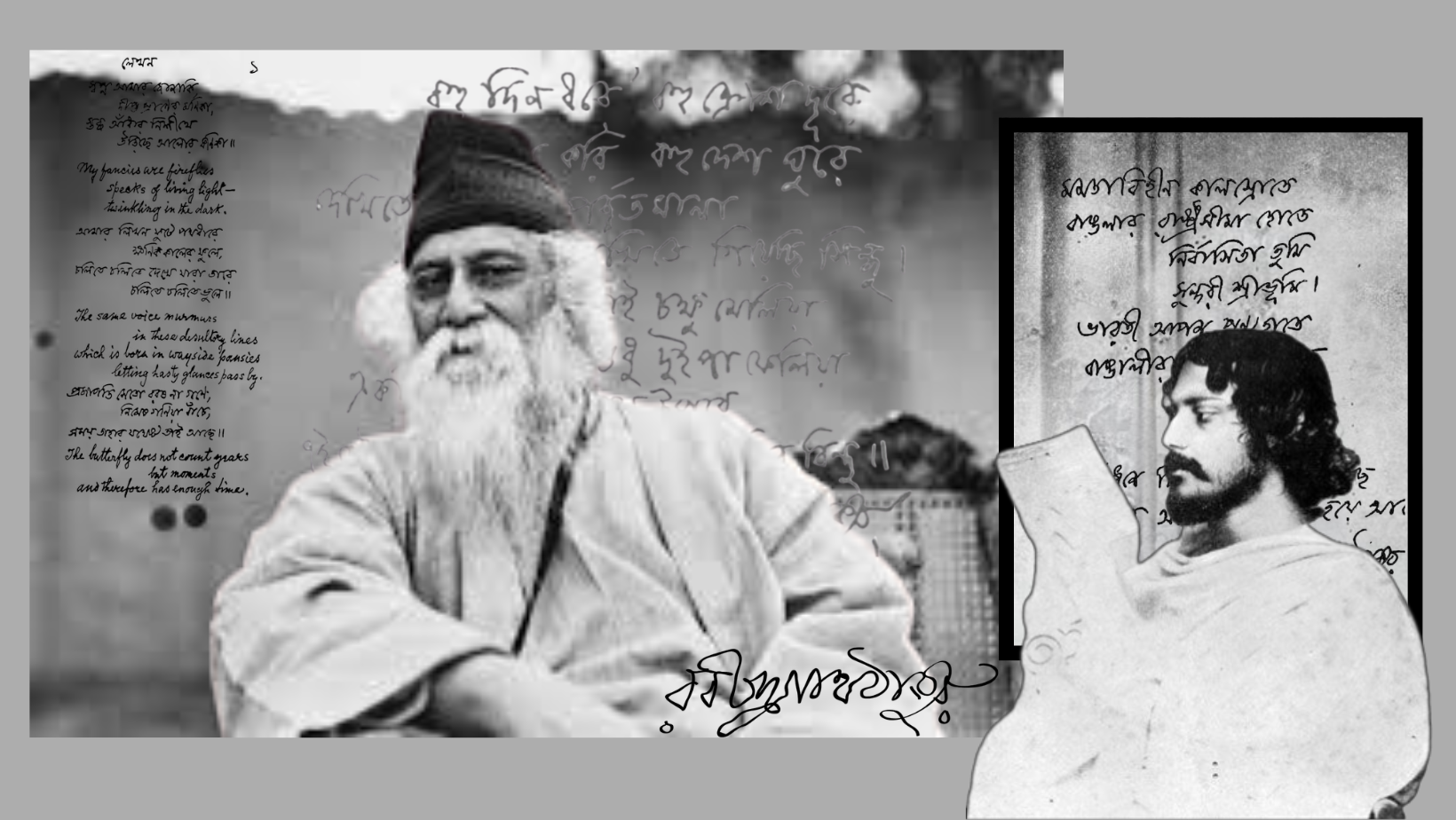
Perhaps this is why Tagore continues to endure, beyond the rituals of commemoration. Beneath the familiarity of his songs and the reverence of his legacy lies a body of work that refuses to simplify love into something easily resolved. He does not offer it as reward, or certainty, or even inevitability. Instead, he presents it as something fragile, easily distorted, and deeply dependent on how well we are able to read not just others, but ourselves. And that is the most unsettling truth his stories leave us with. Love does not fail because it is absent, or even because it is weak. It fails because we do not always know how to understand it.

 For all latest news, follow The Daily Star's Google News channel.
Comments