


Preserving a living archive: How ‘Architectural Guide Dhaka’ documents a city in transition
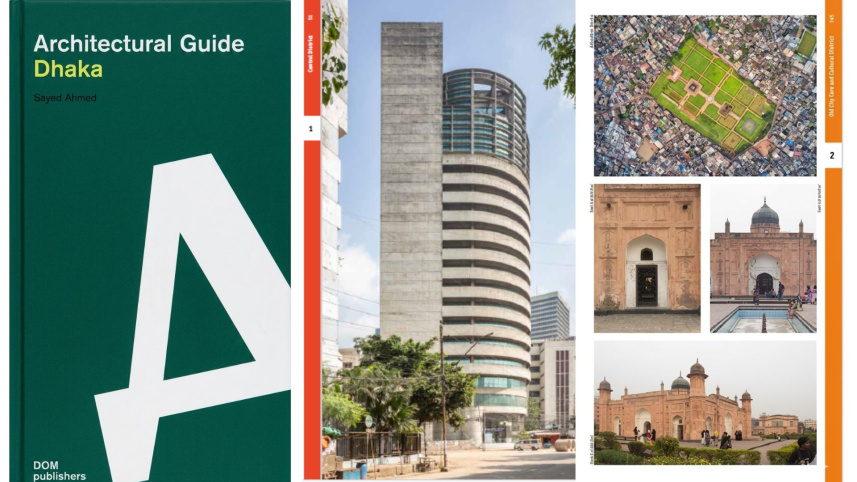
Cities often outgrow their own memory. In Dhaka, where construction cranes rise faster than conversations about preservation, the past risks being buried beneath concrete rather than remembered through it. Reading Architectural Guide Dhaka, authored by Architect and Assistant Professor Sayed Ahmed, I found myself thinking less about buildings as static structures and more as fragile records, stories that can disappear if no one chooses to document them.
The idea for the book, as Ahmed recalls, began almost incidentally at the World Architecture Festival in Berlin, back in November 2016. “I saw architectural guidebooks from many countries, including China and Iran,” he says. “That’s when I realised Bangladesh didn’t have anything like this.” What might have remained a passing observation instead became the foundation of a long-term project, one rooted in both curiosity and urgency and above all, patriotism.

That urgency becomes clearer when Ahmed speaks about preservation in Bangladesh. “The tendency for heritage preservation is very low in our country,” he explains. “That’s why we wanted its documentation.” It is a simple statement, but it carries the weight of a larger reality, one where buildings are often replaced before they are even understood.
Over three years, from 2020 to 2023, Ahmed and his team undertook the painstaking task of surveying Dhaka’s architectural landscape. The result is a curated selection of 150 structures, spanning eras and styles, each contributing to a broader narrative of how the city has evolved throughout history.
What stands out is not just the range of buildings, but the intention behind their inclusion. This is not merely a catalogue; it feels like an attempt to hold on to something that is slipping away.
Flipping through the guide, I was struck by how seamlessly it moves between the monumental and the ordinary. The presence of the National Parliament building, designed by Louis Kahn, is expected, its global reputation precedes it. But what feels more significant is how such landmarks are placed alongside lesser-known structures, allowing a quieter, more layered story of Dhaka to emerge.
Ahmed’s approach also reflects an understanding of Dhaka as a city shaped by multiple cultural currents. Through Hindu, Muslim, and Buddhist architectural influences, the book presents a landscape that is not singular but plural, constantly shifting, yet deeply rooted.
The international dimension of the book adds another layer to its significance. Published by a Berlin-based publisher, called DOM Publishers, in 2023, the guide situates Dhaka within a global conversation on architecture and heritage. It was showcased at the 78th Annual International Conference of the Society of Architectural Historians in Atlanta, USA.
Ahmed’s own experiences seem to inform this perspective. He has witnessed first-hand how other countries approach heritage management. “Abroad, preservation is taken much more seriously,” he notes, a comparison that subtly underscores the gaps back home.
What I found most compelling, however, is how Architectural Guide Dhaka repositions the way we look at the city. Dhaka is often described through its density, its chaos, its relentless pace. But here, it appears differently, not just as a megacity of millions, but as a living archive where histories overlap and coexist. The book encourages a slower gaze, one that notices the textures of time embedded in everyday spaces.
 For all latest news, follow The Daily Star's Google News channel.
Comments