


This recurring road carnage has to stop
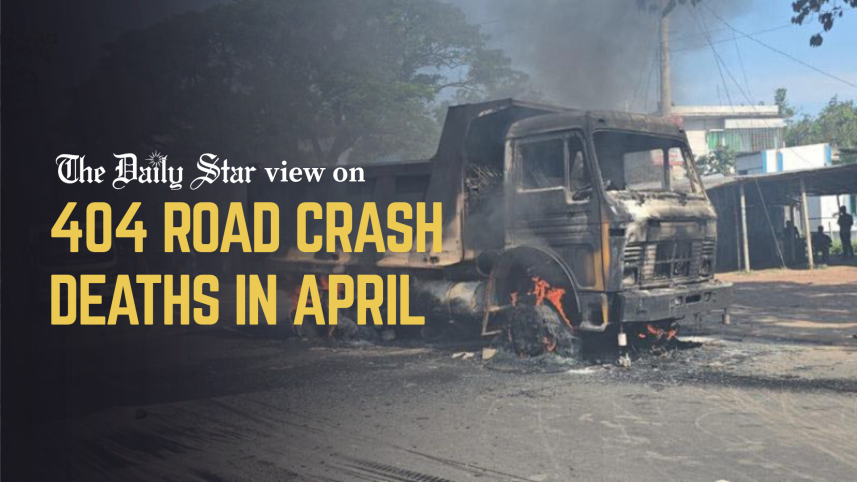
Yet another harrowing set of statistics on deaths caused by road crashes was revealed in the Road Safety Foundation's April 2026 report. In 463 crashes across the country, according to the report, 404 people were killed and 709 were injured. Although both the number of incidents and the death toll in April are lower than those in March, there is no justifying complacency. We celebrated Eid-ul-Fitr in March this year, a time when many travel to see their loved ones. As a result, traffic increases, and so does the number of crashes.
However, while reflecting on the lives already lost on our roads this year, we must take stock of our preparations regarding road safety for the upcoming Eid-ul-Azha, which is only about two and a half weeks away. The measures taken during Eid-ul-Fitr, including increased presence of law enforcers and enhanced monitoring of highways (where most crashes occur), are good but not enough to drastically reduce road crashes. Even scheduling specialised trains to address the Eid rush does not reduce road fatalities. The major causes are unfit vehicles, unskilled drivers, long working hours for drivers without mandatory rest, disregard for traffic laws, and reckless driving, and these concerns remain unaddressed. Motorbike crashes alone constituted 30.66 percent of total collisions in April, and more than one-third of the total road crash fatalities were motorbike riders. Even falls from these two-wheelers—when riders lose control—can turn fatal for riders and passengers. This is how a 17-year-old met his death on Wednesday night in Dhaka’s Demra area when riding a motorbike with his friend.
 For all latest news, follow The Daily Star's Google News channel.
 The causes and solutions of road crashes in Bangladesh have long been known. Experts and road safety advocates have, ad nauseam, suggested changes to policy and regulation to mitigate collisions on our roads, but no government, whether political or non-political, could implement those. A powerful nexus of transport owners, associations, political actors, and an obdurate bureaucracy continues to reign over our roads, where around 66 people die untimely deaths and countless are maimed daily. Ad hoc solutions to road safety did not work in the past; they won’t work in the future.
Also, taking lessons from the recent fuel crisis, innovative solutions must be sought to reduce our dependency on road transportation. Experts point to railways as an alternative. This mass transit is not only fuel-efficient but has the potential to reduce both congestion and unhealthy competition on our roads, forcing bus owners to improve the quality of service. The government’s mulling of private investment in railways gives us hope. However, a strong institutional presence is required for such a transition to work. What is required most is a strong political will to bring down road crash deaths.
Comments