


Even during a measles outbreak, a man’s pointing finger finds a woman

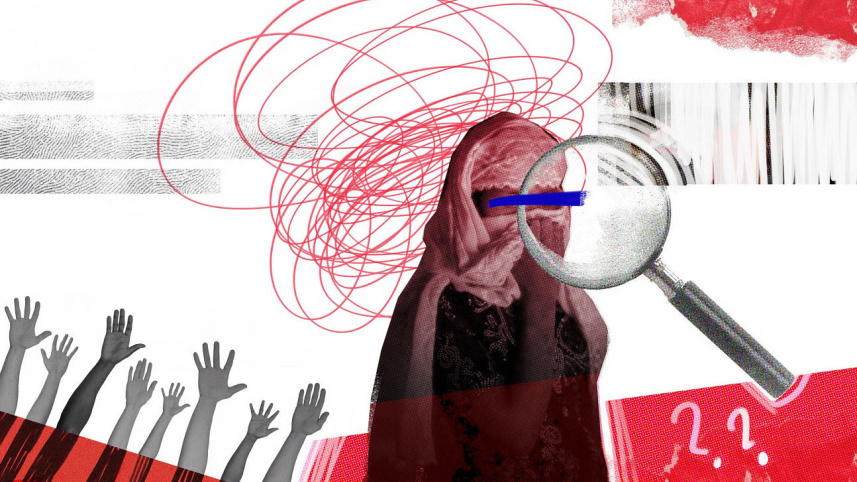
In a recent press conference that has since gone viral for all the wrong reasons, Abdullah Al Jaber, the member secretary of Inqilab Moncho, made a statement so scientifically hollow and socially reckless that, even after his subsequent lukewarm apology, the issue demands an immediate reckoning. He said that many of the infant measles deaths in the country are due to a lack of breastfeeding-supported immunity. While this part of his statement aligns with expert opinion, problems arose when he alleged that 55 percent of mothers are “intentionally withholding breast milk from their children out of a desire to maintain their physical fitness.”
It is a familiar, weary script in Bangladesh. Whenever a systemic crisis arises, whether it is a rise in crime, a breakdown of social values, or a public health emergency like the ongoing measles outbreak, the collective gaze immediately pivots to the female body. It is the most convenient scapegoat in our national discourse. When a woman is raped, we interrogate her choice of clothing and lifestyle. When a child is on their deathbed, we interrogate the mother. By framing a medical tragedy as a result of women’s supposed selfishness, Jaber has not only insulted every mother in this country but has also effectively shielded the state and the healthcare system from the accountability they owe to the 451 children who have reportedly died of measles.

Why is it so easy to talk about a woman’s body as if it were public property? Why is it that a man with no apparent medical education or nutritional expertise can stand before a microphone and diagnose superficiality in millions of women as the root cause of a national crisis? In an age where digital engagement is a currency, attacking women often seems the fastest way to capture attention. It is cheap, easy, and instantly taps into our deep-seated prejudice that prefers to blame individuals rather than address the structural failures of the state.
To understand why breastfeeding rates might fluctuate, one must look at the conditions of women’s lives. A recent report in The Daily Star highlighted a harrowing statistic: approximately 1.6 crore people in Bangladesh faced acute food insecurity last year. We are a nation struggling with nutrition and food stability. When a mother is malnourished, when she herself does not have access to a balanced diet, her ability to lactate is naturally compromised. It is not a choice but a biological consequence of poverty. According to Bangladesh Demographic and Health Survey (BDHS) data, the rate of exclusive breastfeeding fell from 65 percent in 2017-18 to 55 percent in 2022. But experts have blamed not mothers, but issues such as superstition, lack of awareness, and inadequate publicity as major obstacles to exclusive breastfeeding. They also point out frequent disregard for the Breast-Milk Substitutes (BMS) Rules 2017, as many organisations fail to provide six months' maternity leave or breastfeeding facilities, thereby further discouraging working mothers from breastfeeding exclusively.
There is indeed a blatant lack of structural support for working mothers. Bangladesh’s economy relies heavily on the labour of women, particularly in the garment sector and the informal economy. How many of these women are granted adequate postpartum leave? How many workplaces provide the private facilities and time required for breastfeeding? When a mother is forced back into the factory or the office just weeks after childbirth because she cannot afford to lose her income, she is not choosing to prioritise her physique. She is choosing survival.
Also, the narrative that berates women for not breastfeeding their children because of “fitness concerns” ignores the reality of postpartum depression, lack of community healthcare support, and the sheer exhaustion of women navigating a patriarchal society with few safety systems to cushion them.
By turning a public health crisis into a moral crusade against women, the actual causes of measles deaths—such as gaps in the immunisation chain, lack of proper vaccination campaigns, and widespread malnutrition—are pushed out of the spotlight. It is a classic bait and switch. The public becomes busy debating the morality of mothers while the institutions responsible for child health escape scrutiny. A half-hearted apology does not erase the damage such rhetoric creates. A mother who has lost her child to a preventable disease like measles carries an unimaginable grief. To have that grief met with the accusation that her child died because she was worried about her “fitness” is an act of cruelty that no apology can fix.
We need to demand discourse that is grounded in data, sociology, and medical science, not in the prejudiced whims of those holding press conferences. The children of this country deserve a healthcare system that works and a society that supports their mothers. They do not deserve to have their deaths used as fodder to spread misogynistic narratives. If we want to talk about competence, let us talk about the moral proficiency of our leaders to speak on public platforms and the institutional capacity of our state to provide for its most vulnerable citizens. Anything else is a dangerous distraction.
Tagabun Taharim Titun is a content executive at The Daily Star.
Views expressed in this article are the author's own.
Follow The Daily Star Opinion on Facebook for the latest opinions, commentaries, and analyses by experts and professionals. To contribute your article or letter to The Daily Star Opinion, see our guidelines for submission.
 For all latest news, follow The Daily Star's Google News channel.
Comments