


Why char children need a different education policy

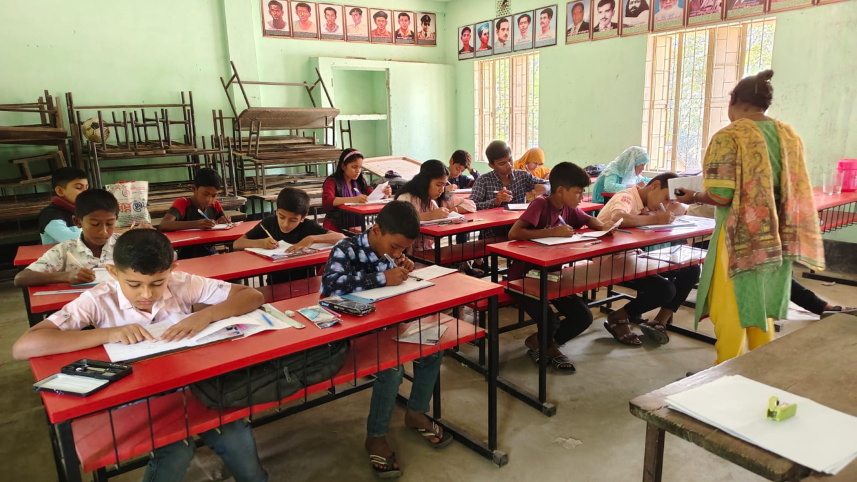
A particular silence falls over a char village school after a flood. The benches are empty, the blackboard warped, the floor covered with a thin film of riverbed silt. Somewhere across the water, a child who should be conjugating verbs or solving arithmetic problems is sitting on a raised bamboo platform, waiting for the world to become land again.
I have sat with that silence. As an independent researcher working in Sirajganj, one of Bangladesh’s most flood-prone districts on the Jamuna River, I have walked into these schools after the waters recede, spoken with teachers who could not reach their classrooms for weeks because there was no boat, and listened to parents explain, without complaint, that their children had not attended school in over a month. In Bangladesh’s char and riverine areas, the Sustainable Development Goal 4—“Ensure inclusive and equitable quality education”—cannot be met at the current pace and with the current policy framework. This is what the evidence and the landscape plainly show.

Over the past two decades, Bangladesh’s progress in education has been genuinely impressive: enrolment has climbed and the gender gap in primary schooling has effectively closed. But national averages conceal a geography of exclusion. The char lands—those shifting, silt-formed islands that line the country’s great rivers—operate under different physical laws. Here, the monsoon is not a season but a sovereign: it decides whether school happens, whether the teacher arrives, and whether a family has enough to eat, and whether a child can afford to attend class. A government can hit the enrolment indicators in the plain land, where roads hold and teachers live near their schools. Achieving meaningful learning outcomes in the chars is a different proposition altogether, and conflating the two in one headline figure obscures the true scale of the challenge.
During my field surveys across char upazilas, I have observed a cascade of problems. It begins with connectivity: roads in the chars are seasonal, not merely poor, and even moderate rainfall can flood school buildings. Teachers, many of whom live in the plain land since the chars do not offer adequate housing, cannot cross the river without boats, and boats, in most char schools, are not always available.
The result is not just absence but a learned helplessness across the whole system. Students stop expecting school to be consistent; parents stop planning around it; teachers, isolated and unsupported, lose the thread of their syllabi. By the time the waters recede, weeks of learning are lost and, in a system with fixed exams and curricula built for uninterrupted calendars, lost weeks do more than merely delay progress—they end it.
Beneath this sits an economic crisis that disasters make acute. River erosion, less dramatic than floods but more destructive because it’s permanent, strips families of land and livelihoods, the asset base that makes investing in education feel rational. Malnutrition follows financial crisis, cognitive function follows malnutrition, and academic performance follows both. Dropout here can become a response to structural impossibility.
What is striking about Bangladesh’s education policy is its tendency to apply plain-land solutions to char-land problems. A stipend does not put a boat on the river. Teacher deployment policies do not resolve the disincentive of posting a qualified teacher to a school inaccessible for months a year, without housing or hardship allowances. Infrastructure standards were not written for buildings that must survive annual inundation, and a calendar with fixed exams and rigid attendance rules functions in the chars as an instrument of exclusion, penalising children for missing school during floods as though absence were a choice.
NGOs often fill the gaps the state has yet to reach, but they operate project by project, without the continuity a government mandate provides. What the char lands need is a separate policy framework that acknowledges, formally and in budgetary terms, that quality education in a climate-vulnerable environment costs structurally more, and that this cost must be borne by the state, not by families already paying the cost of geography.
The path forward is not completely unknown. Researchers and practitioners who work in these areas have mapped it. What is required is political will applied specifically. Schools in char lands need flood-resilient infrastructure: raised plinths, waterproof materials, and designs built around the annual rhythm of inundation. This is not expensive architecture. Teachers posted to char schools need boat allowances, housing support, and hardship incentives; without these, the best teachers will keep avoiding these postings, and the children who most need quality instruction will keep getting the least experienced educators. The calendar needs climate sensitivity, with attendance and exams built around the monsoon cycle. Stipends need to be paired with support for the hidden costs that determine whether a poor char family can keep a child in school—transport, materials, and the nutritional baseline without which attendance is impossible. The government, NGOs and INGOs must coordinate on the frontier where the deficit is deepest.
SDG 4 carries a simple promise: quality, inclusive and equitable education for every child by 2030. Bangladesh has made that promise, and the child on the char land is part of it. But they are sitting on a bamboo platform above the floodwater right now, and the school behind them has been closed for two weeks, and no boat has come. The river will keep moving. The only question that matters is whether the policy will finally move with it.
Shahadat Hussein a Master’s graduate in global development from Cornell University in the US, researches climate vulnerability, social protection and educational exclusion in Bangladesh.
Views expressed in this article are the author's own.
Follow The Daily Star Opinion on Facebook for the latest opinions, commentaries, and analyses by experts and professionals. To contribute your article or letter to The Daily Star Opinion, see our guidelines for submission.
 For all latest news, follow The Daily Star's Google News channel.
Comments