‘Britain didn't conquer India’

Editor's Note: We are republishing this interview with historian and author William Dalrymple, which was taken and originally published in 2014 when he visited Dhaka to attend the Hay Festival. More than a decade later, the conversation remains relevant as questions of empire, colonialism, and how South Asia’s past is written and remembered continue to resonate.
"Britain didn't conquer India…East India Company did. The company, which was only answerable to shareholders, unleashed a beast on the world. Ten years after the Battle of Plassey, the company was being run by 35 people in London," British historian and writer William Dalrymple told The Daily Star.
Dalrymple embarked on the literary scene with his travel books – In Xanadu and City of Djinns. But he earned a solid global fandom with his history books – White Mughals and The Last Mughal. His latest book Return of a King: The Battle for Afghanistan has also received rave reviews.

His history books read like novels. Why?
"Because it's 'narrative history'. The narrative form is ancient whereas the novel form has developed much later. My writing process is like Chinese cooking; most of the time is invested in mise en place: chopping up ingredients, organising them, and at the very end when all the things are ready to go, you start the cooking. I write a book once every four or five years and most of that time goes into researching and preparing what exactly I'm going to write. I'd have over 400 pages of dateline… lots and lots of index cards. I'm a micro-planner. Clarity and control are very crucial if you're going to write about history," he explained.
Though his books read like fiction, nothing is made up in them. "I can't write 'It was a bright, sunny day' unless records actually say it was a bright, sunny day."
Perhaps the reason his history books have found huge success in South Asia is the dearth of this particular form in this region.
Dalrymple agreed: "History books written in South Asia are mostly academic and analytical. The British are good at narrative history. It's only been a decade that we saw brilliant literary non-fiction coming out of South Asia."
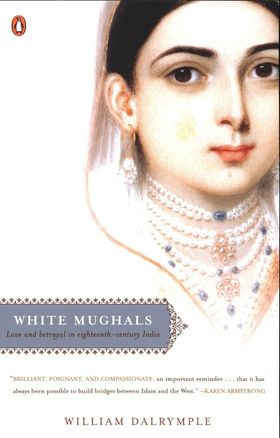
White Mughals is essentially about the British officers of East India Company coming to India and falling in love with it and its culture in the 18th and early 19th century while The Last Mughal describes the ugly face of racism and hatred towards the natives during the Sepoy Mutiny of 1857. Return of a King, a re-telling of the first Anglo-Afghan war (1839-42), presents uncanny parallels between the British invasion of Afghanistan in 1839 and the post-9/11 occupation of Afghanistan by the West.
Did he intentionally present an overarching theme here: history repeating itself and 'us' [East] and 'them' [West] not necessarily acting any wiser?
"Yes, the British wasted resources and ravaged Afghanistan during the war in 1839-42, and they humiliated themselves. Modern warfare is even more expensive. The human cost of war is immensely tragic," he said.
Dalrymple is currently working on his next book – a prequel to White Mughals, which will trace the rise of the East India Company, chronicling the relatively "unwritten time" between the fall of the Mughals and the rise of the British.
Karim Waheed is digital content strategy lead at The Daily Star.
Send your articles for Slow Reads to slowreads@thedailystar.net. Check out our submission guidelines for details.
Sheikh Mujib’s killing: What the newspapers told and what they omitted
Mirrors of Empire / The bureaucrats and intellectuals who shaped the Mughal Empire
To feel Bengali, to think beyond Bengal: Dipankar Gupta in conversation
Bangladesh's visual history / The enduring allure of vintage photographs
The enduring legacy of the 2nd Bangladesh Liberation War Course
In conversation with Harbans Mukhia / Beyond kings and dynasties: Rethinking medieval Indian history
Reading Ardhakathanak / What a 17th-century merchant's autobiography reveals about Mughal governance

The blind spots of Bangladesh studies

Rediscovering Santal history through Scandinavian archives